



Winter weather getting to you? It’s time to bring your cardio indoors.
While we often associate aerobic exercise with running, cycling or swimming, you can easily get your heart rate up at home. Make the most of your spare time to look after yourself, all from the comfort of your living room.
The benefits to a workout, whether indoor or out, are endless. “Exercise improves cardiovascular health by inducing positive changes in oxygen supply, as well as the vascular system, peripheral tissues and inflammation,” explains personal trainer and sports science specialist Víctor Díaz.
In fact, leading global authorities, such as the World Health Organization and the American College of Sports Medicine, recommend at least 150 minutes of aerobic activity every week.
How to get a high-intensity cardio workout at home
We often associate cardio with the gym treadmill or a stationary bike. However, as our expert explains, there are plenty of ways to give your cardiovascular and metabolic systems a real boost without ever leaving the house.
All you need to get started is your workout kit and a bit of clear space where you can move freely. It’s a good idea to keep a water bottle nearby and sip throughout your session to stay well-hydrated.
If you need a bit of a push, try putting together a playlist of your favourite upbeat tracks to keep you motivated. You could even follow along with an online fitness class to make the workout more engaging and help the time fly by.
The 10 best cardio exercises for your living room
With this in mind, our personal trainer has selected a range of effective home exercises that require minimal equipment and are perfect for supplementing your usual gym routine.
“Exercise improves cardiovascular health by inducing positive changes in your body’s oxygen supply, as well as the vascular system, peripheral tissues and inflammation”
He recommends performing each exercise in 30-second bursts, followed by 30 to 45 seconds of rest (depending on your current fitness level). Take a two-minute breather between full rounds to create a highly effective cardio and metabolic workout from the comfort of your own home.
1. Star Jumps / Jumping Jacks
The classic total-body move. Jump while spreading your legs and raising your arms above your head, then spring back to the starting position.
2. Mountain Climbers
 © Getty Images
This is fantastic for your core and gets the heart rate up quickly. Start in a high plank position and drive your knees towards your chest in an alternating motion, keeping your arms strong and your back flat.
3. High Knees
Run on the spot while lifting your knees as high as possible. It is a brilliant way to engage your core and boost cardiovascular endurance.
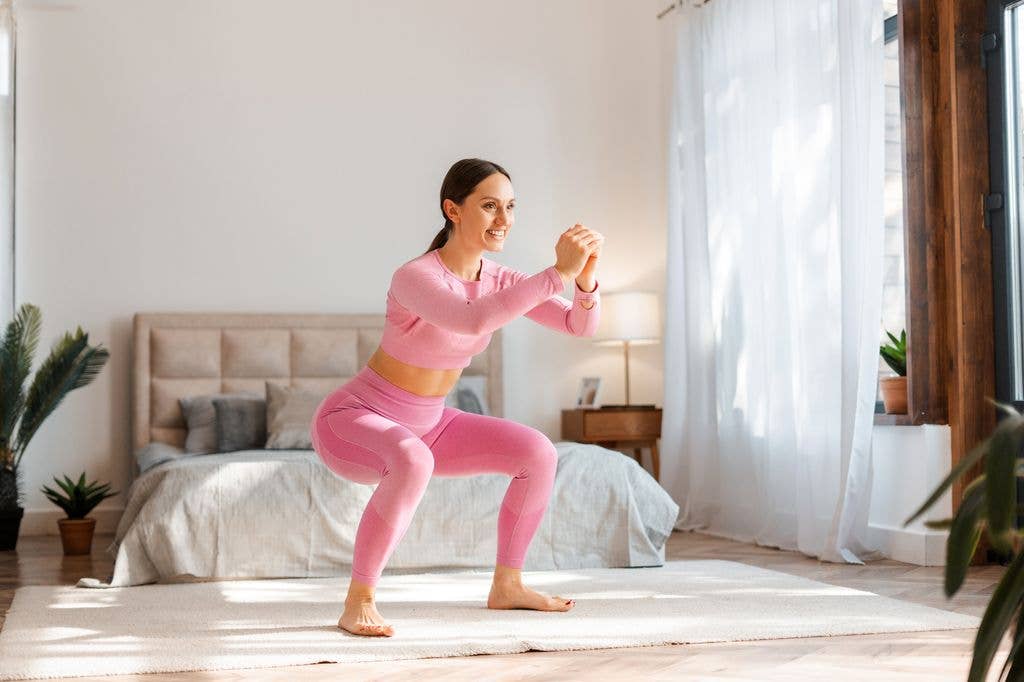
4. Jump Squats
A dynamic variation of the standard squat. This helps build lower-body power while keeping your heart rate in the training zone.
 © Getty Images
5. Thrusters
An explosive, full-body movement that combines a squat with an overhead press. Hold your dumbbells at shoulder height, sink into a deep squat, and as you drive upwards, fully extend your arms towards the ceiling.
6. Kettlebell Swings
While often seen as a strength move, these are excellent for cardio. Hinge at the hips to swing the kettlebell between your legs, then drive your hips forward to propel the weight up to chest height. Remember: your hips are the engine here, not your arms.
 © Getty Images
7. Walk-outs (High plank transition)
Hinge at the hips to place your hands on the floor, then ‘walk’ your hands forward until you reach a high plank. Reverse the movement to return to standing.
8. Burpees
The ultimate all-rounder. From standing, drop into a squat, kick your legs back into a plank, perform a press-up, snap your feet back in, and jump explosively. It’s a tough but highly effective mix of strength and stamina.
9. Step-Ups
Using a sturdy step, bench or even the bottom of your stairs, step up and down while alternating your lead leg. To make it more of a challenge, hold a pair of dumbbells or pick up the pace.
10. Jump rope
Ideal for coordination and heart health. If you have a skipping rope, keep your jumps small and your rhythm steady as the rope passes under your feet.
 © Getty Images
How long should you do cardio to see real results?
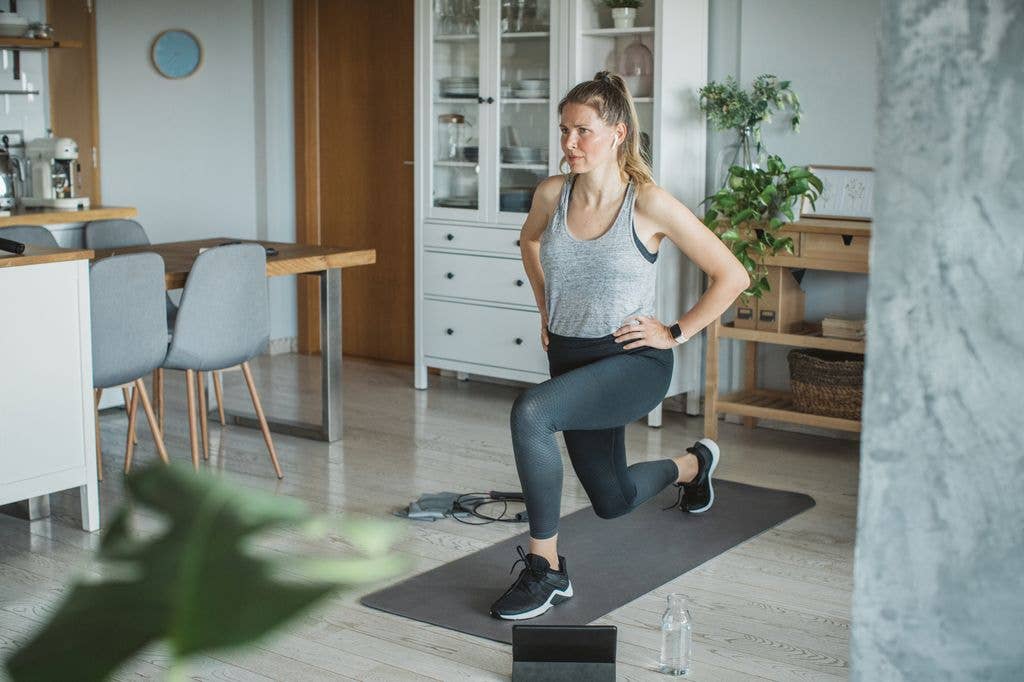
If your goal is to burn fat, Victor recommends aiming for 150 to 300 minutes of moderate cardio a week. If you prefer a tougher workout, you can drop that to 75 to 150 minutes of high-intensity exercise. Here is how to structure your sessions:
- The Steady Approach: Try 30 to 45 minutes of moderate exercise (like a power walk or steady cycle) for a great way to burn fat without overtaxing the body, when combined with a balanced diet.
- The Fast Track: Try 20 to 30 minutes of higher-intensity work, such as HIIT or the circuit mentioned above. These trigger the ‘afterburn effect,’ meaning you continue to burn calories even while you’re recovering on the sofa.
Ultimately, the best results come from a ‘hybrid’ approach: mix your cardio with some weight training and a nutritious diet to keep your metabolism firing.
 © Getty Images
Is 30 minutes of daily cardio safe for your body?
By committing to a daily cardio session, you’ll be reaping the many rewards that consistent exercise offers. “If you tailor the intensity and type of activity to your current fitness level, it’s a brilliant way to hit your health targets and improve your cardiorespiratory fitness,” explains the expert. “However, it is vital to balance aerobic work with strength training and allow for proper recovery to avoid burnout.”
Ultimately, it’s important to listen to your body and know your limits to prevent overtraining.
Morning vs. evening cardio: When is the best time to work out?
Put simply, the best time to train depends on your personal preference and your schedule. “The most effective workout is the one you actually do,” says Díaz. “The best time of day is whenever you can fit it into your routine consistently until it becomes a habit.”
However, he also points out, numerous studies have looked into how the timing of a workout can affect results. “Every cell in the body is governed by a circadian rhythm, influenced by factors like body temperature, hormones, and metabolism,” explains the expert. “These rhythms vary depending on whether you’re a morning person or a night owl.”
“The most effective workout is the one you actually do. The best time of day is whenever you can fit it into your routine consistently until it becomes a habit”
He adds: “That said, your own motivation is more important than your chronotype. While performance differences might matter to elite athletes, that’s not the case for the general population.
“If you have the luxury of choice, listen to your body. Some feel most energetic at the crack of dawn, while others hit their stride in the afternoon.”
 © Getty Images
The surprising benefits of training at the crack of dawn
Research has highlighted some interesting differences between morning and evening sessions. “Morning workouts can actually improve the quality of your sleep at night. However, if you already struggle to get to sleep, you should avoid training too close to bedtime; exercise raises cortisol levels and body temperature, which can keep you awake.
“It is vital to balance aerobic work with strength training and allow for proper recovery to avoid burnout. Listen to your body and know your limits”
“Morning exercise has other perks: it can boost fat-burning – especially if done before breakfast – and may be more effective at regulating appetite and calorie intake throughout the day.”
The PM payoff: How evening cardio helps you unwind and build strength
On the other hand, core body temperature tends to peak in the afternoon, which can lead to better muscle efficiency and reaction times.
“You might find you have more energy than you did first thing in the morning, and it’s a brilliant way to blow off steam after a stressful day. Just remember: if you are training late, try to avoid high-intensity moves right before bed, as they can interfere with your sleep,” concludes the trainer.
Read the full article here