



The kidnapping of Nancy Guthrie – the mother of news anchor Savannah Guthrie – is the latest in a string of crimes in which ransoms have reportedly been demanded in Bitcoin.
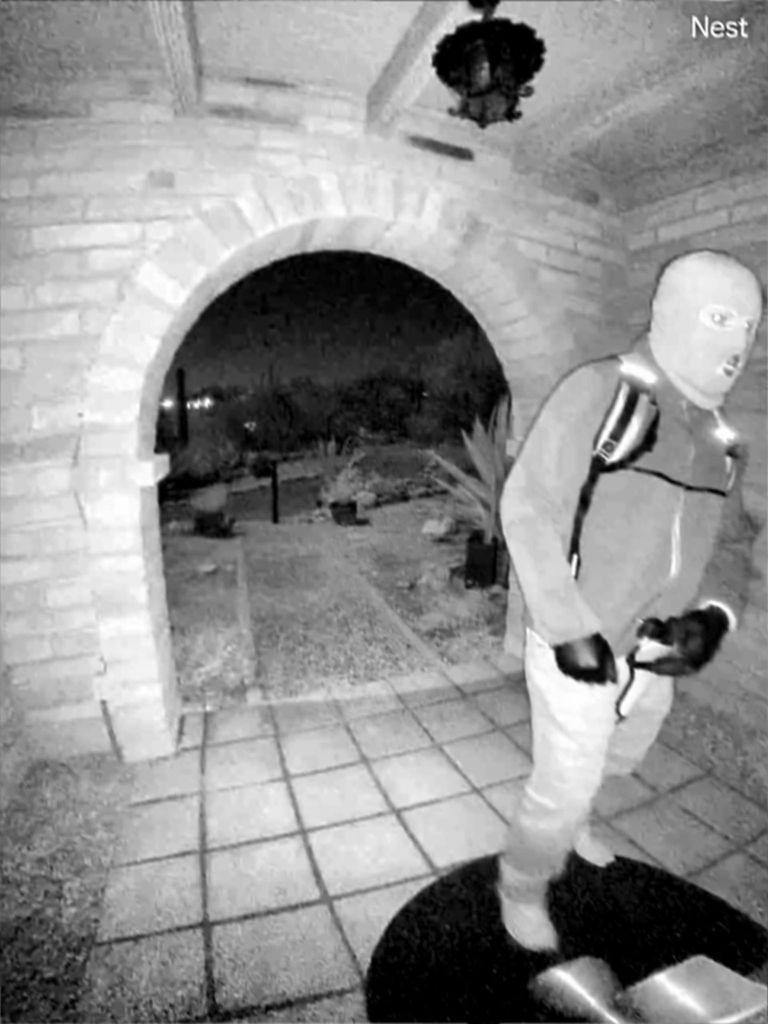
The 84-year-old was taken from her home in Tucson, Arizona, in the middle of the night on January 31. A ransom of US$6 million (£4.4 million) has been demanded by the kidnappers.
Now, renewed movement in the Bitcoin wallet linked to the case has intensified scrutiny – and raised a critical question: although Bitcoin is not inherently untraceable, can perpetrators ultimately profit without being identified?
Bitcoin is a decentralised digital currency often described as anonymous and private. That perception has made it attractive to criminals who believe it offers a convenient way to receive, transfer and store funds beyond the reach of authorities. But experts say that belief is dangerously outdated.
“When a wallet like this moves, it is never just a transaction. It is a signal,” says Bezalel Eithan Raviv, CEO of Lionsgate Network, a crypto-forensics and recovery firm.
“In some cases, it is operational, testing access, moving funds, trying to stay ahead. In others, it is noise, designed to confuse investigators and the public. But here is the reality we see every day. Criminals move. The blockchain remembers.”
 © Getty Images
According to Bezalel, every transaction creates a permanent data point. “Every movement creates a new data point, a new lead, a new opportunity to follow the money. In many cases, movement happens because pressure is building.”
But one of the most persistent myths surrounding Bitcoin is that it is anonymous. “There is a dangerous misconception that Bitcoin is anonymous. It is not,” Bezalel says. “Bitcoin is one of the most transparent financial systems ever created. Every transaction is recorded permanently. No one can edit a transaction after the fact.”
He argues that in high-profile cases especially, criminals may be underestimating the scrutiny that follows public exposure.
 © Getty Images
“In many cases, yes,” he says, when asked whether offenders misjudge blockchain transparency. “Criminals still believe Bitcoin gives them protection. In reality, it often does the opposite, especially in high-profile cases.
“The moment a case becomes public, the ecosystem activates. Exchanges monitor, analysts track, investigators collaborate.”
Unlike physical cash, cryptocurrency must eventually be converted into usable money. “Crypto is digital value. You cannot directly consume it,” Bezalel explains. “To use it in the real world, criminals need someone willing to convert it into fiat currency, usually through a centralized exchange. That is where intervention becomes possible.”
 © Getty Images
When funds reach regulated services, he says, “blockchain transparency becomes a bridge to real world identity.” Modern investigations combine blockchain analysis with traditional detective work.
“We map transaction patterns, identify clusters of wallets, track interactions across chains, and correlate activity with services such as exchanges and payment processors,” Bezalel says. “But the real breakthrough happens at the intersection of blockchain data and human behavior.”
Speed varies. “Sometimes attribution happens quickly when funds reach a known entity. In other cases, it takes time. But one thing remains constant. The data does not disappear. The trail remains, waiting to be connected.”
 © FBI
© FBIAs for whether renewed wallet activity signals investigative progress or misdirection, Bezalel says it can be both. “Movement creates exposure. Exposure creates opportunity. And often, it is in these moments that mistakes are made and cases move forward.”
For victims and families watching closely, the distinction matters. While Bitcoin’s association with extortion and ransomware has fuelled fear that funds simply vanish into the digital ether, specialists insist that narrative is incomplete.
“Crypto is traceable. And it is recoverable,” Bezalel says. In a case as high profile and emotionally charged as the alleged kidnapping of Nancy Guthrie, every transaction will now be examined not just as a payment attempt – but as a potential clue.
Read the full article here