



To pierce or not to pierce? That is the question that regularly rattles around my head when feeling A) bored B) spontaneous or C) uncool. Take it from someone with too many earrings to count, a new piercing can fix anything, from a dull rainy day to a quarter life crisis.
However, I’ve always been on the fence when it comes to piercing a body part beside my face. You often hear horror stories about a friend of a friend who braved the needle only to wind up with some ghastly infection that warranted an emergency hospital visit.
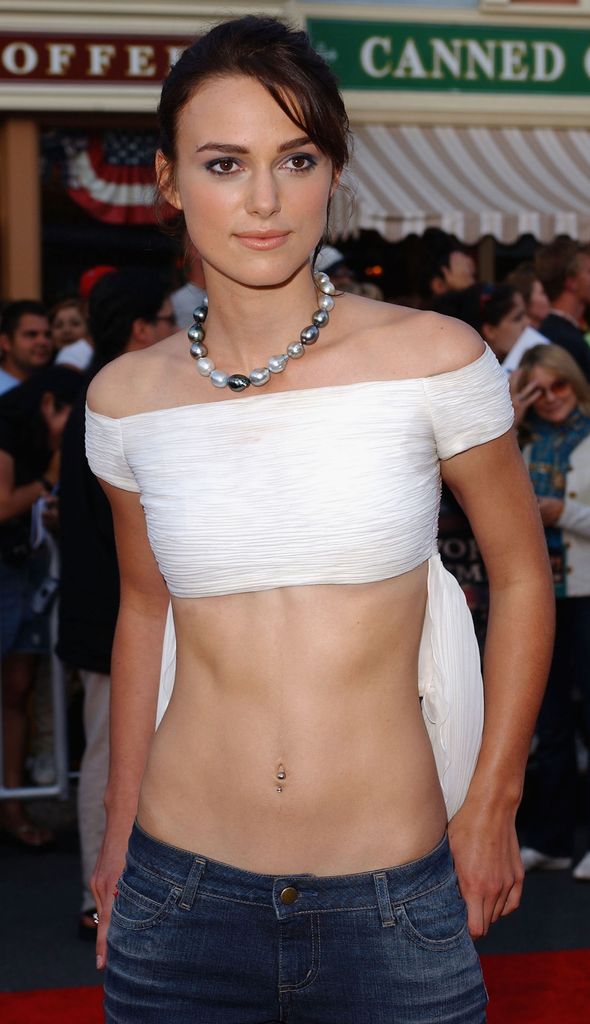
No matter, the idea of a belly button piercing has always intrigued me. Cute and undeniably kitsch, these sparkly accessories have been championed by It-girls including Dua Lipa, Billie Eilish, Priyanka Chopra and most recently Amanda Seyfried – who bore hers proudly while attending the Tory Burch AW26 show during New York Fashion Week.
“I’ll never get rid of it. I’ve had it since I was seventeen. I took it out when I was pregnant both times, put it straight back in,” the actress told People Magazine during the event.
And so returned my yearn for a belly button piercing. But I had questions – does it pop out when you bloat? Does it catch when shimmying into jeans? Does it hurt? Is it worth the faff that a piercing enviably entails?
 © Instagram
Thankfully, Natasha Lyons, founder of Tish Lyon was there to save the day. Read on for her expert insight about what to know before getting a belly button piercing.
Why have belly button piercings made a comeback?
“Belly button piercings never really disappeared, they just went quieter for a while. What we’re seeing now is part of a broader return to more ‘feminine’ styling after years of minimal, gender-neutral basics dominating fashion. As waistlines drop again, the torso becomes a focal point, and the stomach is one of those areas of the body with very little built-in ornamentation.”
“A navel piercing fills that gap in a way that feels effortless and intentional. It’s similar to what happened with curated ears, because as soon as haircuts and styling exposed ears more, people wanted to decorate them- and now the exposed midriff is inviting that same kind of personal styling. In the 90s, it was all about low rise and crop tops so bellies were on show- so it was very much fashion dependent. I remember when there were BCRs (rings with a ball in the middle) and I would buy different silver charms to add onto the rings so that the jewellery had a pretty dangle and were not just a plain ring. The current nostalgia with 90s/2000s style, makes the perfect ‘fashion moment’ for the navel piercing to feel current again.”
Why does their Y2K appeal still resonate today?
“Y2K hits a really specific emotional and visual sweet spot. Fashion tends to move in roughly 20-year cycles, so the 90s and early 2000s are being revisited through nostalgia. Navel piercings are at the centre of this- they were worn by pop icons like Britney Spears, Beyoncé and Paris Hilton, and they were perceived as glamorous. What’s changed is the jewellery, because early 2000s belly rings were often chunky and crystal-heavy (made with steel and with silver end), whereas modern styles are more refined with delicate gold pieces, minimal bars, and high-quality titanium or solid gold. That makes the piercing feel more wearable and less tied to one single era. I feel like this piercing is a beautiful, very sensual placement which draws the eye to the stomach.”
“In previous decades, this was seen as a forbidden part of the body. Therefore, belly piercings are a soft nod to female emancipation in a very subtle and playful way. We’re also seeing a fun generational element at Tish Lyon, because younger clients come in with their mums, which is pure nostalgia for them.”
 © Getty Images
What should someone know before getting one? Does it hurt and what about pregnancy?
“First, navel piercings are completely anatomy-dependent, because it’s not a one-size-fits-all piercing. Depending on the shape and ridge of your navel, a piercer might recommend a different placement or style, like an inverse navel (pierced from the bottom upwards) or a floating navel. A proper anatomy check is essential, and if a piercer isn’t comfortable doing it on the day, we’d always rather someone comes back later- because bodies change, and even the elasticity/ridge of the area can change over time.”
“In terms of pain, most people find it really manageable and usually say it’s around a 4 out of 10. It’s a quick, sharp pinch and it’s over in seconds if you’re with a reputable piercer. The bigger thing to know is healing, because navels can be slow. They typically take around 8-12 months (sometimes longer) because there’s constant movement in the area, friction from clothing, and it’s not a high blood-flow zone like the ears. Loose-fitting trousers and skirts will make your life much easier while healing, essentially tight jeans are not your friend.”
“On pregnancy, it’s generally advised to remove the jewellery as your belly grows, because it can become too tight and increase the risk of rejection. Some people switch into a longer, softer PTFE retainer during pregnancy, but it’s always best to speak with your doctor first and make sure that option is suitable for you. And if the piercing closes during pregnancy, it can often be re-pierced afterwards. If it’s fully healed beforehand, sometimes it just needs a new piece of jewellery inserted rather than starting from scratch.”
Read the full article here