

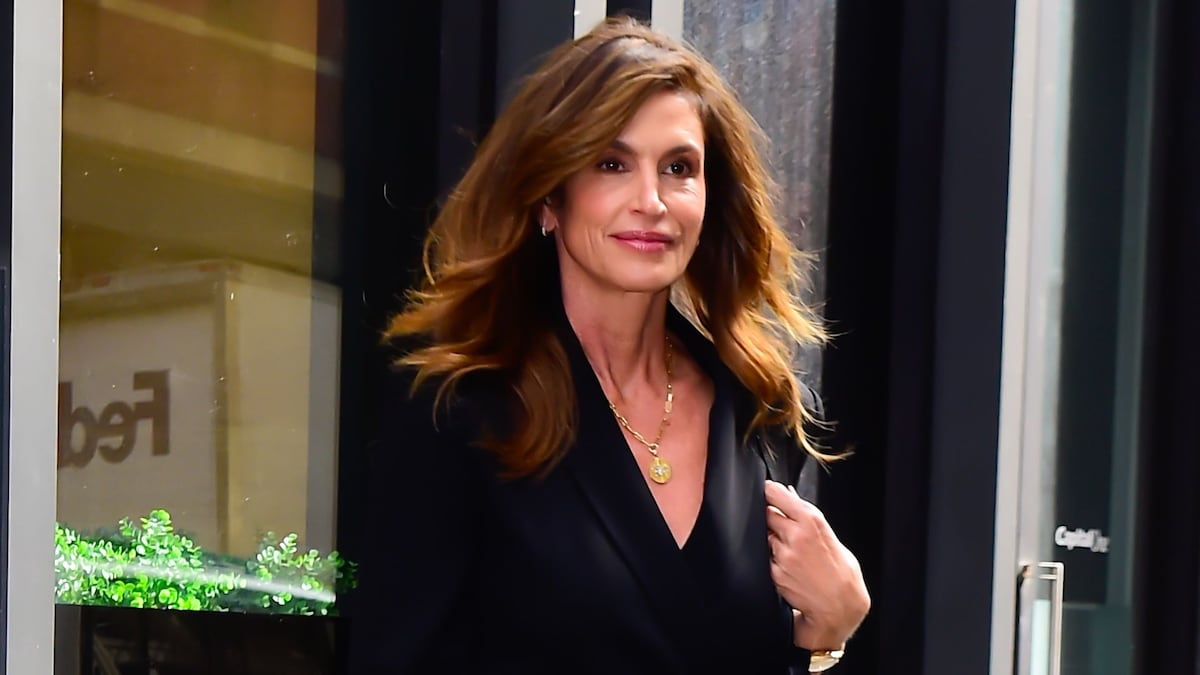

Cindy Crawford is set to celebrate her 60th birthday on February 20, and the iconic American supermodel continues to prove that lasting vitality isn’t just about genetics.
Over the years, she has built her lifestyle around consistent exercise, quality rest, balanced nutrition, and sustainable habits. The mother of Kaia Gerber starts most mornings with a workout followed by a homemade, nutrient-packed smoothie.
Crawford recently shared insights into her routine during an interview with Lauryn Bosstick and Michael Bosstick, creators of The Skinny Confidential and founders of Dear Media. During the conversation, she explained that when she’s at home, she typically practices intermittent fasting.
Rather than eating immediately after waking, she usually waits until around 10 a.m., often exercising beforehand. To break her fast, she prepares a smoothie with coconut milk, half a banana (she was advised that a whole one might add too much sugar), spinach, mint, collagen, protein powder, cocoa, flaxseeds, hemp seeds, and a sprinkle of maca on top.
 © GrosbyGroup
As for the rest of her diet, Crawford says she eats a wide variety of foods but limits gluten because it doesn’t sit well with her. While she loves pasta, especially when traveling in Europe, she finds it affects her differently at home.
She doesn’t eat much bread and typically opts for a protein-rich salad at lunch. Dinner usually consists of protein paired with vegetables or something similar.
What do experts think?
According to dietitian-nutritionist Antonio Andújar, Crawford’s approach appears more focused on fat loss than muscle gain. He notes that intermittent fasting, limiting carbohydrates throughout the day, and training before breakfast all point in that direction.
However, he cautions that fasted workouts may not be ideal for those seeking high performance, intensity, or muscle development. Exercising with low glycogen stores, he explains, can reduce performance and may even contribute to muscle loss. That said, if the activity is more aerobic in nature, it might make more sense.
 © Cindy Crawford /Getty Images
Crawford is known to practice reformer Pilates, which could make fasted training less problematic in her case. Andújar emphasizes that nutrition should always be individualized, taking into account overall activity levels and specific goals.
Rosa Rullán, a dietitian known on social media as Nutrisinexcusas, describes Crawford’s diet as relatively low in carbohydrates and warns of potential downsides.
These can include decreased athletic performance, hormonal imbalances, nutrient deficiencies, and disruptions to gut microbiota. She also highlights that intense training combined with low-calorie intake can lead the body to break down muscle tissue for energy.
 © GC Images
In her view, fasted training is generally not the most advisable approach for women. On the positive side, Rullán praises Crawford’s consistent inclusion of vegetables and protein in her meals.
She also acknowledges that intermittent fasting, when done correctly, can offer benefits, though she suggests it may be better suited to later in the morning rather than immediately upon waking and training on an empty stomach.
As she approaches 60, Cindy Crawford continues to demonstrate that disciplined habits, mindful eating, and regular movement remain central to maintaining strength and energy at any age.
Read the full article here