

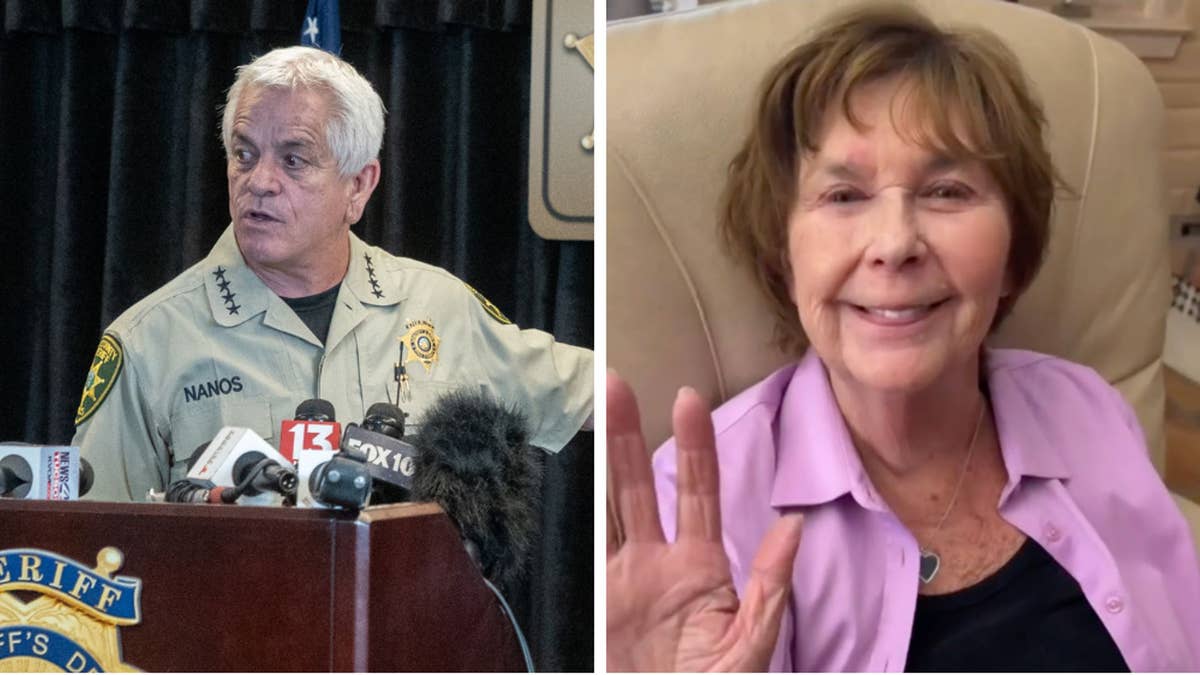

Six months after the disappearance of Savannah Guthrie’s mother, investigators have revealed what they believe could be the key to finally identifying whoever took her.
Exactly six months after Nancy Guthrie vanished from her Arizona home, police released two chilling ransom notes to the public in a renewed appeal for information, hoping someone will recognize the distinctive language used by the writer.
Nancy, who was 84 when she disappeared in January, remains missing despite months of intensive investigation. While the notes demanded millions of dollars in Bitcoin before later claiming she had died shortly after being abducted, detectives now believe the words themselves may hold the biggest clue.
“This just might jar someone to say, ‘You know, I’ve heard that,'” Pima County Sheriff Chris Nanos said as the notes were made public.
Why investigators are focusing on the wording
Although the messages are brief, experts say every sentence offers insight into the person who wrote them.
William Eggington, a retired linguistics professor and forensic consultant, told the BBC that everyone has a unique “word print”, known as an idiolect, which can distinguish one person’s writing from another.
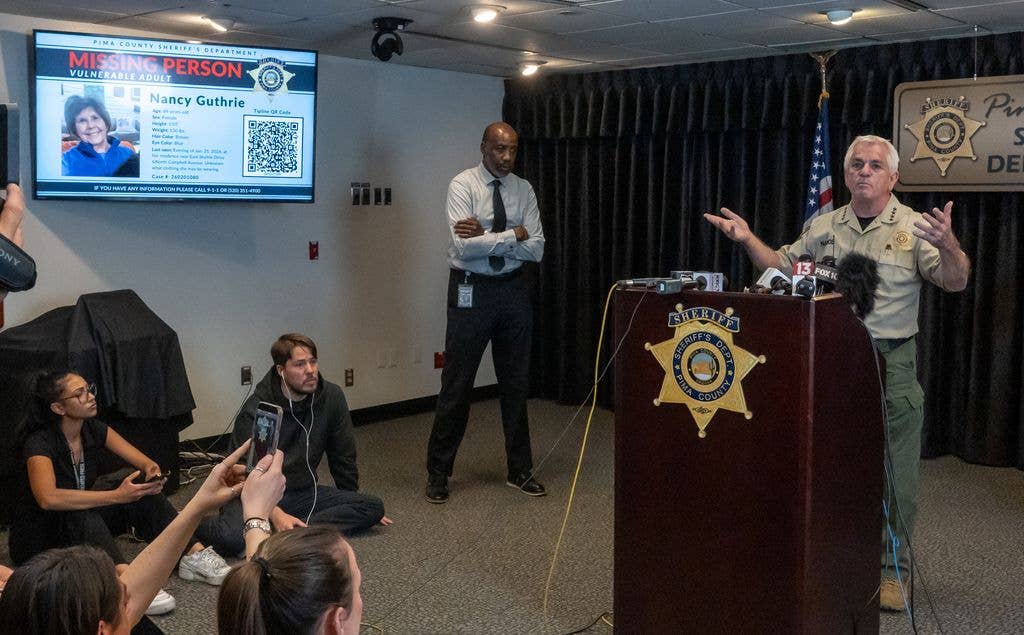 © Getty Images
“It’s built upon the premise that we each carry an idiolect, or a word print, of our own that distinguishes our language from others,” he explained.
Investigators are now hoping someone familiar with the writer’s speech or writing style will recognise particular turns of phrase or unusual language.
The first note, sent to a local television station on February 2, began: “Hello Savannah, we have your mother Nancy. She is safe but scared. She will be held for ransom and once payment is received she will be released unharmed.”
 © Getty Images
Eggington said the heavy use of passive language and structured “if-then” sentences suggests the writer likely has at least a high school education and possibly some university experience.
Small mistakes could prove significant
The notes also contain subtle inconsistencies that investigators are unlikely to ignore.
In one section, the writer correctly spells the word “received” before later misspelling it as “recieved”.
According to Eggington, that inconsistency could indicate the writer either isn’t confident about the spelling or failed to carefully proofread the message before sending it.
 © Getty Images
The second note, which arrived four days later, painted a dramatically different picture.
“Guthrie Family, we did not fully grasp the seriousness of her physical condition. We never intended to hurt her,” it read before claiming Nancy had “perished shortly after she was taken” and was now “buried in nature”.
Eggington believes those phrases are particularly revealing. By describing Nancy in the third person and saying she “perished”, rather than directly acknowledging responsibility, the writer appears to distance themselves emotionally from what allegedly happened.
The unusual phrase “buried in nature” also stood out to investigators, who believe it could reflect a distinctive way of speaking or writing.
Could the notes identify the kidnapper?
While analysing language is only one part of the investigation, experts say it has successfully helped solve high-profile cases before.
Perhaps the most famous example came in 1996, when authorities published the manifesto of Theodore Kaczynski, known as the Unabomber. His brother recognised the writing style and alerted investigators, ultimately leading to Kaczynski’s arrest.
If police identify a suspect in Nancy’s case, they will compare known examples of that person’s writing with the ransom notes to look for linguistic similarities.
However, experts caution that conclusions must be drawn carefully, particularly because the writer may have deliberately altered their natural style in an attempt to avoid detection.
Professor Jeffrey Adler, who teaches the history of American crime and violence at the University of Florida, told the BBC that after six months it “seems like a stretch” that the case will be solved through the notes alone.
Nevertheless, investigators believe making them public offers their best chance of generating new leads.

Savannah’s emotional appeal
Police consulted Nancy’s family before deciding to release the letters. Shortly afterwards, Today presenter Savannah made an emotional plea to the public, urging anyone who recognised the language or knew anything about her mother’s disappearance to come forward.
“We are desperate,” she said. “We need someone to come forward. Someone knows something.” For investigators, that remains the hope.
Read the full article here