

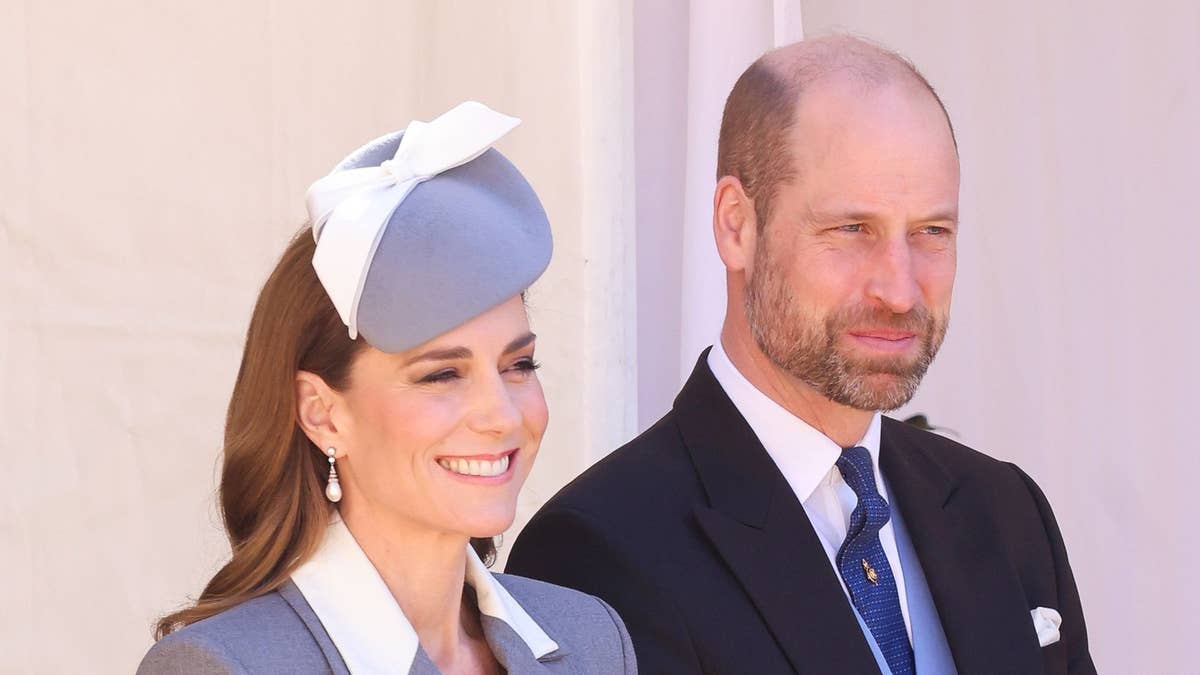

The Princess of Wales has many talents, one of which is her impeccable ability to execute the perfect royal curtsy, which she exhibited for King Charles on Wednesday.
Kate, 44, accompanied her husband, Prince William, to welcome the President of Nigeria and the First Lady for their state visit to the UK.
The royal couple received President Bola Ahmed Tinubu and First Lady Oluremi Tinubu at the Fairmont Windsor Park Hotel, before later being joined by King Charles and Queen Camilla.
Joining his son and daughter-in-law on Datchet Road in Windsor, King Charles walked with the Nigerian president onto the Royal Dais, where Kate offered him a warm welcome, performing a perfect curtsy in the sunlight and greeting the monarch with a cheerful “Morning!”
Kate’s royal curtsies
Unsurprisingly, Kate has perfected the art of the curtsy after years of practice. The gesture, part of royal protocol, is a sign of respect to the monarch and involves a slight bow of the head while bending the knees. For men, the equivalent is a bow. This greeting is typically performed the first time a person sees the King each day.
Last week, Kate demonstrated the gesture once again as she greeted the King at the annual Commonwealth Day service at Westminster Abbey. She attended alongside William, Camilla, Princess Anne and the Gloucesters, and was seen kissing the monarch on the cheek before dropping into a curtsy.
 © Getty
Kate, Oluremi and Camilla’s royal style
On Wednesday, Kate donned a grey Tolu Coker coat dress with a matching Jane Taylor hat and Hugo Boss snakeskin heels. The princess was also spotted holding a clutch bag and wore her long hair in loose curls that cascaded down her back.
Meanwhile, First Lady Oluremi Tinubu donned an emerald green dress, adorned with a pattern, with a golden-yellow silk shawl and matching head scarf. Queen Camilla was in pink, wearing a Fiona Clare cool crepe dress and a matching Philip Treacy pink beret. Camilla also donned two Cartier flower clips, which previously belong to the late Queen Elizabeth II.
Read the full article here