
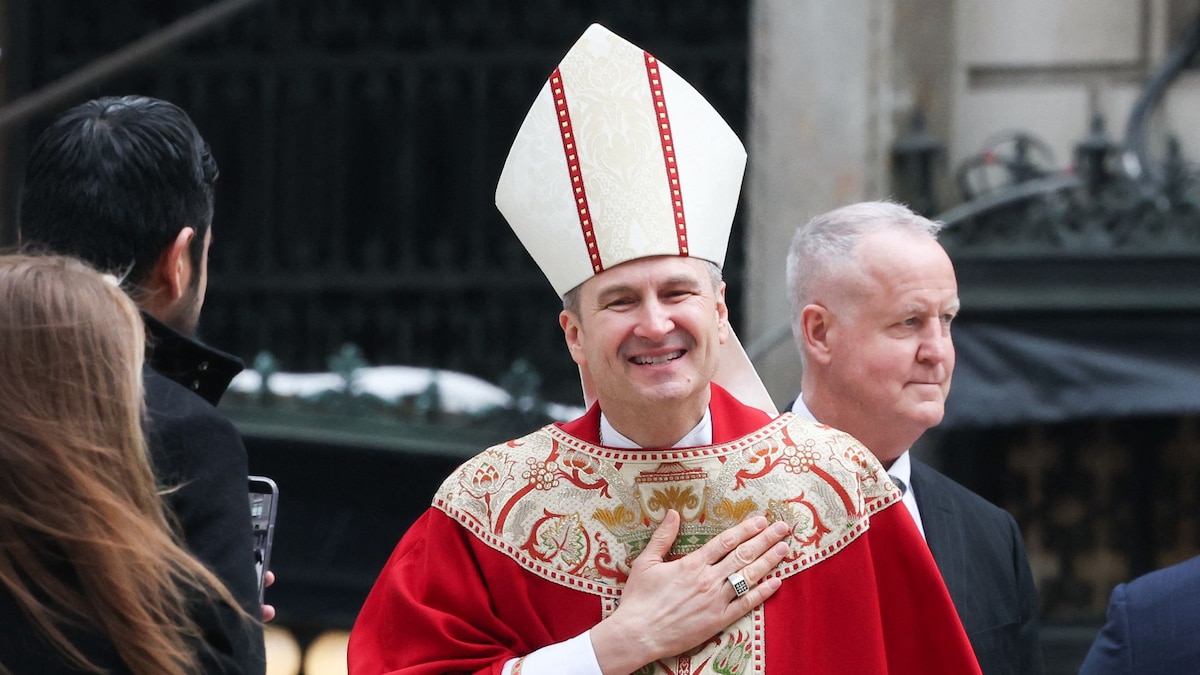

The new Archbishop of New York, Ronald Hicks, stepped into one of the most influential pulpits in the United States and did something unexpected. He opened his ministry in the Big Apple by weaving Bad Bunny lyrics into a homily at St. Patrick’s Cathedral.
“If you want to have fun with charm and style, all you have to do is spend a summer in New York,” he said in Spanish, echoing the opening lines of “NUEVAYoL” by Bad Bunny. The lyric itself nods to “Un verano en Nueva York,” the 1970s salsa anthem by El Gran Combo de Puerto Rico, a group that helped define Latin music’s global reach.
Hicks arrived with rhythm, cultural fluency, and a clear intention to speak the language of the city he now leads.
Music, Faith, and a Cultural Reset
“I love music. And I love all kinds of music. And if you know anything about me, there’s almost always a song playing in my head,” Hicks told the congregation. That line matters. In a city where music shapes identity, neighborhoods, and generations, invoking Bad Bunny inside a cathedral is not random. It reflects the demographic and cultural reality of New York. Latin music is not a trend here. It is infrastructure.
The Archbishop didn’t stop with reggaetón references. He moved across eras and genres, quoting “New York State of Mind” by Billy Joel and “Empire State of Mind” by Jay-Z featuring Alicia Keys. “Some folks like to get away, take a holiday from the neighborhood,” he recited from Joel. Then he invoked the Jay-Z anthem line: “Concrete jungles where dreams are made of. There’s nothing you can’t do.”
Each lyric choice mapped onto a different New York. Working-class nostalgia, ambition and grit, immigrant dreams and urban reinvention.
A Cathedral Moment With Political Undertones
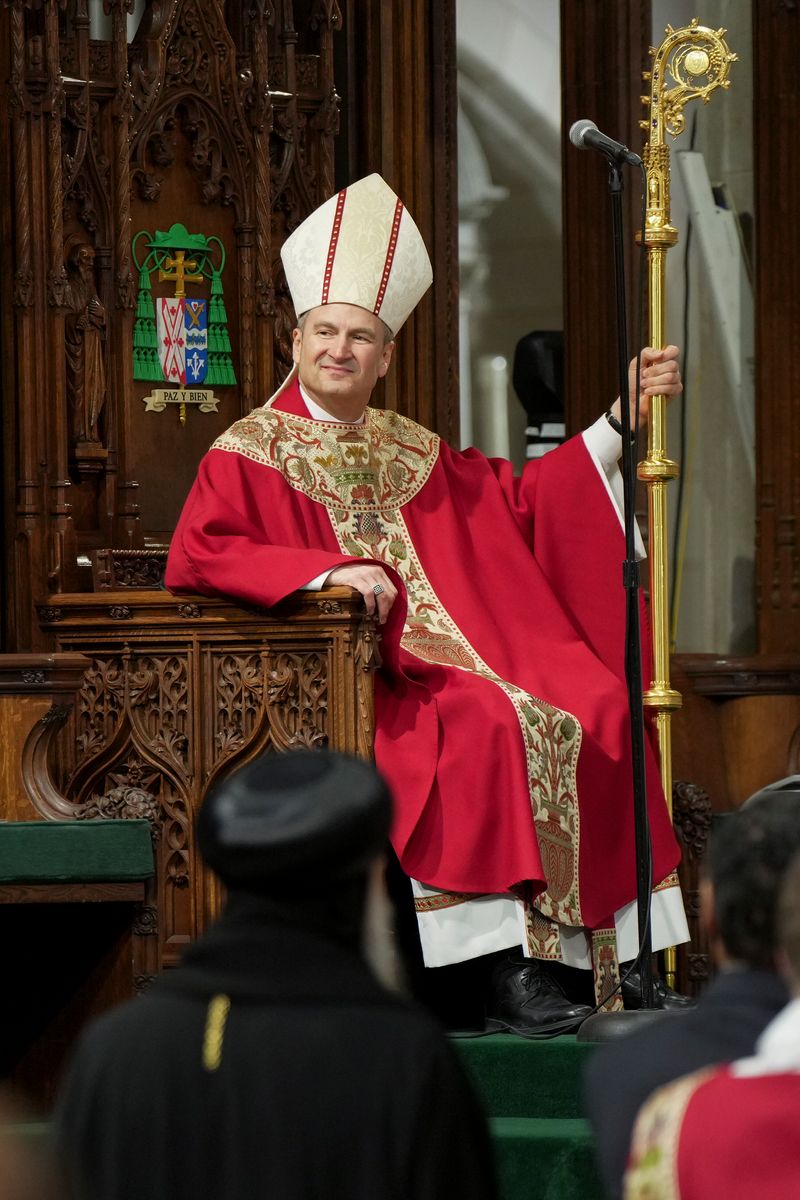
Hicks took possession of his cathedral seat on February 6 at St. Patrick’s Cathedral, succeeding Timothy Dolan. The ceremony carried weight beyond tradition. Throughout the rite, he alternated between Spanish and English, a deliberate acknowledgment of the Latino community that shapes modern Catholic life in New York.
 © Getty Images
His message went further. Hicks called for the defense of migrants and the protection of “human dignity,” placing social justice at the center of his leadership tone from day one. That stance lands in a national climate where immigration remains one of the most polarizing issues in American politics. Referencing Bad Bunny, a Puerto Rican artist who has openly criticized policies, subtly underscored that positioning.
Cultural Fluency as Pastoral Strategy
New York Catholic leadership has historically balanced tradition with visibility in public life. What Hicks demonstrated is something slightly different. Cultural fluency as a pastoral strategy.
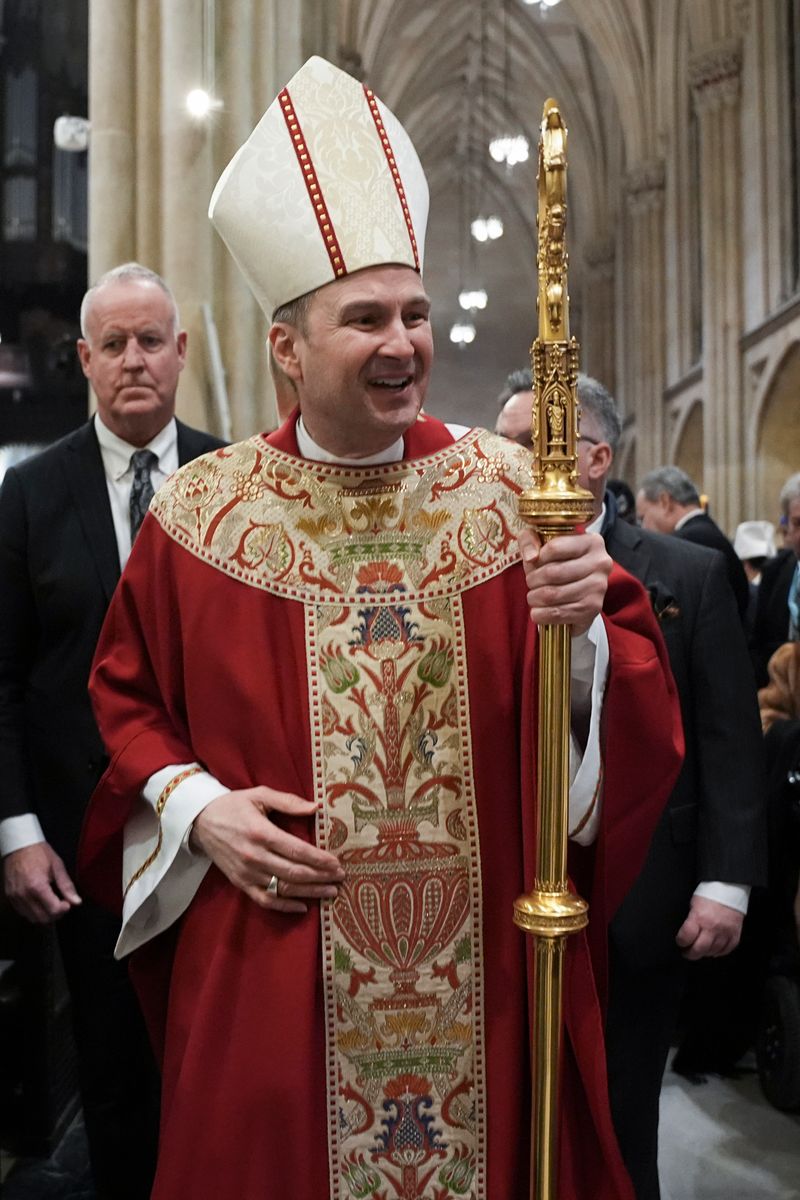
Quoting Bad Bunny inside a homily is about proximity. It says the Church is listening to the soundtrack of its congregation. For younger Catholics and Latino families especially, the gesture reads as inclusion. For older parishioners, the references to Billy Joel and Jay-Z grounded the message in familiar New York mythology.
 © Getty Images
It also reframes how religious authority can operate in 2026. Institutions that ignore cultural signals lose relevance quickly. Institutions that understand them gain trust.
Hicks seems to grasp that instinctively.
The Bigger Picture for the Catholic Church
In cities like New York, the future of parish life depends heavily on immigrant families and bilingual ministry. By blending Spanish and English throughout the ceremony, Hicks acknowledged that demographic shift directly. There is also something symbolically sharp about connecting salsa roots, reggaetón dominance, classic rock storytelling, and hip-hop ambition inside one homily. It mirrors the layered identity of New York itself.
From El Gran Combo’s 1970s salsa celebration to Bad Bunny’s modern reinvention of urban Latin sound, the arc of those references spans generations of migration and cultural evolution.
The Archbishop mapped a city’s emotional DNA onto a spiritual message.
Read the full article here