

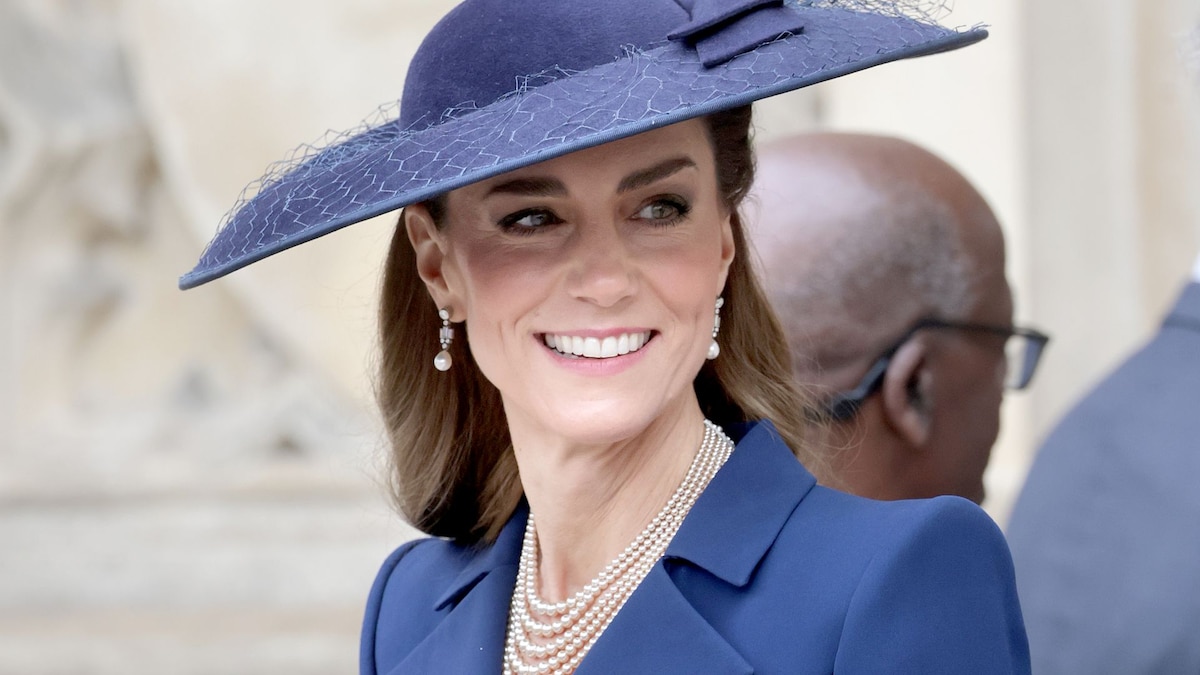

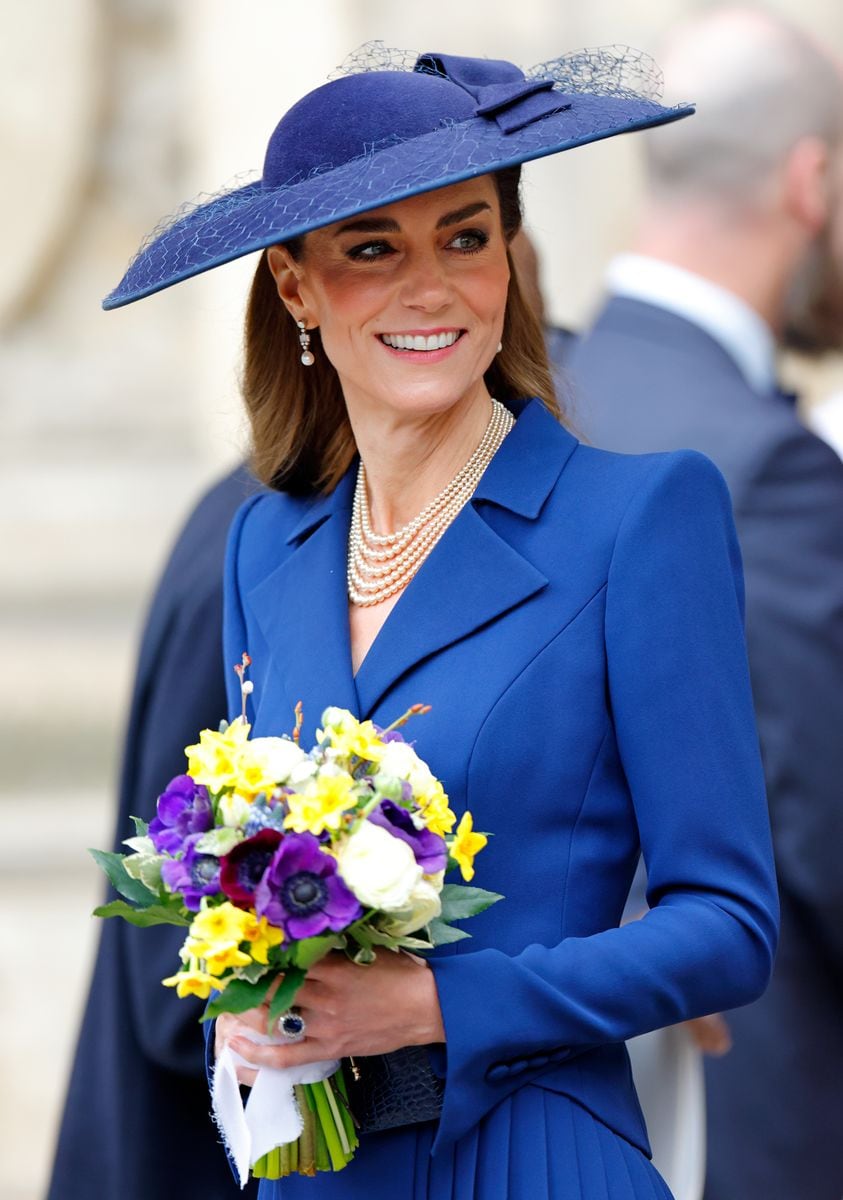
At this point, pearls are practically part of Catherine, Princess of Wales’s uniform. During the annual Commonwealth Day service at Westminster Abbey, the Princess of Wales stepped out in a look that quietly reinforced what has become one of the most defining elements of her royal style, pearls worn with intention.
Kate paired a royal blue coatdress by Catherine Walker with a navy felt hat and a vintage-inspired five-strand pearl necklace from Susan Caplan. The piece, made of faux pearls and dating stylistically to the 1980s, has become one of her most recognizable accessories over the past year, appearing at several high-profile engagements, including Commonwealth celebrations and commemorations tied to the 80th anniversary of Victory in Europe Day.
She finished the look with the Bahrain pearl drop earrings, a treasured piece from the collection of Queen Elizabeth II. The pearls were originally a wedding gift to the then-Princess Elizabeth in 1947, and their continued presence in Kate’s wardrobe has taken on a deeper meaning as the monarchy moves into a new era.
For royal watchers and jewelry historians alike, the Princess of Wales’ embrace of pearls is far from accidental. It reflects a layered visual language rooted in both tribute and continuity.
 © Fox Photos
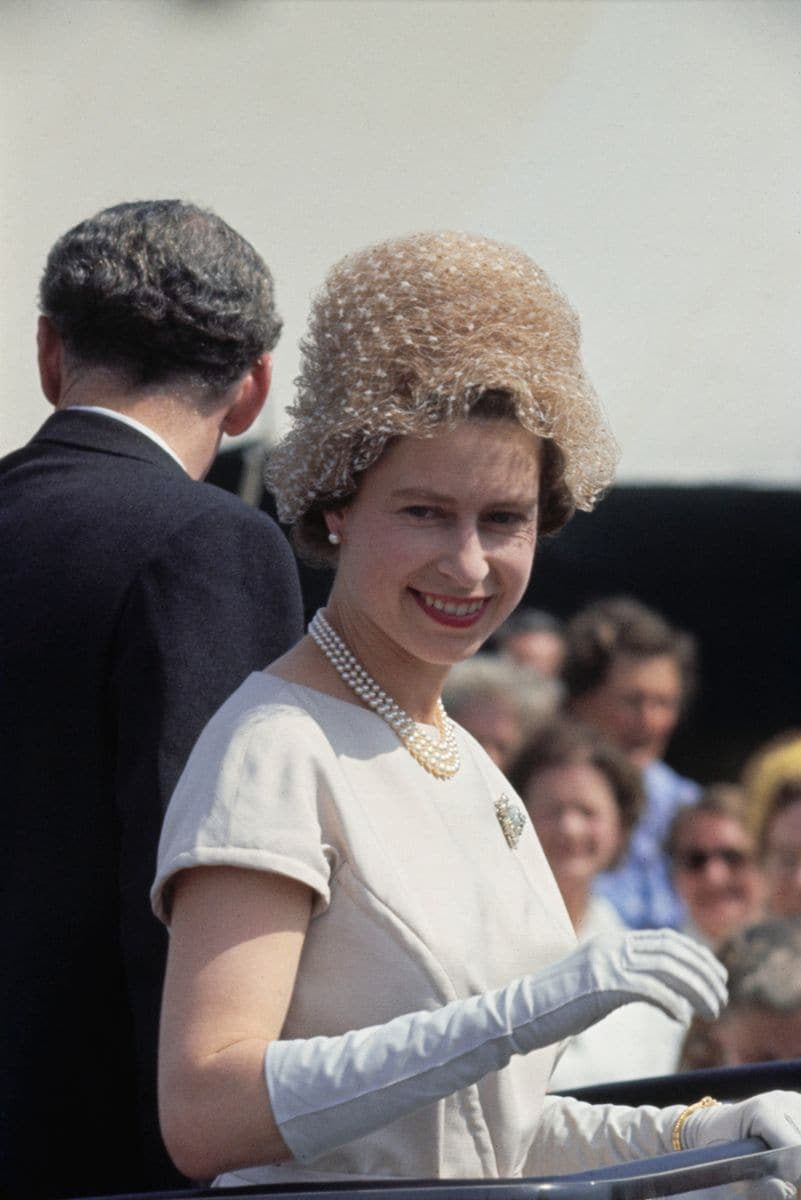
Pearls were famously part of Queen Elizabeth II’s daily wardrobe. The late monarch was rarely seen without her classic three-strand pearl necklace, making the gem something of an unofficial royal staple. By adopting pearls as her signature accessory, Kate both honors that legacy and subtly reinforces the continuity of the institution.
 © Max Mumby/Indigo
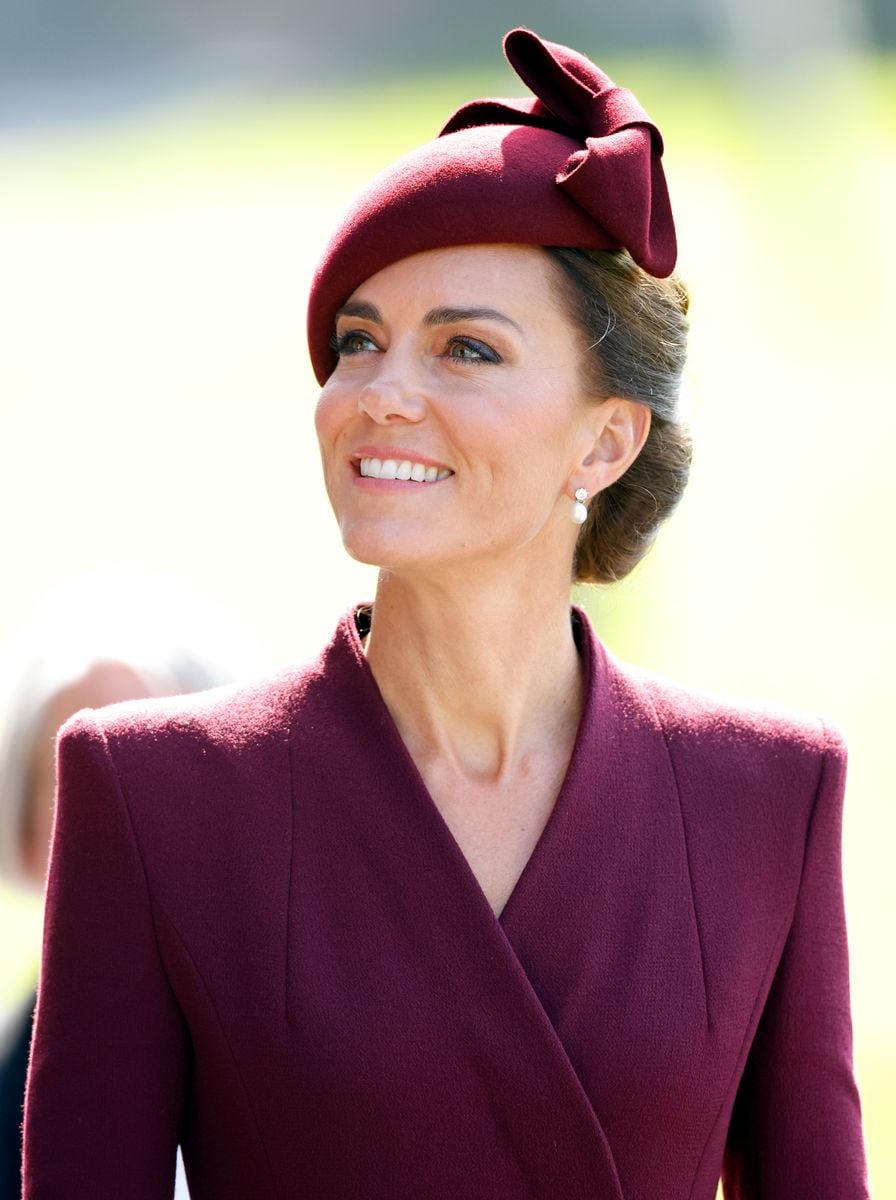
The symbolism runs even deeper. Since the reign of Queen Victoria, pearls have also been associated with mourning in the British royal family. Often referred to as “tears,” the stones became traditional jewelry during periods of grief.
Kate herself underscored this meaning during some of the most solemn moments of recent royal history. At the state funeral of Queen Elizabeth II, she wore the Japanese four-strand pearl choker from the late monarch’s collection, a historic piece created by royal jeweler Garrard.
 © Max Mumby/Indigo
The necklace had also appeared during the funeral of Prince Philip, Duke of Edinburgh, reinforcing the gem’s association with remembrance.
Beyond necklaces and earrings, the Princess of Wales has also revived several archival pearl pieces connected to previous generations of royal women. One example is the three-strand pearl bracelet designed by Nigel Milne for Diana, Princess of Wales, in 1988, another subtle nod to the family’s most influential style figures.
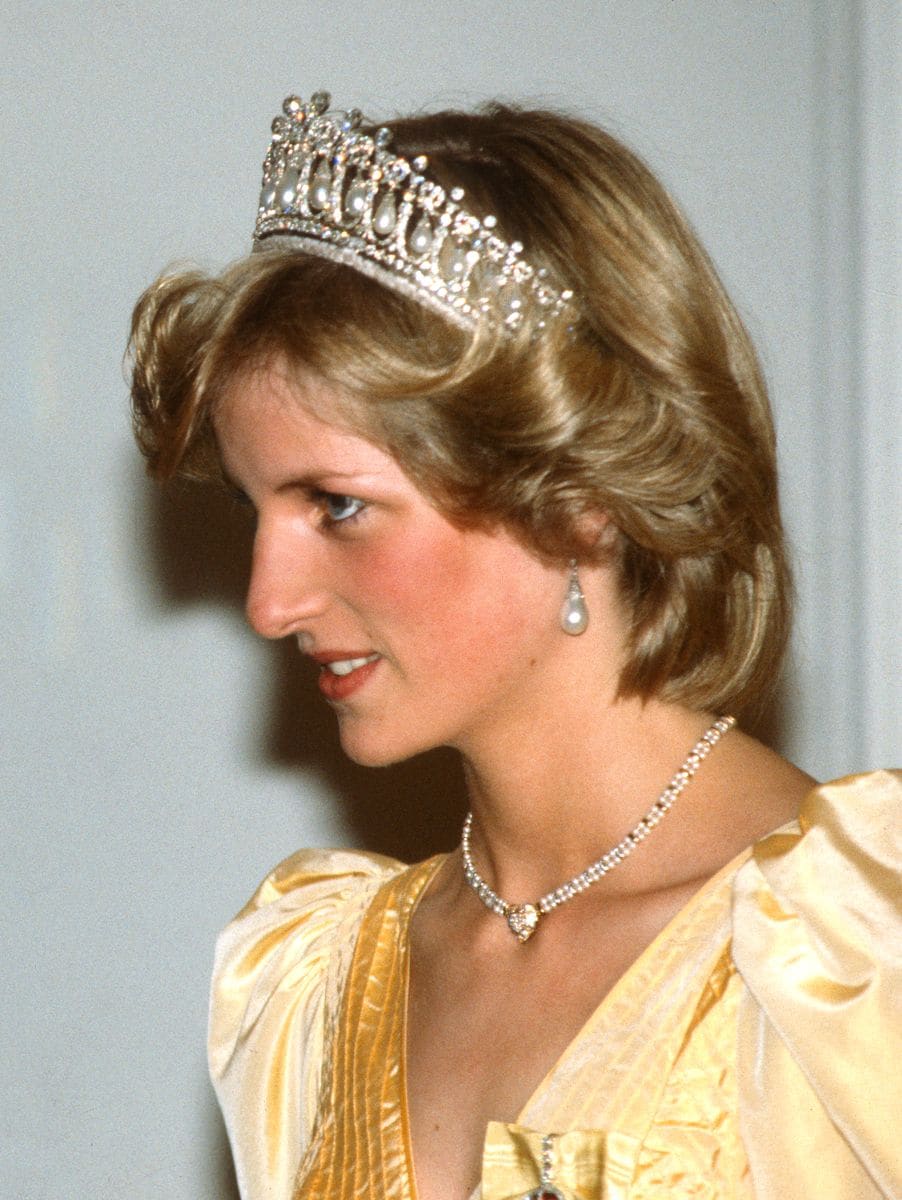 © Anwar Hussein
And while pearls dominate her daywear and ceremonial looks, the most spectacular pieces in Kate’s jewelry box remain the royal tiaras, reserved for the monarchy’s most formal occasions.
To date, the princess has worn five different tiaras, each steeped in royal history. Her most recognizable is the Lover’s Knot Tiara, originally commissioned in 1913 by Queen Mary.
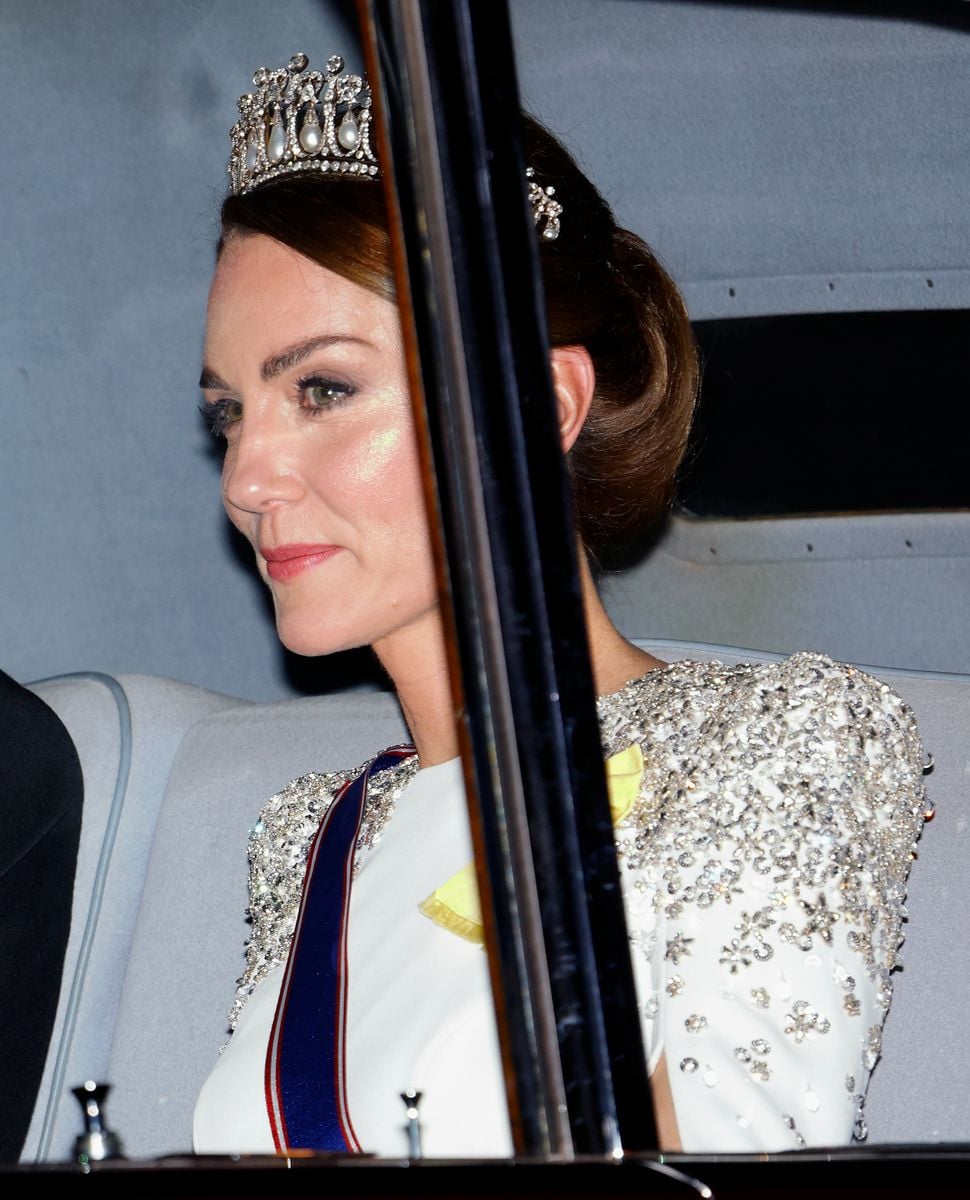 © Max Mumby/Indigo
The piece was later given as a wedding gift to Diana by Queen Elizabeth II and became one of the late princess’s most iconic jewels, despite her once remarking that the heavy tiara often gave her headaches.
Kate has worn the tiara more than ten times, effectively transforming it into her own signature.
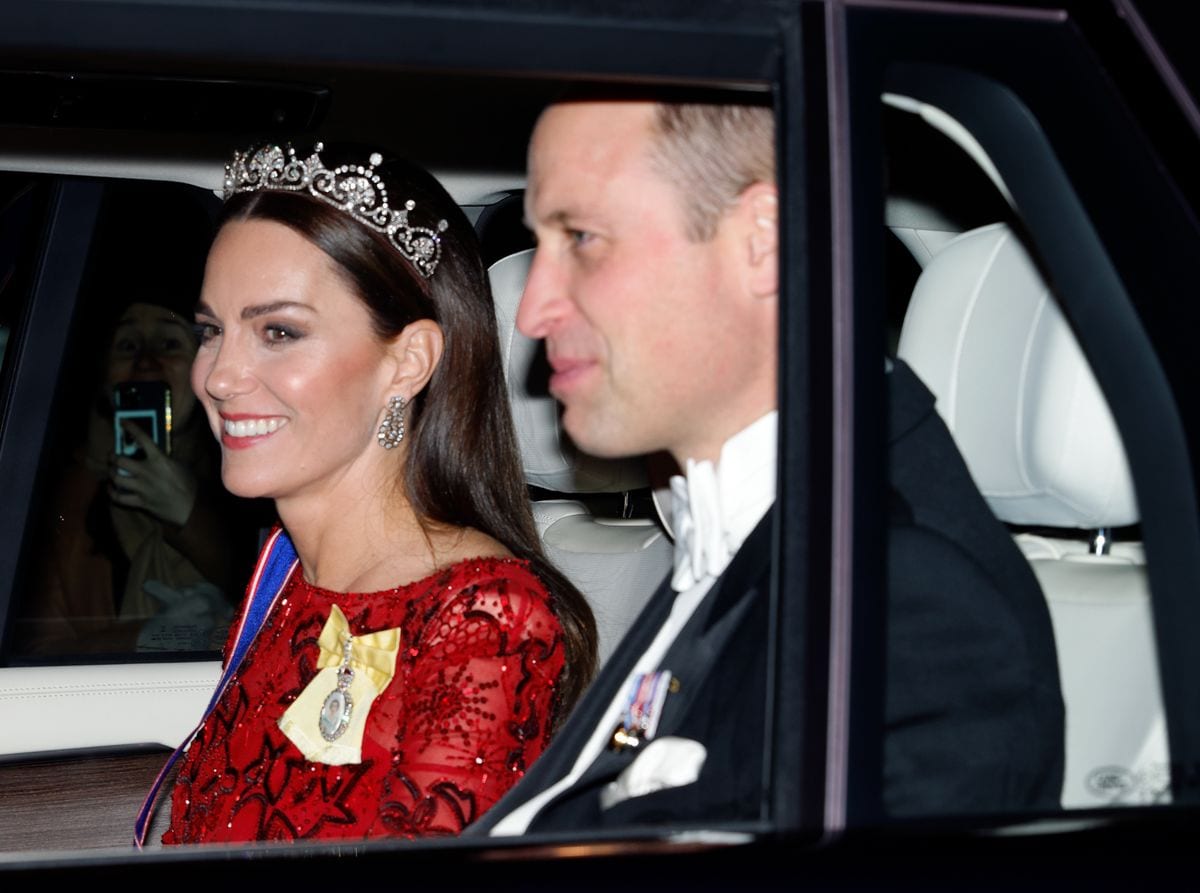 © Max Mumby/Indigo
She has also brought renewed attention to historic pieces like the Lotus Flower Tiara, once favored by Princess Margaret, and the Strathmore Rose Tiara, a floral design that had remained hidden in royal vaults for nearly a century before Kate revived it in 2023.
More recently, in December 2025, she debuted the Oriental Circlet Tiara at a state banquet honoring the president of Germany. Designed in 1853 by Prince Albert for Queen Victoria, the diamond-and-ruby piece marked a historic moment: Kate became the first princess, rather than a reigning queen or queen consort, to wear it.
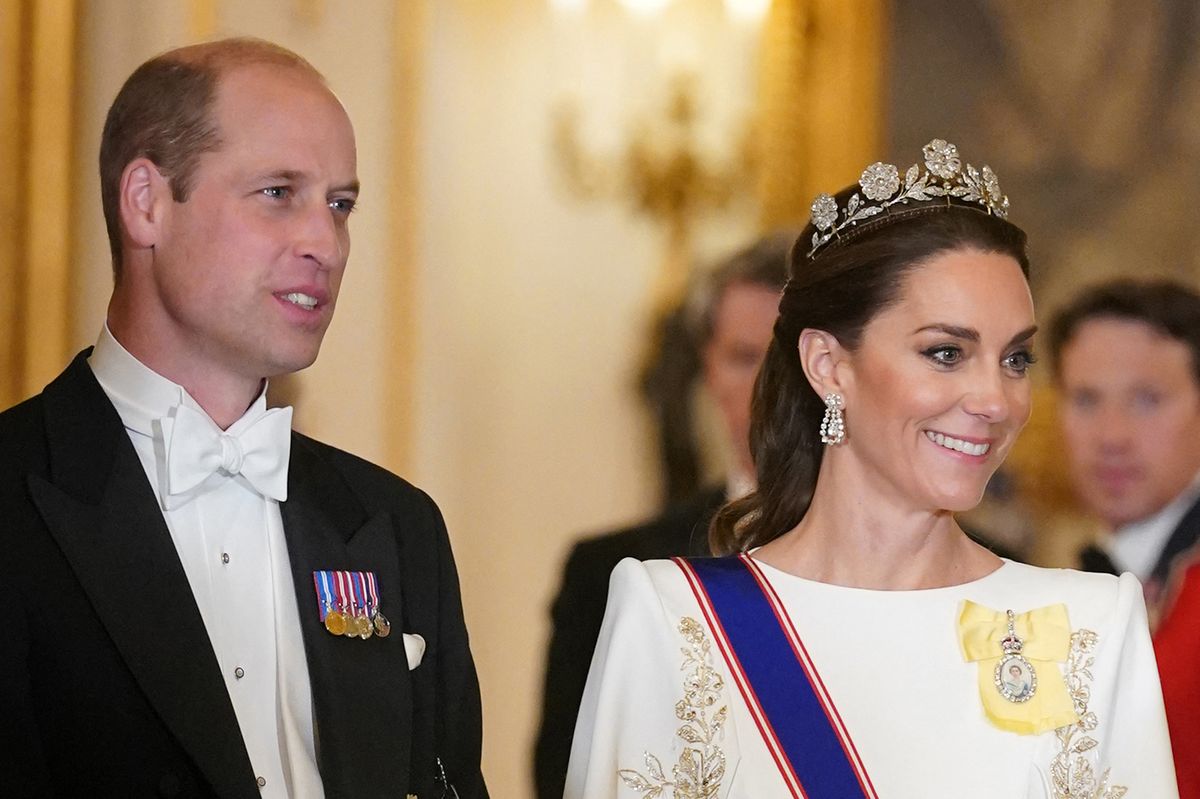 © YUI MOK
Still, it’s the quieter sparkle of pearls that now defines her public image. Just days before Commonwealth Day, during a visit to the Indian community in Leicester on March 5, 2026, the princess was even gifted a garland of roses and pearls, which she briefly incorporated into her white ensemble by Ralph Lauren.
In an era of transition for the royal family, the message behind the Princess of Wales’ jewelry choices is subtle but unmistakable. Through pearls, soft, historic, and steeped in meaning, she appears to be positioning herself as both guardian of tradition and bridge to the monarchy’s future.
Read the full article here