



We all know that eating our greens can support our health, but how exactly can upping your intake of green vegetables like kale change your body? From supporting a strong immune system to reducing your risk of chronic disease, a registered dietitian says the benefits of consuming kale regularly shouldn’t be underestimated.
What happens to your body when you introduce kale
The benefits of consuming kale may be noticed fairly quickly, according to Avery Zenker, a Registered Dietitian with a Master’s in Nutrition. “If you consume kale regularly, you may experience a number of health benefits. The health properties of kale can benefit the heart, blood vessels, brain, skin, bones, eyes, gut, liver, immune system, and more. Many of the health benefits of kale are subtle and may not be obvious by how the mind and body feel, but we can expect that changes are happening under the surface,” she told HELLO!.
“If your baseline diet is very low in fibre, adding kale to your typical intake can improve blood sugar regulation, appetite, cholesterol levels, gut health, and digestion.”
Benefits from day one:
The high fibre content of kale means you may notice a difference in the way you feel quite quickly. “After a day or two of eating kale, the gut microbiome will likely shift. The nutrients in kale interact with gut bacteria, impacting how they function and potentially shifting the composition. The gut microbiome can change within as little as 24 hours of dietary changes. How healthy our microbes are impacts how healthy we are,” Avery explains.
“On day one, you’ll get a variety of nutrients and antioxidants from kale, including fibre, vitamins, minerals, and polyphenols. These nutrients start working in your body right away. You might feel fuller and more satisfied after a meal with kale due to its fibre content and volume. You may also have a more stable blood sugar response after eating kale due to its fibre content.”
Support a healthy heart in one week:
Meanwhile, after just a week of consuming kale on a regular basis, you may notice even more improvements. The dietician shares: “Within the first week, the most noticeable changes may be cardiovascular effects from vasodilation. Dark leafy greens like kale contain natural nitrates that convert to nitric oxide, reducing blood pressure and arterial stiffness (3). Even one meal with a very large serving of kale could cause immediate reductions in blood pressure that last over three hours (2). The vasodilation properties of kale may also be helpful for athletic performance. Some people may experience improved bowel regularity due to kale’s high fibre content.”
Improved gut health in one month:
The health benefits don’t end there; by incorporating kale into your daily diet long-term, you may also observe changes to your gut health, along with measurable improvements to your blood pressure or cholesterol levels.
“By week two, you might start to experience reductions in cholesterol or triglycerides if they were high to begin with. You may continue to experience improved bowel regularity and vasodilation. The gut microbiome may continue to shift towards promoting beneficial bacteria,” Avery says.
 © Getty Images
“After a few weeks to a month, you may have measurable improvements, like lower cholesterol, decreased blood pressure, and reduced blood sugar, if these measures were high to begin with. Your taste buds may also be adjusting, and you might start enjoying bitter veggies like kale more.”
Long-term benefits of kale:
If you can commit to eating kale each week for a year, you may well notice some other improvements to your well-being, but it will depend on the quality of the rest of your diet, along with what your health was like previously.
The dietician shares: “Over a year of regular kale consumption, there may be a continued decreased risk of chronic diseases. Each 0.2 serving daily increment of green leafy vegetables is associated with a 13 per cent lower risk of type 2 diabetes, while regular intake is correlated with reduced arterial plaque and cardiovascular disease risk through its antioxidant properties (3). The combination of improved insulin sensitivity, lipid profiles, gut microbiome benefits, and reduced inflammation contributes to overall metabolic health.

“If you’re adding kale into a low-fibre diet, you can expect more benefits than if you’re simply swapping your daily spinach for a serving of kale. The more drastic the change, the more drastic the outcome. You might boost your fibre intake to higher than average.”
Avery adds: “Long-term regular consumption of kale may help reduce risk of certain chronic diseases, like cardiovascular disease, type 2 diabetes, certain cancers, and digestive conditions (2). Eating kale regularly also has been shown to benefit the gut microbiome, fat metabolism, and immune response (2).”
However, kale alone won’t fix all your health concerns if you’re otherwise eating an unhealthy diet. “The benefits listed are not guaranteed, but they’re a good estimate based on the available evidence. No single food can take the place of a healthy diet and lifestyle, but it can contribute meaningfully to overall well-being,” the expert advises.
Health benefits of kale explained:
So what are the properties of kale that make it so nutritious? This humble green has properties that can benefit the heart, blood vessels, brain, skin, bones, eyes, gut, liver, immune system, and more.
 © Getty Images
“Kale is packed with nutrients. Kale is a source of fibre, iron, calcium, magnesium, potassium, vitamin A, B vitamins (B1, B2, B3, B5, B6, and B9), vitamin C, vitamin K, and phytonutrients. It contains antioxidants including polyphenols, carotenoids, glucosinolates, and flavonoids,” Avery says. “The various antioxidants in kale help the body recover, repair, and protect itself from cellular damage. Kale contains antioxidants like beta-carotene, chlorophyll, lutein and zeaxanthin. The vitamins, minerals, fibre, and polyphenols in kale can help lower inflammation.”
As well as being high in fibre, kale is also an excellent source of vitamin C, providing over 100 per cent of daily vitamin C recommendations in 100 grams raw. Meanwhile, by weight, kale has twice as much calcium as milk.
Recommended ways to eat or serve kale:
The dietician has also shared some recommended ways to prepare and serve kale, not only to improve its taste, but also to add extra nutritional benefits. “Kale is excellent both raw and cooked, from fresh, frozen, or dried sources. Eating kale along with a source of fats, like olive oil or avocado, helps increase absorption of its fat-soluble nutrients, vitamin A and vitamin K,” she says.
“Unlike some other leafy greens, it’s very hardy and holds its structure well. Kale goes great in stir-frys and scrambled eggs. It can be tossed into soups, stews, and curries. Make a creamy chickpea coconut milk curry with a handful of kale. Add kale to a sheet pan with other vegetables, seasonings, and oil to make a roasted vegetable mix that can be paired with a variety of dishes.”
Meanwhile, sandwiches and salads are another great way to add kale into your daily diet, as Avery suggests: “Lightly saute kale with garlic, oil, salt, and seasonings, and add it to wraps, sandwiches, toast, grain bowls, and more. Serve it as a side dish to any meal of the day.
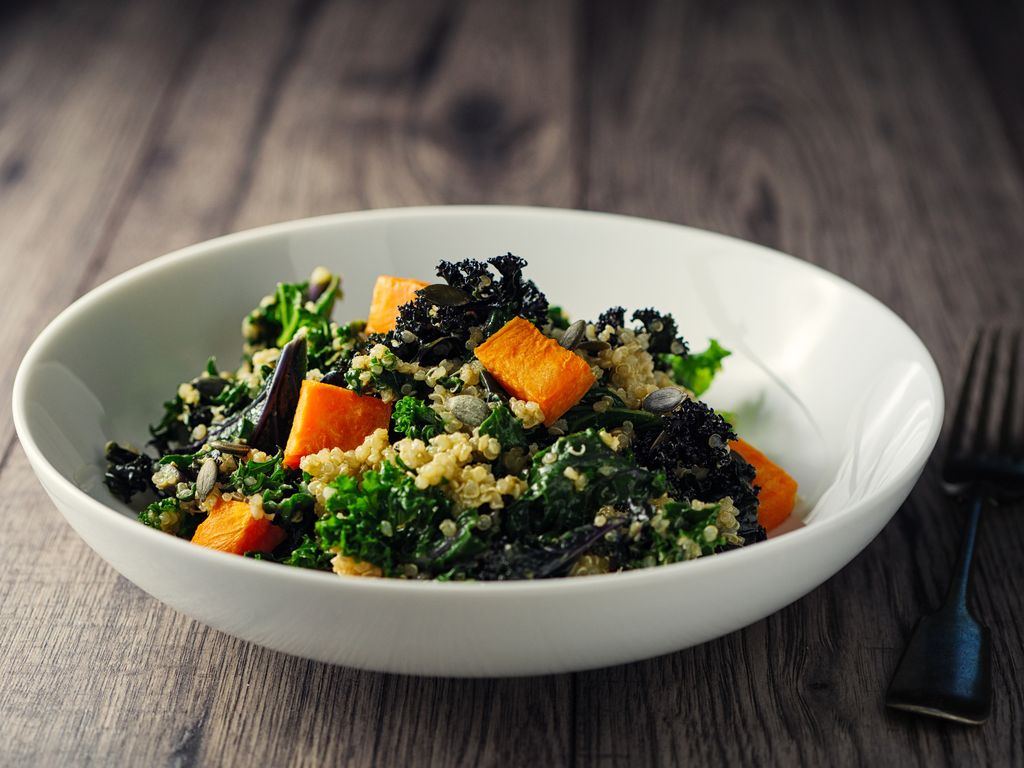
“If you’re serving a kale salad, massage the kale with your hands before adding it to help soften and improve the texture. Baby kale is much softer than larger kale leaves and may not even need massaging. Try a creamy tahini dressing made with tahini, lemon juice, black pepper, and garlic. Kale goes well with a variety of salad ingredients, like sweet potato, onions, carrots, avocado, pumpkin seeds, walnuts, chickpeas, lentils, edamame, nutritional yeast, couscous, bulgar, and quinoa.”
Kale can also be blended into smoothies. “I’d recommend blending kale with water or liquid first to get it smooth, then adding other ingredients,” Avery says. “Kale goes well with bananas, pineapple, and mangoes. Frozen, fresh, and powdered kale work well in smoothies.”
Sources:
- https://fdc.nal.usda.gov/food-details/326196/nutrients
- https://www.mdpi.com/1420-3049/30/21/4214
- https://www.jacc.org/doi/10.1016/j.jacc.2016.10.086
- https://pubmed.ncbi.nlm.nih.gov/34432833/
Read the full article here