
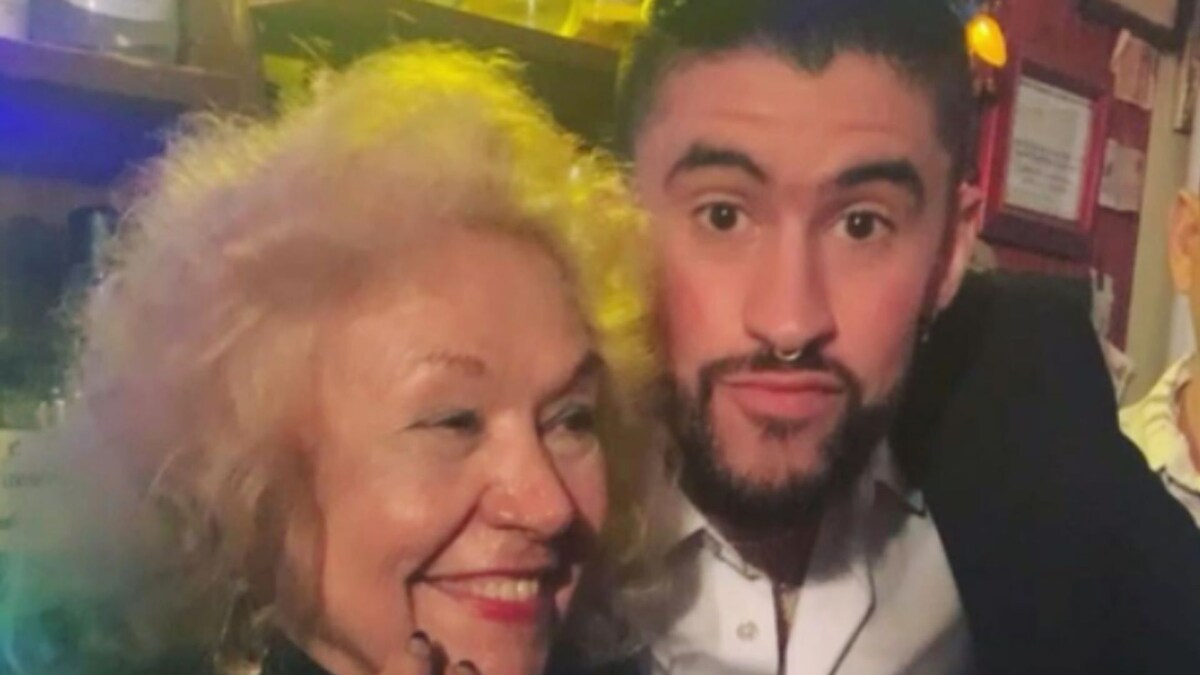

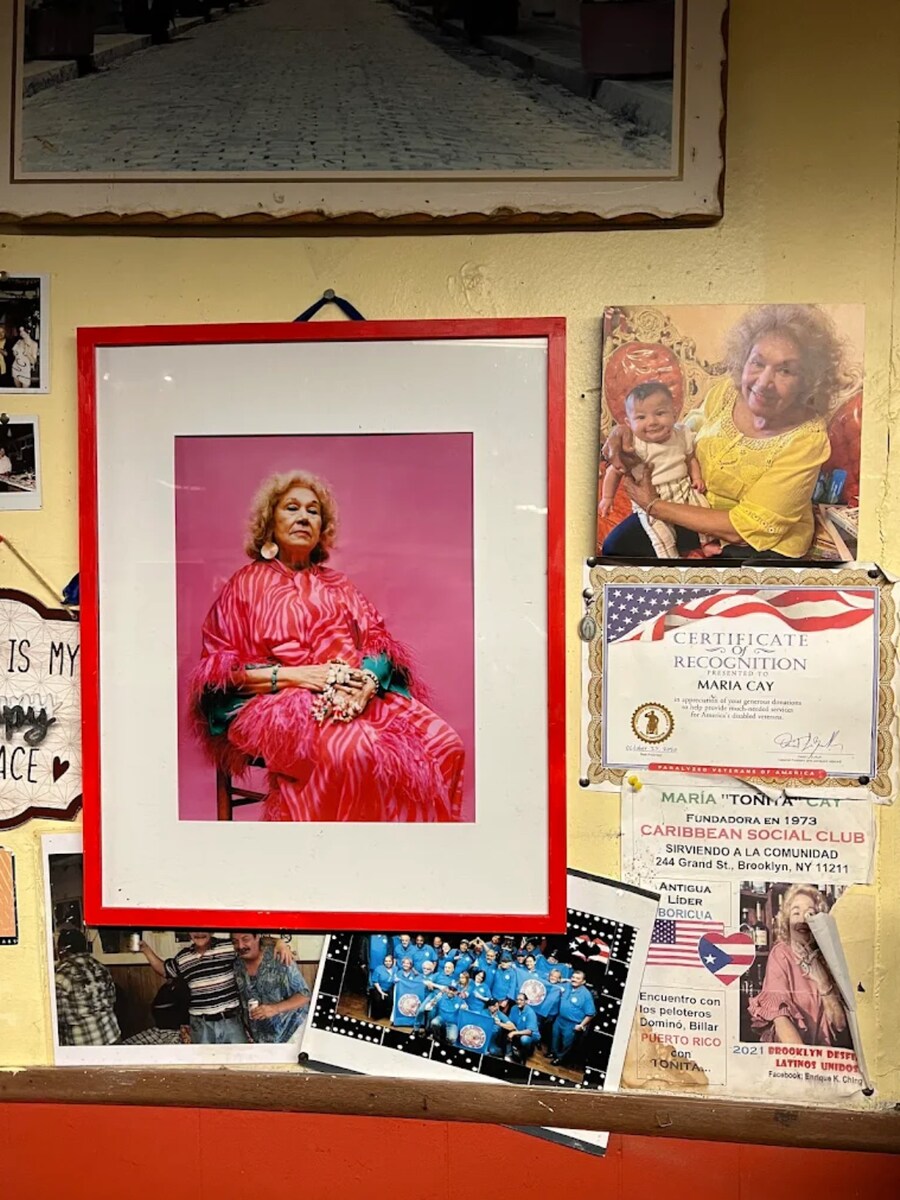
Toñita is not a myth, a character, or a lyrical metaphor. She is María Antonia Cay, a Puerto Rican-born matriarch who founded and still presides over the Caribbean Social Club in Williamsburg, Brooklyn. Born in Puerto Rico in 1940, Cay migrated to New York City as a teenager in the 1950s, part of the massive mid-century Puerto Rican migration that reshaped neighborhoods like Williamsburg and the South Bronx.
She worked in the garment industry for years before opening what would become one of the most culturally significant Puerto Rican social clubs in the city.
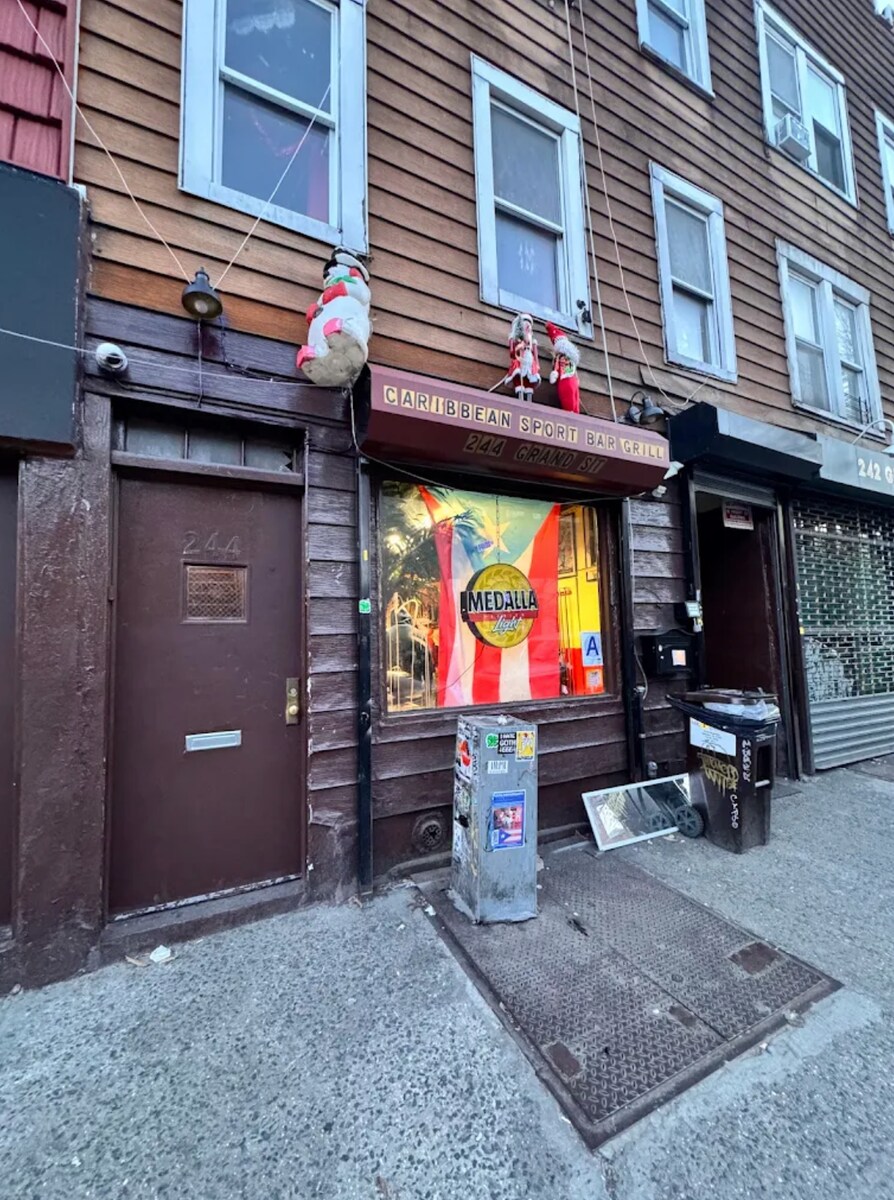
Founded in the 1970s in “Los Sures,” Williamsburg’s historically Puerto Rican south side, the Caribbean Social Club started as a gathering space tied to a local baseball team. Over time, it evolved into a living room for the diaspora.
Dominoes, salsa, Spanish conversations, home-cooked food, and affordable drinks. It was never about luxury. It was about belonging. In a neighborhood transformed by gentrification, where longtime residents have been priced out and cultural spaces erased, Toñita refused to sell — even when developers reportedly offered millions. That refusal turned her from a neighborhood fixture into a cultural symbol.
 © @tonitasny
Why Toñita Matters in Puerto Rican and Nuyorican Culture
Toñita’s significance goes beyond nightlife. Her club functions as an informal infrastructure. During crises like COVID-19, she provided meals. For immigrants and working-class families, she offered stability. Patrons describe the space as “home.” That word matters.
For Puerto Ricans in New York — often called Nuyoricans — identity has always been shaped by migration. New York became shorthand for departure from the island. It was both an opportunity and a rupture.
Social clubs like Toñita’s stitched those ruptures together. Inside those walls, Puerto Rico isn’t nostalgia, it’s routine. Language flows freely, and music sets the rhythm. Elders are respected, while newcomers are folded in.
 © @tonitasny
Toñita herself operates as a matriarchal figure. She is often described as a grandmother, mother, and caretaker. Not in a symbolic way. In a lived way. She feeds people, remembers them, and enforces rules that protect the space. That is why she resonates. She represents intergenerational continuity in a city that constantly reinvents itself.
Why Bad Bunny Keeps Honoring Toñita
Bad Bunny’s tributes are not one-off gestures. They form a pattern. In 2022, he celebrated a project launch at Toñita’s club. In 2025, he referenced her in the song “NUEVAYoL” with the lyric about taking a shot at Toñita’s house — not a random house, but a real, visitable address.
He brought her to a Puerto Rico-themed late-night television appearance, placing her in the front row. He featured her in the “Nuevayol” music video. During his Puerto Rico residency events, she traveled to the island as an honored guest.
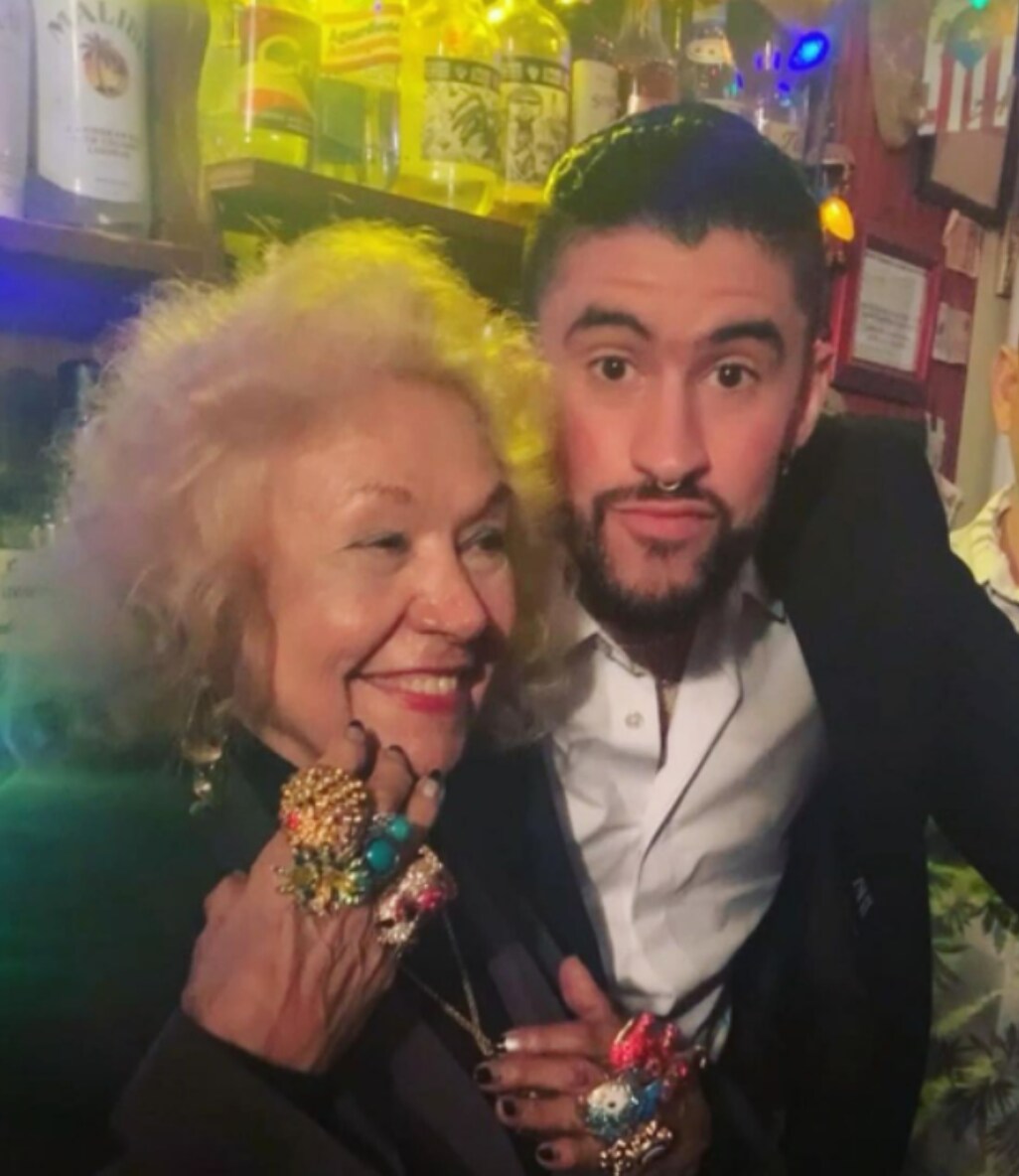 © @tonitasny
Then came the most visible moment: the Super Bowl halftime show in 2026. During the performance of “NUEVAYoL,” the set recreated Toñita’s club, right down to the 244 Grand Street address. She appeared on stage and served him a shot, a literal reenactment of the lyric. It was deliberate cultural positioning.
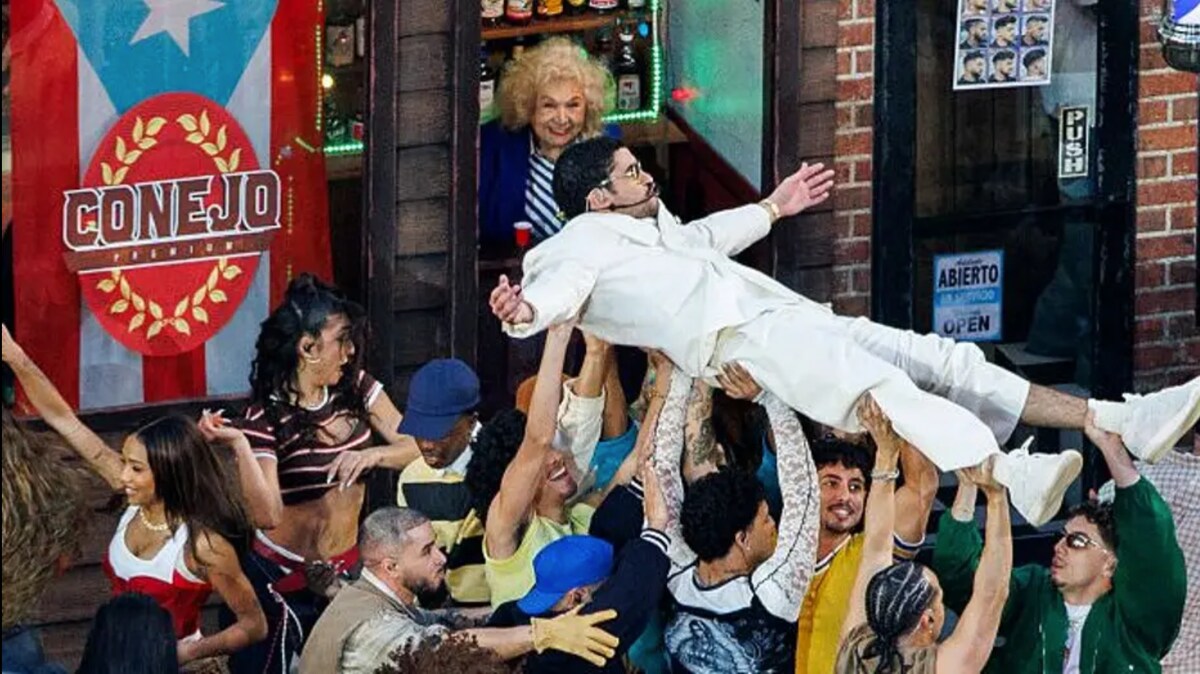 © @tonitasny/NFL
Bad Bunny’s larger artistic project consistently centers on Puerto Rico, migration, and resistance to displacement. By spotlighting Toñita, he elevates a real neighborhood institution instead of abstract symbolism. He makes the local global.
Diaspora, Resistance, and Cultural Memory
Toñita embodies three forces that define modern Puerto Rican identity: migration, matriarchy, and resistance. Migration shaped Brooklyn’s Puerto Rican neighborhoods. Matriarchs sustained them. Resistance keeps them from disappearing.
In Williamsburg, Toñita’s club is one of the last surviving Puerto Rican social-club spaces of its kind. That alone makes it historically important. But her refusal to sell, to dilute, or to rebrand amplifies the symbolism.
The Bigger Picture
Toñita’s story connects generations. Younger audiences discover her through Bad Bunny. Older community members see recognition as long overdue. Her club bridges working-class history and global pop culture. It shows how neighborhood institutions anchor identity far more powerfully than polished venues ever could.
Toñita is not a background figure in Bad Bunny’s narrative. She is a cornerstone. A living institution. A reminder that home can exist in exile — and that resistance sometimes looks like keeping the lights on, the dominoes clicking, and the doors open.
And now, thanks to global stages and deliberate artistic choices, the world knows exactly where 244 Grand Street stands.
Watch Toñita serving shots here.
Read the full article here