

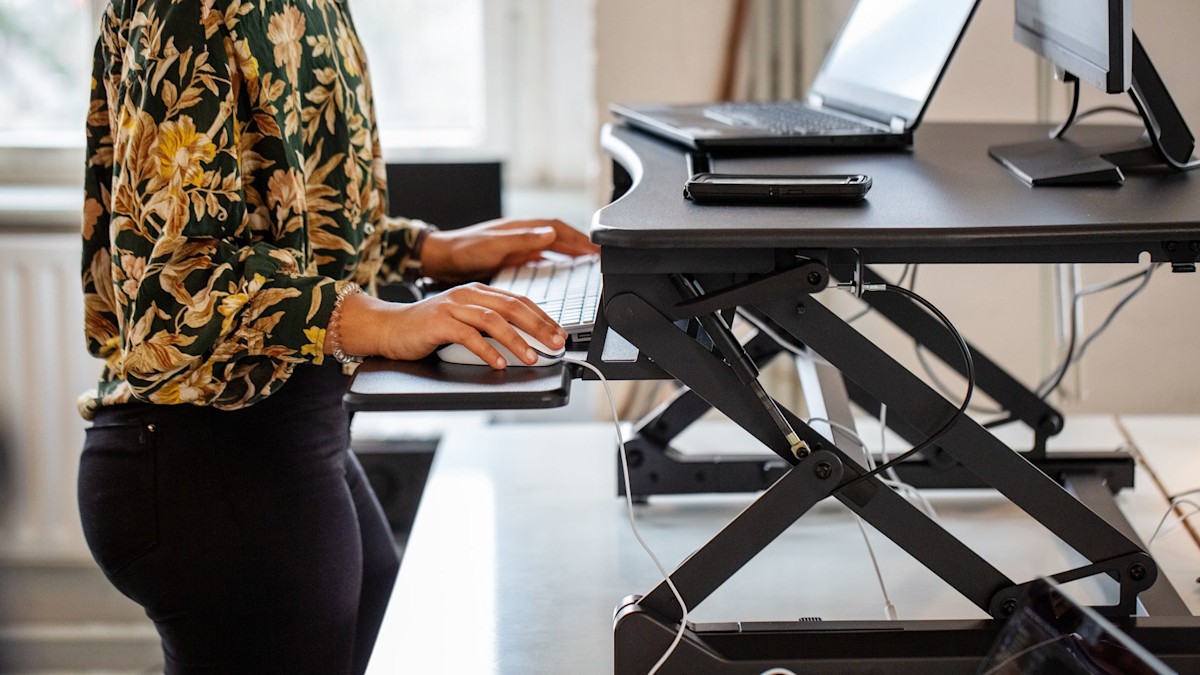

The modern working affliction of spending too long sitting down can be damaging to health, which may be why search interest in standing desks was up by more than 20 per cent in 2025.
While we try to bio-hack our way out of desk fatigue with expensive office tech, we might actually be ignoring the gold standard of leg health, which we can learn from our grandparents. Unlike today, previous generations naturally broke up their workdays with their daily tasks, such as walking across the office to physically file papers and taking proper outdoor lunch breaks.
A doctor has warned that swapping sitting down all day for standing may put strain on your legs and veins in a different way, but we should be focusing on the old-school mindset of varied movement with everything in moderation.
Dr Andrew Ingles, Vascular Doctor at UK Vein Clinic, explains: “Standing desks can be a great tool to help us decrease the time we spend sitting down. Prolonged sitting (for hours at a time) increases strain on the veins and makes it harder for blood to flow upwards, which can lead to blood pooling in the legs. Symptoms of this include swelling, aching, heaviness and varicose veins.”
While standing more is beneficial for circulation, he adds that standing for too long can also create vein pressure. “Standing, on the other hand, encourages more subtle muscle engagement, especially in the calves, which act as a natural pump to help blood back up to the heart. However, as with most things, moderation is key,” the doctor shares.
“Too much standing, particularly static standing where you’re not moving your feet or shifting your weight, can be just as unhealthy for your legs, again leading to increased vein pressure. This is especially true if you already have symptoms such as varicose veins or you tend to maintain poor posture when standing, such as locking your knees or leaning heavily on one hip.”
He adds: “Standing desks are beneficial for our vein health when they encourage more movement such as small stretches, shifts and walking breaks, rather than long, static standing.”
What a healthy sit-stand balance looks like during a typical workday
Instead of swapping sitting for spending all day standing, Dr Ingles recommends the following approach for a healthy sit-stand balance.
“Our veins like variation. Alternating between sitting, standing, and short bursts of intentional movement is the best approach for maintaining good vein health. For example, you might want to sit down for concentrated work, while standing may be better suited for lighter tasks such as planning, reading, or sending emails,” he says.
 © Getty Images/iStockphoto
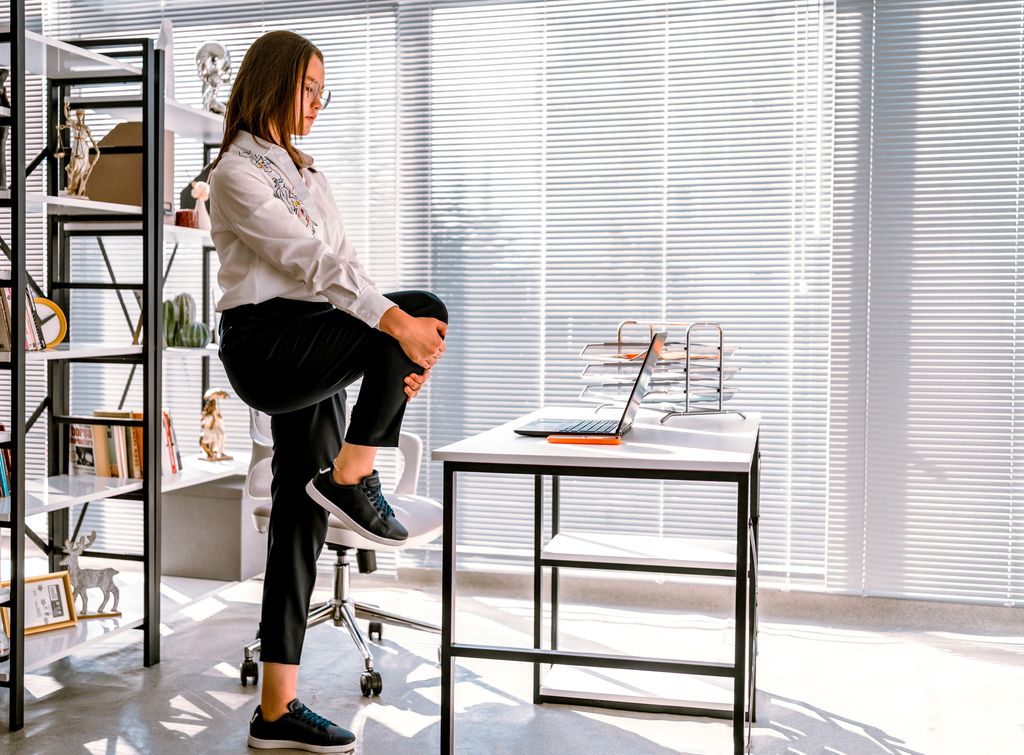
“Incorporating movement might be doing simple stretches such as touching your toes, or going for an outdoor walk on your lunch break. This combination keeps blood flowing efficiently and can help reduce the risk of vein problems.”
Five quick exercises for desk-based workers to boost circulation
To keep your blood flowing and support leg and vein health during a day at the office, give these simple exercises a try. “Boosting circulation during a busy workday doesn’t have to be overly complicated, and most people can likely do a combination of these exercises without thinking about it,” says the vascular doctor.
- Heel-to-toe rocking: Rock back and forth on your feet by gently alternating between lifting the heels and balls of your feet. It’s a great way to keep the legs active.
- Calf raises: This engages your calf muscles, which act as a natural pump, forcing blood towards your heart.
- Walking: Whether it’s walking to the water fountain to fill up your bottle or taking the stairs instead of the lift, low-impact activities are great for getting blood pumping.
- Ankle circles: This improves blood flow around the ankle and reduces stiffness.
- Seated marching: This keeps your hip and thigh muscles active and boosts blood flow.
How to support healthy circulation and keep your vein health in check
 © Getty Images
The doctor suggested the following:
- Exercise – Working the muscles in your legs, through activities such as cycling, swimming and hiking, strengthens the veins so they can manage the flow of blood more effectively. Aim for at least 30 minutes of exercise most days.
- Healthy diet – There isn’t a specific ‘vein diet’, but certain habits can help. Getting enough fibre (from vegetables, fruit and wholegrains) can help prevent constipation, which can increase pressure in the abdominal and leg veins. Reducing very salty foods may also help limit fluid retention in people prone to ankle swelling.
- Maintaining a healthy weight – Excess body weight makes veins more vulnerable to damage because it increases the pressure on them. Research suggests this effect is more significant in women.
- See a doctor – If you experience persistent aching, heaviness or swelling at the end of the day, it’s recommended you see a GP or vein specialist. Vein disease is progressive, meaning it gets worse over time, so these early signs of vein strain are easier to treat – and far simpler to manage – when addressed promptly.
Read the full article here