



Carín León’s week has been filled with literal highs and lows ahead of his album’s release, Muda, which dropped today. He’s been celebrating in Mexico City with HOLA! along for the fun, but after a press conference and release party, his partner, Meylin Zúñiga, was injured when the elevator carrying them fell one floor. Thankfully, they are both okay, the show continues to go on, and MUDA is officially available to stream on all platforms.
To say Leon is going outside the regional Mexican box on the album is an understatement. With MUDA, it’s clear he is fully uninterested in pretending he ever belonged in one to begin with. MUDA is a project built around transformation, risk, and instinct.
It’s an album where salsa sits next to blues, cumbia bleeds into pop, and norteño crashes into rock influences that have quietly shaped him since childhood. “With MUDA, we went looking for new sounds and musical horizons beyond our regional roots,” Leon explained at the press conference. “The goal was to take the project to other countries and other languages.”
A huge part of that evolution came from the creative circle behind the album, especially longtime collaborator and musical genius, Edgar Barrera. Leon repeatedly described the 29 Latin Grammy Awards and 1 Grammy Award winner as both a “maestro” and a close friend during the project’s rollout, crediting him with helping shape some of the album’s biggest sonic risks.
MUDA was created alongside Barrera, producer Casta, Spreadlof, and a group of writers and musicians, Leon says, who already understand how he thinks creatively. Instead of entering sessions with strict formulas, the process sounded intentionally random in the best way possible. “We’d say, ‘Okay, let’s make ska now. Let’s make salsa. What do we feel like doing?” Leon said during the press conference.
That freedom runs through the entire record. “Carranga” with Juanes pulls from Colombian folk traditions and old-school Mexican double entendres. “Bingo” with Rawayana leans into nostalgic salsa. “En La Misma Cama” drifts into blues-infused pop. The final track, “Ay Lupita,” feels like a modern take on Mexican mambo and quebradita, mixing chaotic dance-floor energy with a more modern sound, especially through Leon’s auto-tuned vocals.
In fact, Leon admitted that for years, people told him not to make the kind of music he wanted to make. Early in his career, when he started blending regional Mexican with other sounds, he was worried audiences would reject it completely. “I put one song as a bonus track because I thought people were going to say, ‘This guy became a pop singer,’” he recalled. Instead, it became one of the songs fans connected to most.
That moment confirmed what he already suspected – sincerity mattered more than formulas. “It was pure sincerity and honesty in the music that got me here,” he said.
 © Provided
MUDA also closes a creative world Leon has been quietly building for years across albums like Colmillo de Leche, Boca Chueca, and Palabra de To’s. Every title revolved around the mouth, voice, expression, identity, and language. This time, the symbolism evolves into shedding skin.
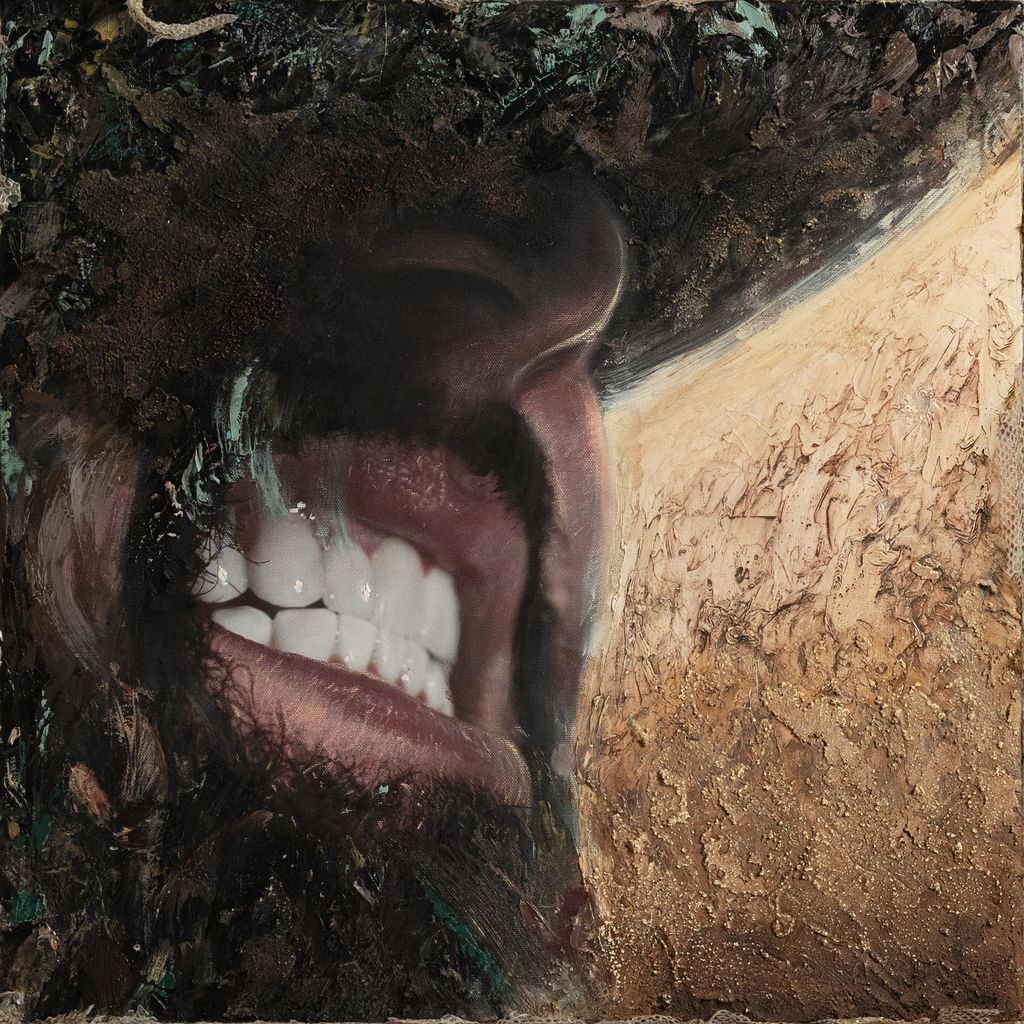
“The title references Hermosillo because the H is silent,” he explained, “but it’s also about a ‘muda de piel.’” The visual concept reflects that shift, too. For the first time, his mouth appears fully uncovered on an album cover.
 © Provided
The oil-painted artwork, created with Alan Ortega, was intentionally “washed out,” revealing something more raw underneath. Leon described it as moving toward something “more raw. More real.”
And even as his music expands globally, Hermosillo remains at the center of everything he does. He still lives there, his producers are from there, his musicians are from there, and most of his team are childhood friends.
The album jumps from heartbreak to devotion to ego to nostalgia, and above all, is an example of an artist fully trusting his instincts and making the kind of music he wants to, even if it feels like a risk.
Even now, with stadium tours, a Sphere Las Vegas show, and a Tokyo festival headline slot ahead of him, Leon insists he still feels nervous every time he releases music. “When an artist thinks they already know everything,” he said, “that’s when the artist dies.”
Read the full article here