



Brain lymphoma is a rare and aggressive disease – the mere mention of it may strike some of your deepest health fears. But why are some cases of the disease linked to the very common glandular fever, also known as the “kissing disease” or mononucleosis, that is often transmitted by the Epstein-Barr virus (EBV)?
We wanted to know exactly what this condition is and, more importantly, clarify the actual risk of developing it if you’ve ever had glandular fever (an ailment not to be confused with the recent ‘unprecedented’ Meningitis B outbreak).
Two of Spain’s renowned medical experts, Dr Adolfo de la Fuente of MD Anderson Cancer Centre in Madrid, and haemato-oncologist Dr Agustín Penedo, helped answer some common questions.
“Brain lymphoma is an aggressive type of cancer which, though rare, is very well-characterised,” explains Dr De la Fuente of the cancer which directly affects the central nervous system. “It is what is called a diffuse large B-cell lymphoma.”
Unlike other lymphomas that develop in the lymph nodes, this type can appear in the brain because the lymphocytes – the cells that cause the disease – can infiltrate almost any organ or tissue. While this type of cancer isn’t common, early diagnosis is key because symptoms sometimes mimic neurological conditions such as stroke, which also has signs you should never ignore.
Dr Agustín Penedo explains that brain lymphoma is a type of non-Hodgkin lymphoma (NHL) that specifically affects the central nervous system (CNS). This includes the brain, spinal cord, meninges, or eyes, and is diagnosed when there is no evidence of the disease elsewhere in the body.
It is broadly categorised into two types:
- Primary CNS Lymphoma: The most common form, accounting for roughly 1-2% of all NHL cases and 4% of primary brain tumours. Diffuse large B-cell lymphoma, a particularly aggressive subtype, is the most frequent diagnosis.
- Secondary CNS Lymphoma: This occurs when a systemic lymphoma spreads to the central nervous system. It is much less common for the disease to present in this way initially.
What is the Epstein-Barr Virus?
The Epstein-Barr virus (EBV) belongs to the herpes family and causes infectious mononucleosis. It is estimated that around 90% of the population will have been exposed to a herpes virus at some point in their lives.
However, having had an EBV infection doesn’t guarantee further complications. “It absolutely does not mean that people who have, or have had, the infection will go on to develop lymphoma. Not at all,” clarifies Dr Penedo.
Transplant patients, whether solid organ or stem cell, who have had an Epstein-Barr infection, can be at higher risk
On the other hand, for immunocompromised people the risk can be higher. “These patients require immunosuppressive treatment to prevent organ rejection, and that suppressed immune system can leave them more vulnerable to lymphoproliferative disorders linked to the Epstein-Barr virus,” explains Dr De la Fuente.
In such cases, the process is slightly different: it isn’t that a viral infection directly triggers lymphoma, but rather that the virus can reactivate. This can lead to an abnormal buildup of lymphocytes – a type of white blood cell. “These are well-recognised conditions, such as EBV-positive post-transplant lymphoproliferative disorder (PTLD). It has very specific characteristics and can often have a positive outcome if caught early,” adds the specialist.
Red Flag Symptoms: When to See Your GP
The symptoms of brain lymphoma vary depending on which part of the brain is affected. “Because the skull is a fixed, enclosed space, any mass – no matter how small – can disrupt neurological function, often causing noticeable symptoms from a very early stage,” explains the haematologist.
Warning signs can include slurred speech, mobility issues, weakness in the limbs, memory problems or even changes in personality. It is therefore extremely important not to ignore any new or worsening neurological symptoms; if you have any concerns, you should see a specialist or your GP immediately.
 © Getty Images
Diagnosis and Treatment
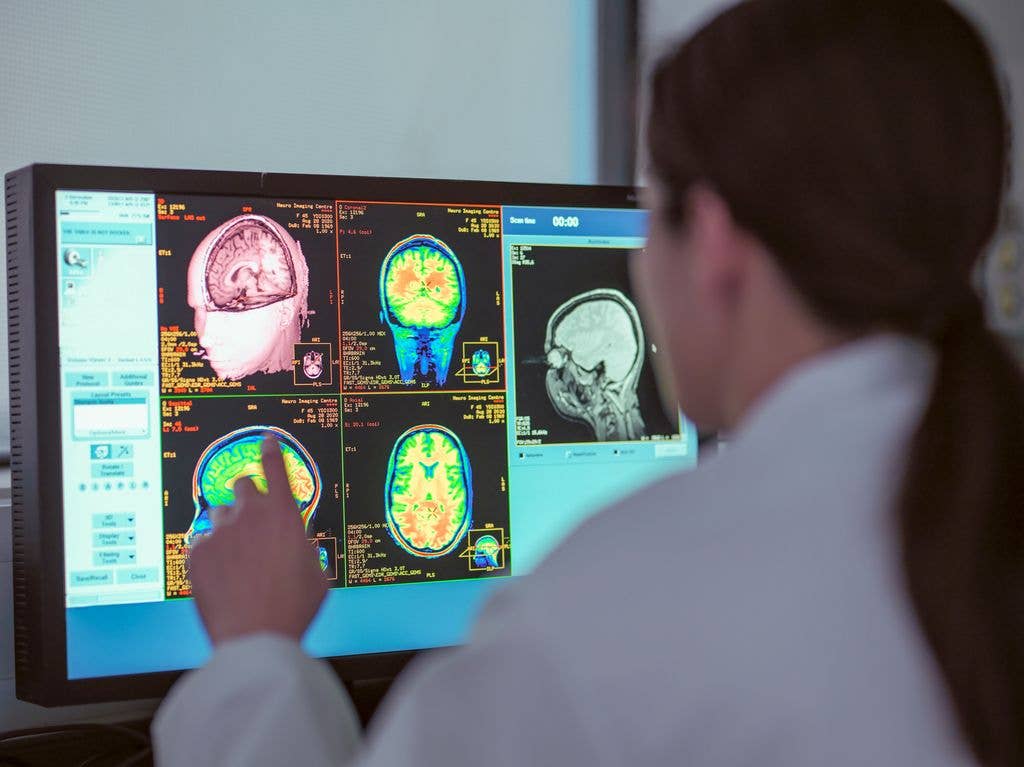
Neuroimaging plays a vital role in diagnosis. A contrast-enhanced MRI scan will typically reveal lesions deep within the brain. However, a definitive diagnosis is reached via a brain biopsy, which remains the “gold standard”. This allows clinicians to identify the specific subtype and test for the presence of the Epstein-Barr virus.
Brain lymphoma prognosis – plus who is most at risk?
While the presence of EBV doesn’t fundamentally alter the treatment for brain lymphoma itself, it does shape the clinical approach based on the patient’s immune system.
For patients with a healthy immune system, treatment usually involves high-dose immunochemotherapy, typically using methotrexate. For those living with HIV or for transplant recipients, the focus often shifts to optimising antiviral therapy or reducing immunosuppression to help the body’s own immunity fight the virus.
According to Dr Penedo, the prognosis varies. “Immunocompromised patients with EBV-positive brain lymphoma have a median survival of two to three years, whereas for those with a healthy immune system, this can exceed five years.”
While the Epstein-Barr virus is linked to certain cases of brain lymphoma, particularly in those with weakened immune systems, it is not a direct or universal cause
What is certain is the importance of early diagnosis and specialist follow-up, especially for neurological symptoms that don’t clearly align with other conditions, such as a stroke.
The key lies in tailoring the treatment to each patient, and acting quickly. Fortunately, medicine is advancing, and the biology of these types of tumours is becoming better understood every day, allowing for more effective and promising interventions.
About the experts:
- Dr Adolfo de la Fuente is the Head of Haematology at MD Anderson Cancer Center Madrid-Hospiten. He is a renowned specialist with extensive experience in clinical research and innovative cancer treatments.
- Dr Agustín Penedo is a specialist in Haematology and Haemato-Oncology at HM Hospitales in Madrid. He has a focused expertise in treating lymphoid pathologies.
Read the full article here