



Princess Charlene cut a casual figure as she attended the Together Crossing for the Pelagos race in Monaco.
The 48-year-old opted for a laid-back look for the event, sporting a navy polo shirt along with white trousers.
Styling her blonde locks into a sleek updo, Charlene completed her ensemble with white trainers and a pair of sunglasses.
She attended the event with her husband, Prince Albert, 68, who wore a white polo shirt and beige trousers.
The Together Crossing for the Pelagos is a 225-kilometer water bike relay race across the Mediterranean Sea. The event promotes drowning prevention and marine conservation.
The race, co-organised by the Princess Charlene of Monaco Foundation and the Prince Albert II of Monaco Foundation, requires elite athletes to pedal specialized water bikes in an uninterrupted relay.
Teams departed the Tuscan port city of Viareggio and arrived on the sands of Larvotto Beach in Monaco where they were greeted by Charlene and Albert.
The race was won by Team Lionheart, made up of Gustav Larsson, Veronika Larsson, Jeremy Josserand and Alex Bennett, who completed the relay in exactly 24 hours.
Humble beginnings
Former Olympic swimmer Charlene, who met her husband at the Mare Nostrum international swimming meet in 2000, has been open about how her life changed drastically following her royal wedding in 2011.
Perhaps one of the most marked differences between her pre-royal life and today is her living arrangements.
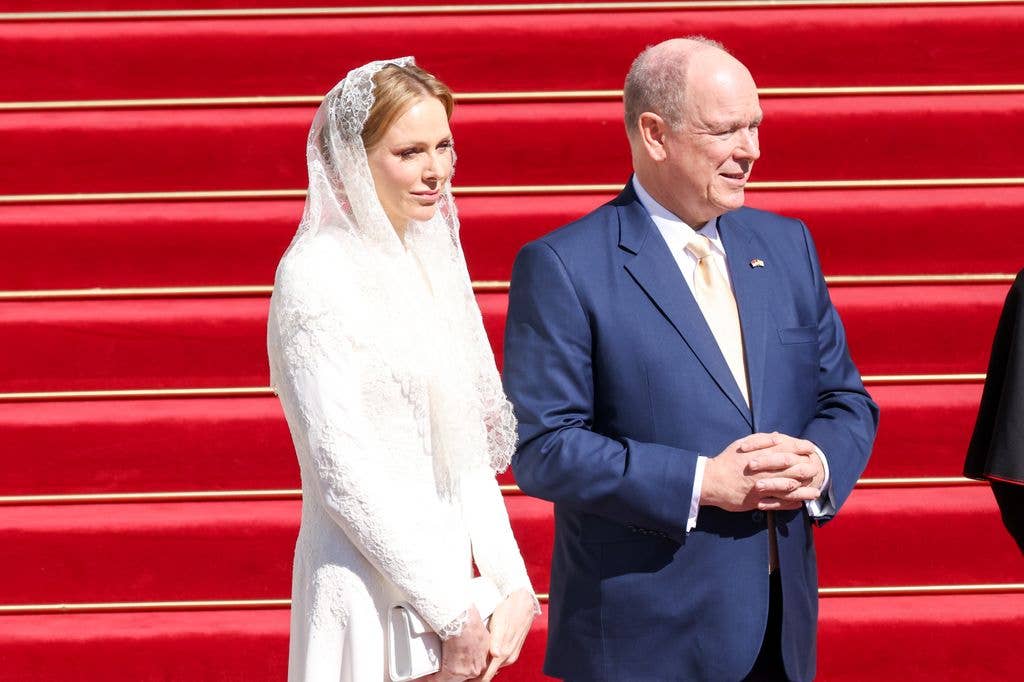 © Getty
After growing up in Bulawayo, Zimbabwe, 12-year-old Charlene and her swimming teacher mother, Lynette, and photocopy salesman father, Michael, moved to Benoni.
Speaking previously to The Times, she reflected on how she falls back into a very normal dynamic when visiting her childhood home, but she continues to fear for her parents’ safety.
She said: “I worry about them a lot. I worry about the fact that people break into the house and they’ve been robbed many times. There have been a lot of killings on our street.
“If you’re not from a very wealthy background – and we are from a very lower-middle-class income – you can’t afford to live in a secure area. But they wouldn’t have it any other way; they are happy.”
Read the full article here