

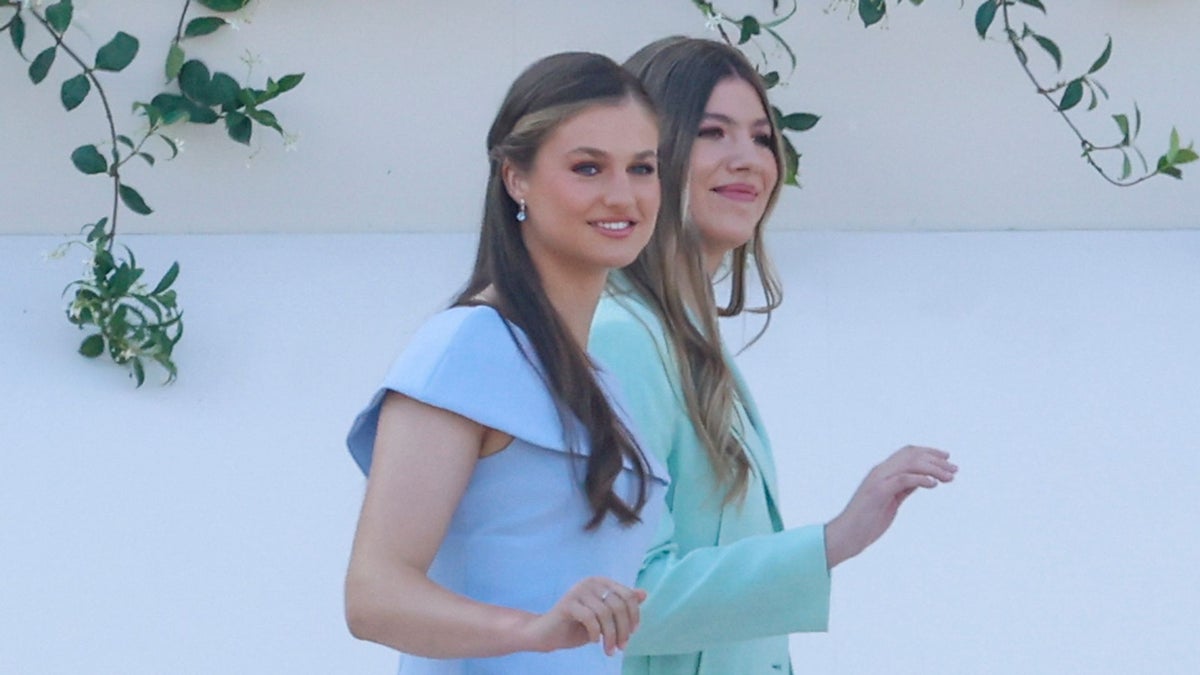

Madrid is experiencing one of its most significant days of the year with Pope Leo XIV’s official visit to Spain. Following yesterday’s reception with the King and Queen and Infanta Sofía, Princess Leonor made another public appearance this Sunday at the massive outdoor Mass held in Madrid’s Plaza de Cibeles.
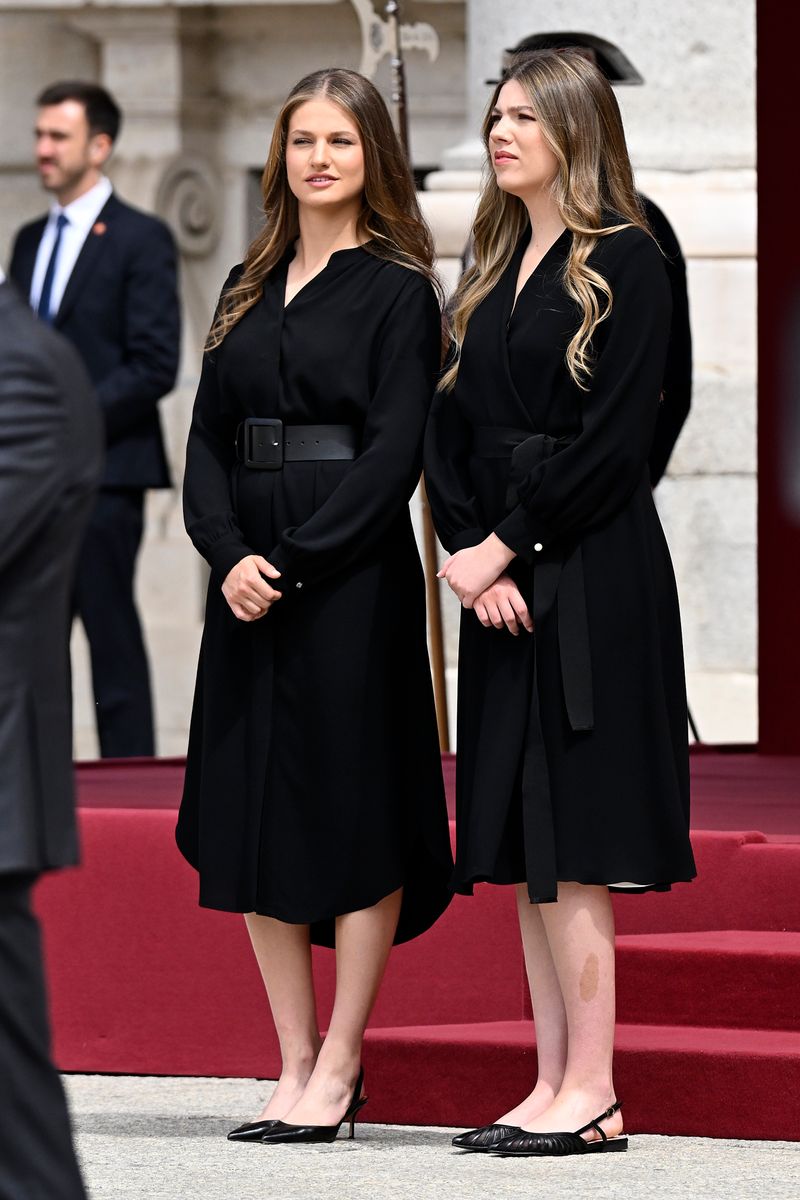
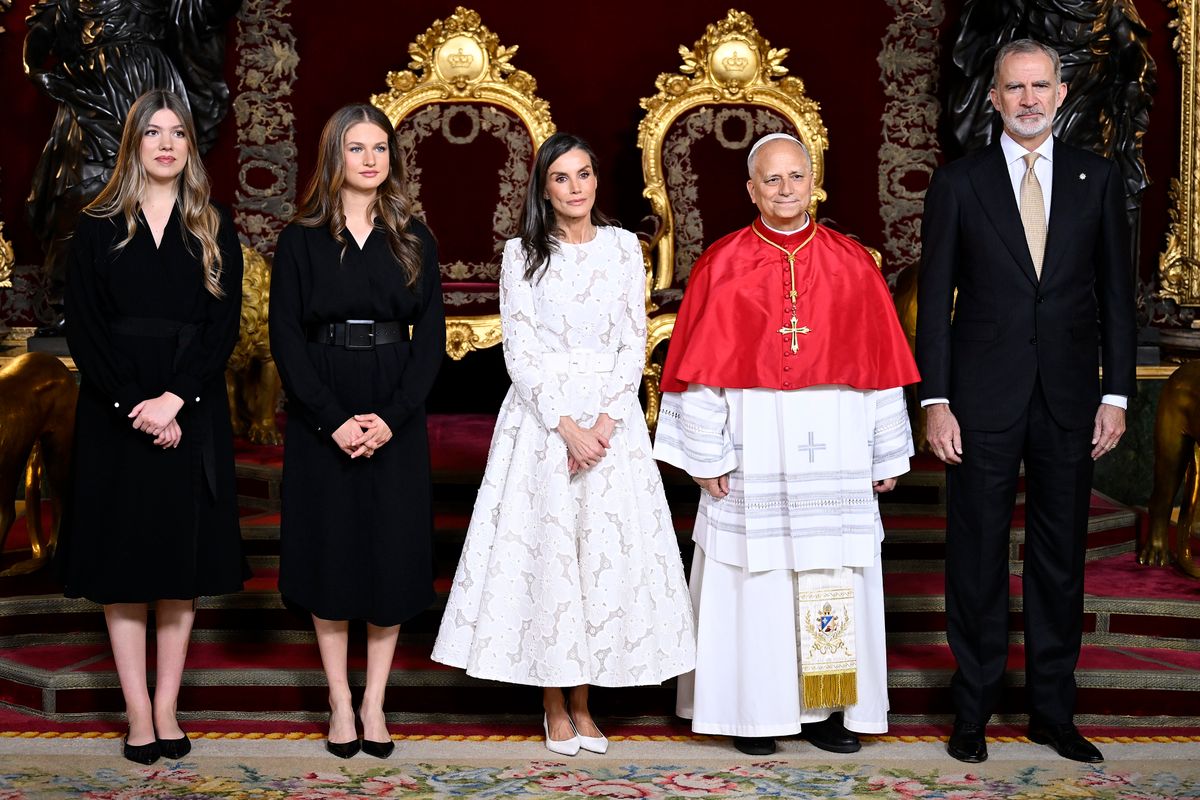
While she chose an impeccable long-sleeved black dress for her debut before the Pontiff, a look that adhered precisely to traditional Vatican protocol, today the heir to the Spanish throne presented a much brighter, more contemporary interpretation of those same standards.
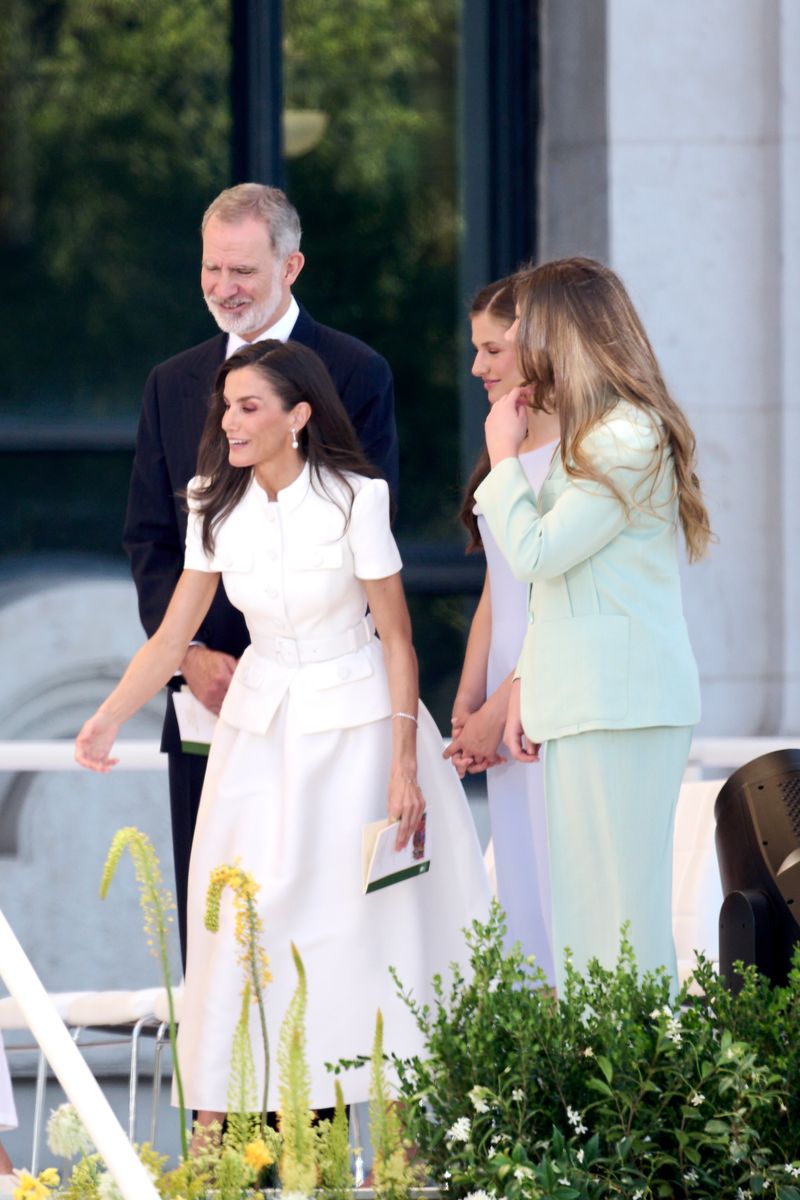
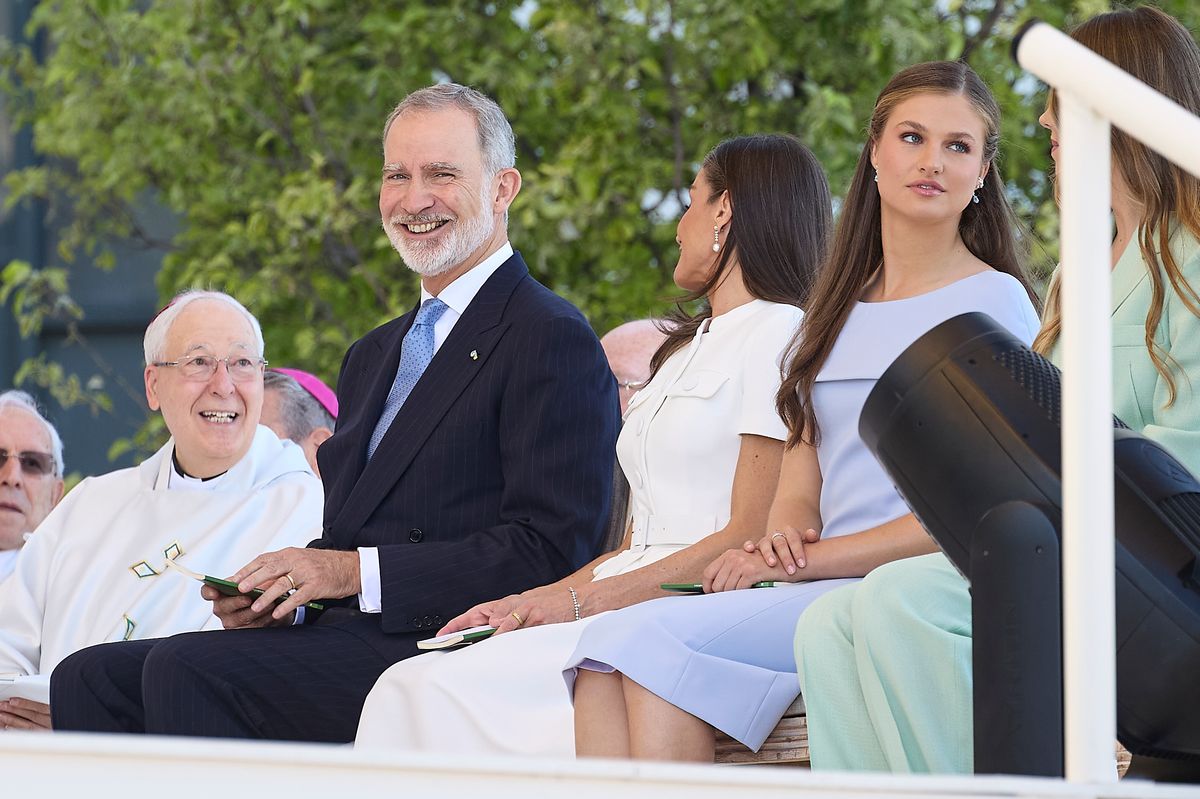
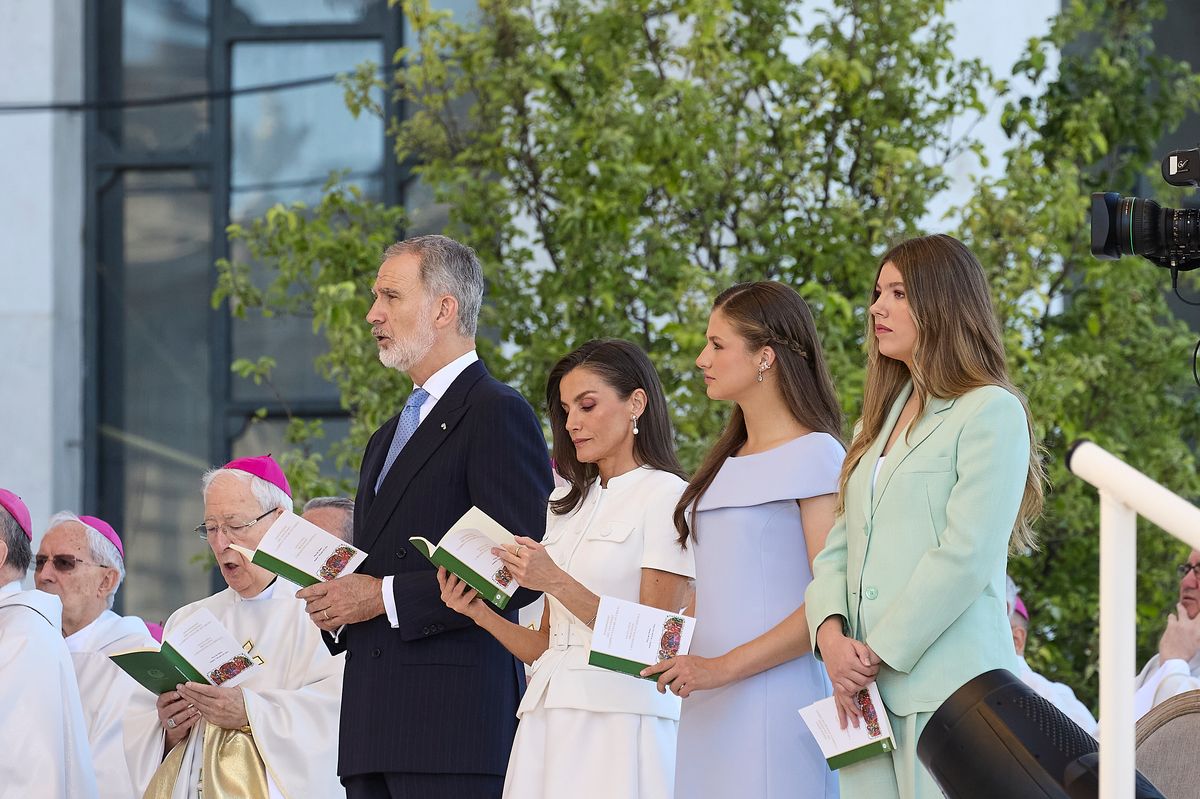
The biggest question centered on the mantilla and how she would interpret the dress code for a religious ceremony of this magnitude. Her answer came in the form of an elegant pastel blue midi dress that conveys serenity, approachability, and modernity while maintaining the institutional respect required for an event of this significance.
 © Getty Images
A Pastel Dress That Softens the Formality Without Breaking the Rules
For her second appearance alongside Pope Leo XIV, the Princess of Asturias opted for a notably different image from the previous day.
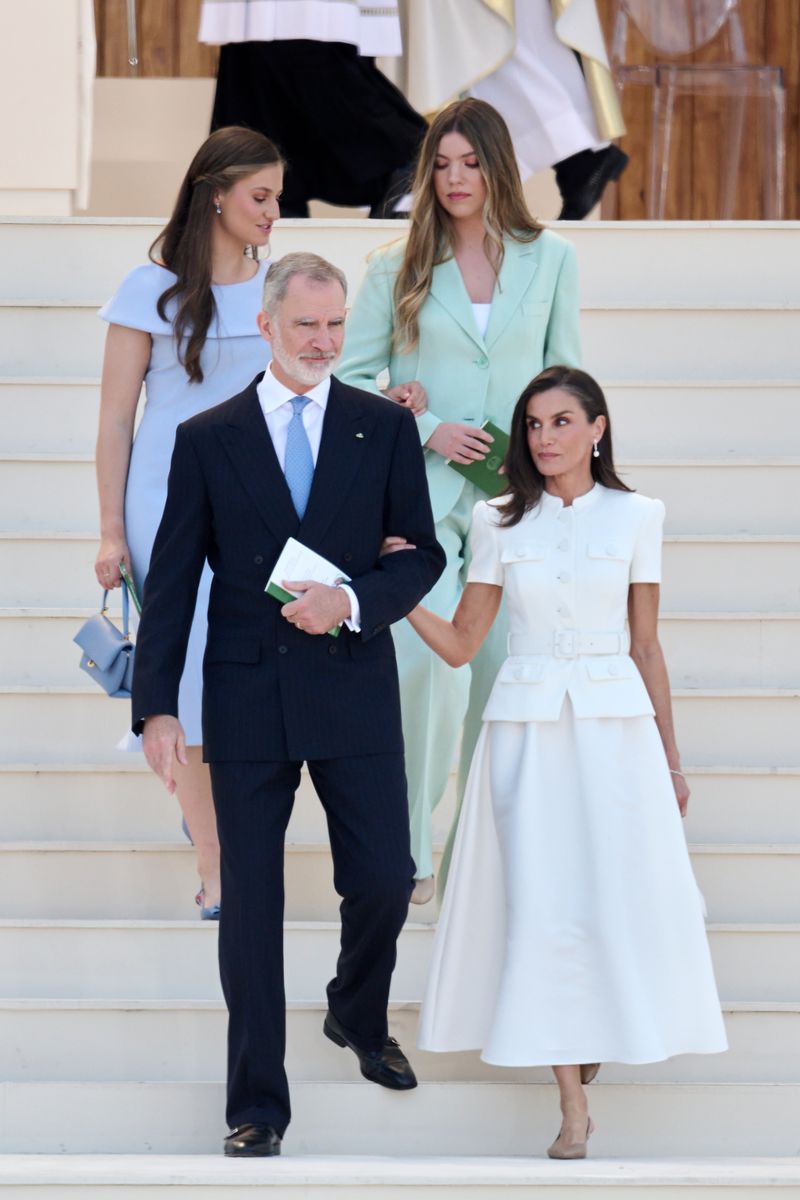
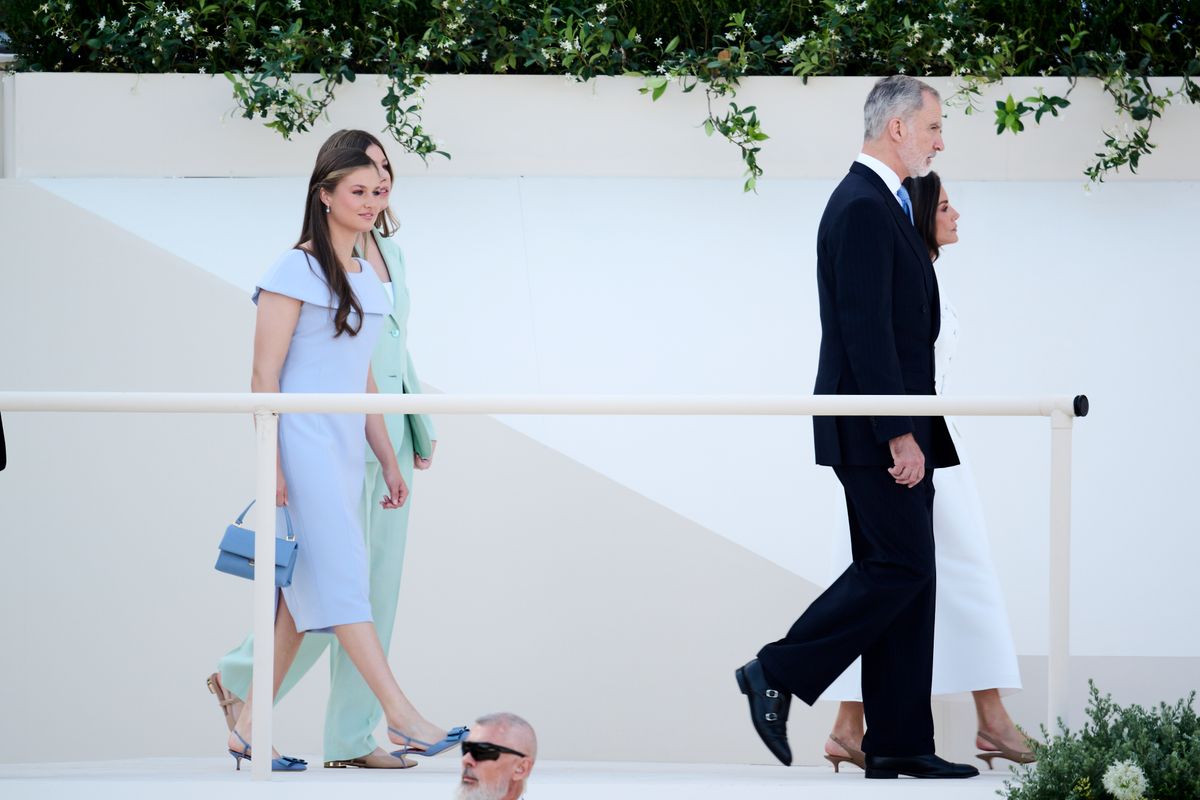
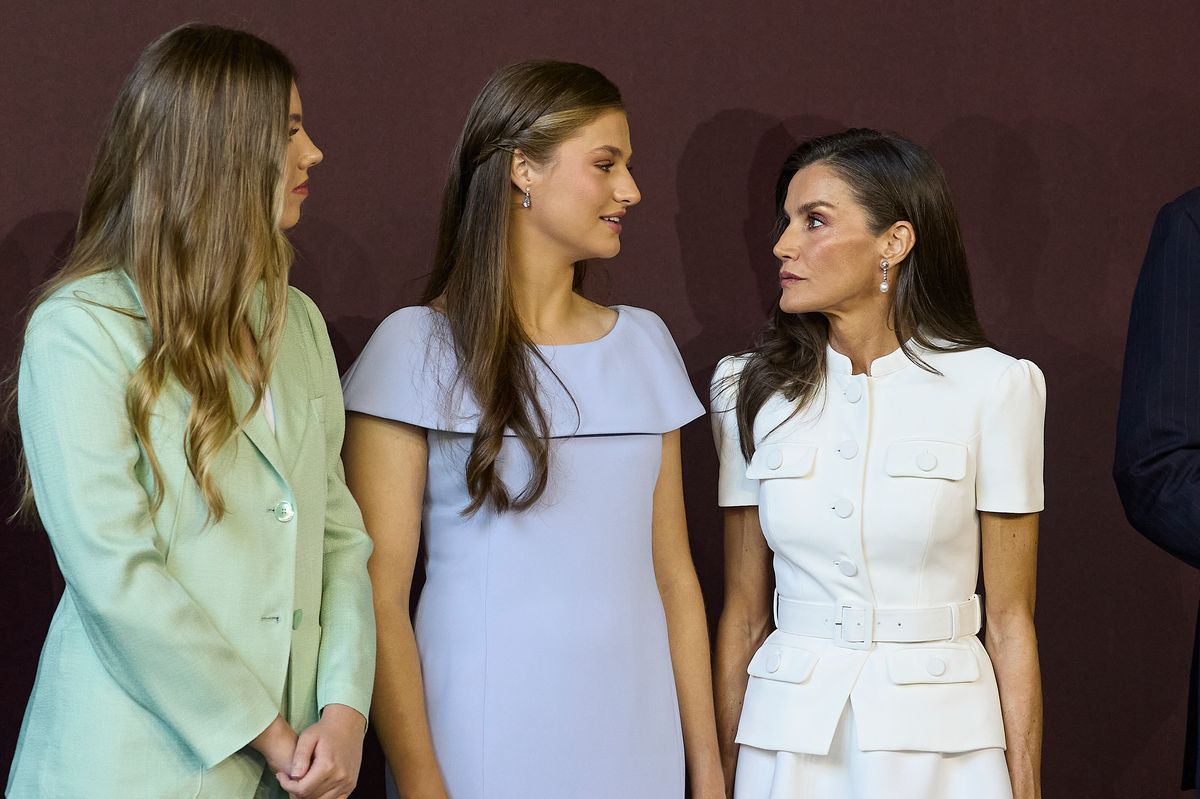
Leonor wore a pastel blue midi dress, a signature color for her. The design was the Lauren model by Hannibal Laguna White, a monochromatic piece with clean lines that brings lightness and delicacy in contrast to the strict black attire she chose for her first meeting with the Pontiff.
 © Getty Images
The dress, matched to the tie worn by her father, King Felipe VI, stood out for its flattering Bardot neckline. The silhouette leaves the shoulders slightly exposed, lending the ensemble a romantic yet contemporary feel.
The choice is particularly noteworthy because it illustrates how younger generations of European royals are interpreting protocol through a more flexible, modern lens, adapting it to the occasion without sacrificing the solemnity such events require.
The heir completed the look with low-heeled shoes in the same shade as the dress, accented with a delicate bow-shaped buckle, along with a coordinating handbag that reinforced the outfit’s harmonious color palette.
 © Getty Images
For jewelry, the Princess of Asturias chose her aquamarine pieces. As a finishing touch, she wore a Moliane ear cuff and styled her signature blonde hair in soft waves, with a few strands pinned back, an approach that enhances her natural look and complements the less rigid tone of this liturgical celebration.
What Protocol Says: Respect, Restraint, and Symbolism
Before the visit, protocol expert and Camilo José Cela University professor Gloria Campos García de Quevedo explained that in meetings of this kind, “clothing should convey respect, restraint, and a sense of institutional responsibility.”
She also noted that Vatican protocol has evolved significantly over recent decades. While the rules still rest on a strong historical foundation, there is now considerably more room to interpret certain dress codes from a contemporary perspective.
 © Europa Press via Getty Images
That evolution seems to be reflected in Leonor’s choices. Yesterday, she took the most traditional route possible with a black dress that felt almost diplomatic in its formality. Today, by contrast, she maintained the elegance required by the occasion while introducing a more approachable, modern dimension through both color and silhouette.
The Meaning of Pastel Tones in Visual Diplomacy
In European royal circles, colors are rarely chosen at random. The concept of diplomatic dressing uses fashion as a form of silent communication, with each shade conveying a specific message.
Pastel tones have gained prominence because of their ability to project serenity, balance, and approachability without sacrificing authority. Compared with stronger, more commanding colors, this palette softens an institution’s image and creates a sense of accessibility, making it especially effective at religious and social events.
 © Europa Press via Getty Images
Blue, in particular, is an intriguing choice. Historically associated with spirituality, reflection, and institutional dignity, it also carries symbolic meaning that is especially fitting for a Mass celebrated by the Pope.
The Privilege of White: Why Leonor Can’t Dress Like Letizia
One of the topics that generates the most interest whenever a royal woman meets the Pope is the so-called “privilege of white.”
As Gloria Campos explained, it is a historic concession reserved by the Holy See for certain Catholic queens and royal consorts.
 © Getty Images
In Spain, Queen Letizia is entitled to exercise that privilege, and she did so today in an impeccable white dress inspired by the style of Kate Middleton.
For that reason, the Queen attended the Mass in white, while neither Princess Leonor nor Infanta Sofía qualifies for this protocol exception. Their institutional status is different, meaning they must follow the general dress guidelines established for women attending papal events.
The Absence of a Mantilla and the Evolution of a Historic Tradition
The other major question was whether Leonor would wear a mantilla. For decades, the traditional Spanish lace veil was one of the defining elements of papal visits and Vatican audiences. However, Gloria Campos pointed out that while “a mantilla is entirely appropriate for a papal visit,” it is also “not mandatory.” What protocol requires in certain contexts is that the head may be covered, but not necessarily with a traditional mantilla.
Leonor’s decision to forgo one fits comfortably within this evolution. Rather than breaking with tradition, it represents a contemporary reinterpretation of it.
 © Getty Images
History offers plenty of precedents. Grace Kelly attended the Vatican wearing a black mantilla when Monaco had not yet been granted the privilege of white. Princess Diana also embraced dark ensembles in keeping with traditional rules. Even Jacqueline Kennedy turned her visit to Pope John XXIII, wearing a black dress and mantilla, into an iconic image recognized around the world.
Leonor, however, belongs to a different generation, one that respects historical codes while seeking to express them through a more contemporary visual language.
An Image That Speaks to the Future
The photograph of Princess Leonor alongside Pope Leo XIV extends far beyond the realm of fashion.
As Gloria Campos noted, it is an image that “will be seen around the world” and one that projects a sense of institutional continuity for the Spanish Crown.
 © Europa Press via Getty Images
That is why every detail matters. Yesterday’s impeccably protocol-driven black and today’s pastel blue are part of the same narrative: that of an heir who understands the value of tradition while recognizing that symbols must evolve in order to remain relevant.
It is likely within that balance, between history, protocol, and modernity, that one of the keys to the public image Leonor is building before Spain and the wider world can be found.
Read the full article here