

The marriage of King Harald V and Queen Sonja is one of the most moving love stories in European royalty: a romance that defied its time and helped modernize an institution that, in the 1960s, was still anchored in dynastic alliances. Their determination opened a door that now seems obvious: that a future king could also marry for love.
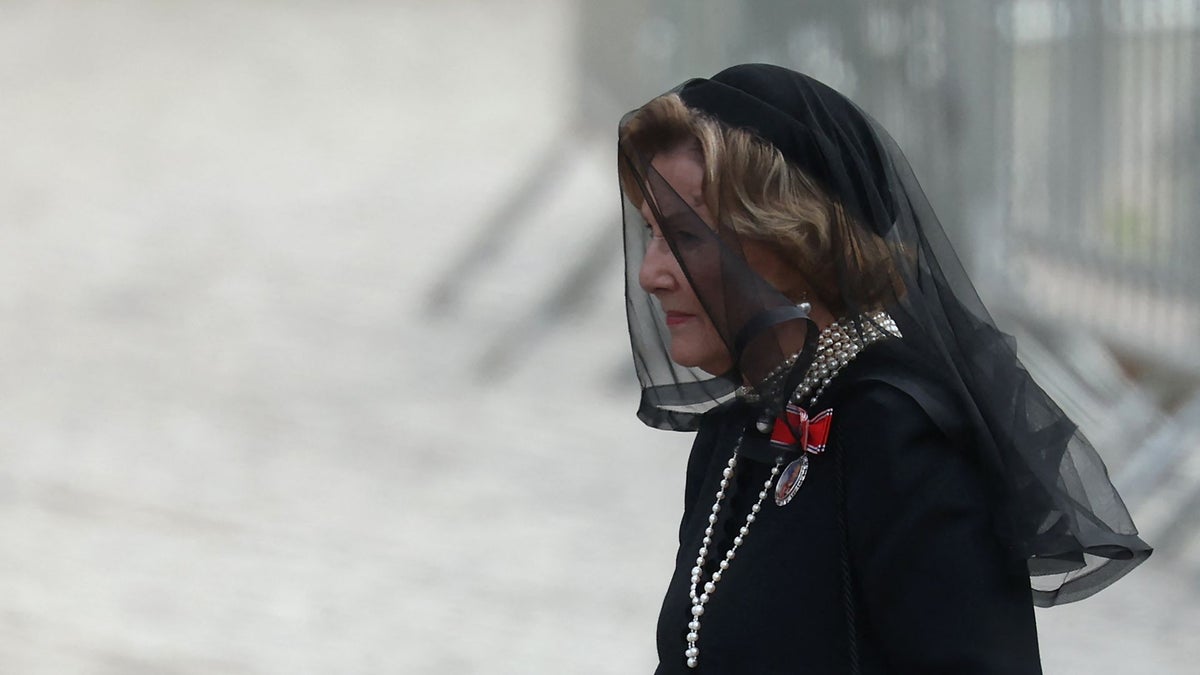
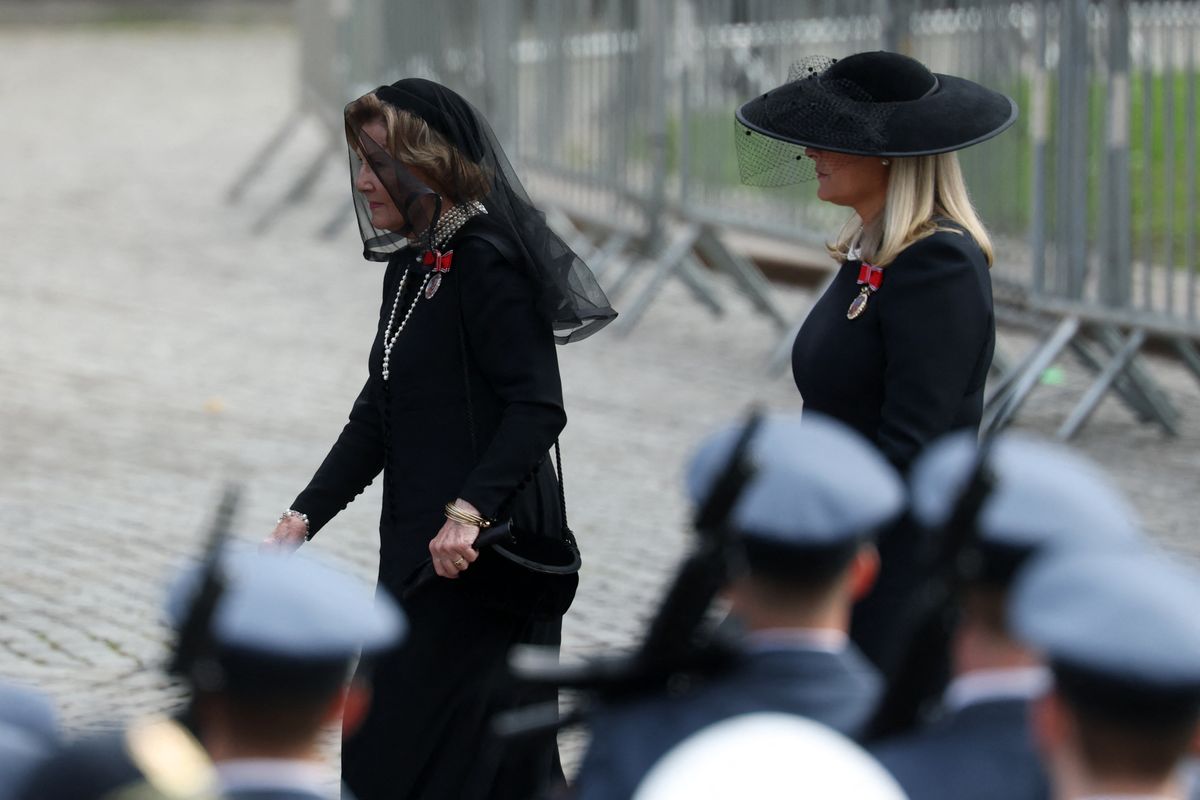
This Wednesday, September 9, in Oslo Cathedral, that same woman who helped revolutionize the European monarchy, not only Norway’s royal family, is saying goodbye to the partner with whom she shared almost 58 years of marriage (he passed away the day before their anniversary) and an extraordinary life together. She does so surrounded by her loved ones, but with profound sadness. Queen Sonja followed her husband’s coffin by car, taking part in a heartbreaking funeral procession where she found comfort in Norway’s new queen, Mette-Marit.
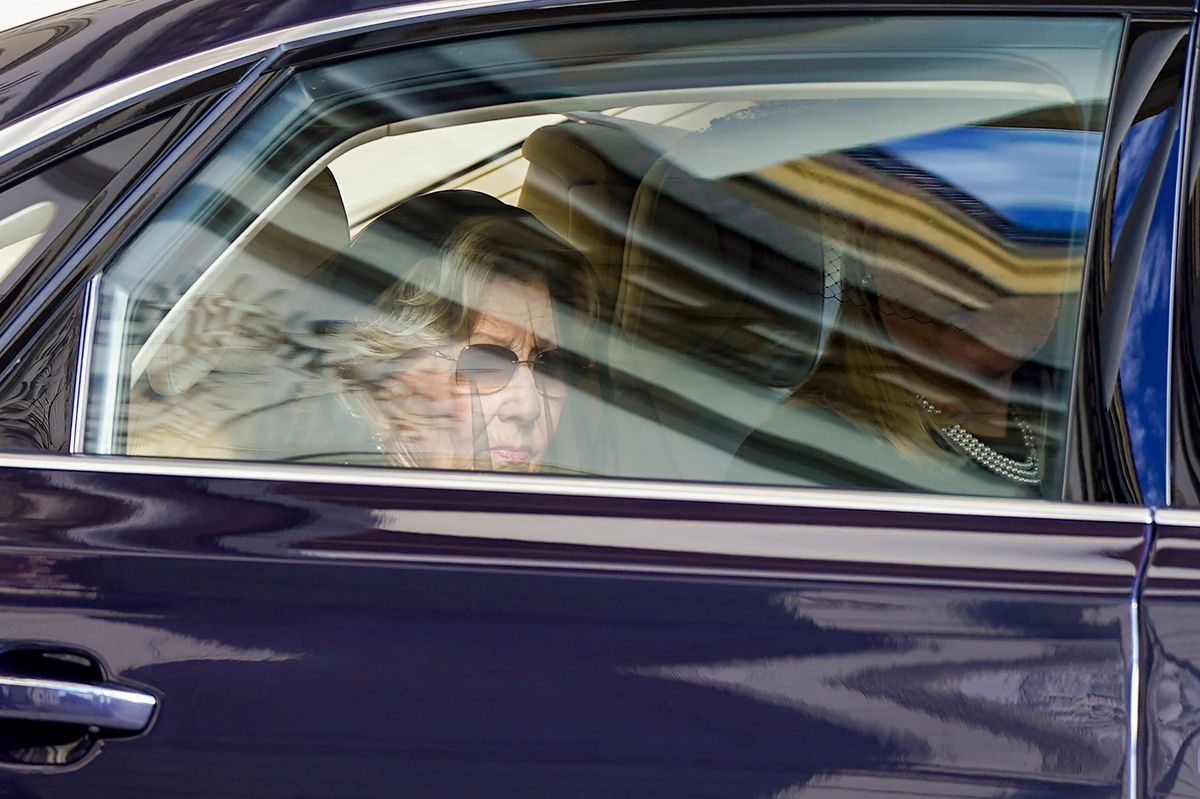
While the new King Haakon of Norway walked on foot beside Crown Princess Ingrid and Princes Sverre and Märtha Louise, the Queen Dowager, Sonja of Norway, 89, who has recently faced heart complications, followed the procession by car, accompanied by the new queen, Mette-Marit, who is recovering from her lung transplant and was the one to comfort her on what is likely one of the saddest days of her life.
The Queen Dowager is saying goodbye to the man she stood beside in his official duties and with whom she shared an extraordinary bond right up until the very end. Together they sailed from the summer sailing camps of their youth to the royal yacht; they traveled whenever they could, from Malaysia to Tenerife, on private vacations that sometimes came to light because of the health scares of a king who never lost his passion for travel, for life, and for making jokes.
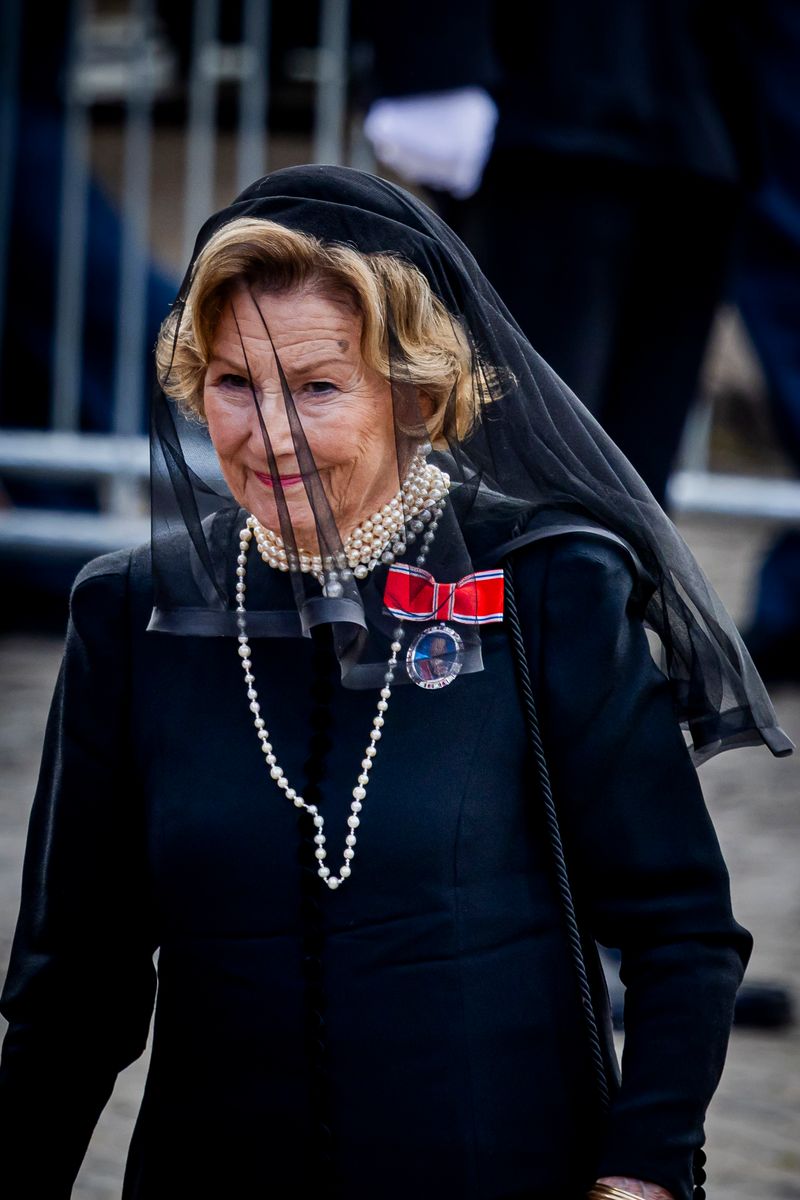 © Patrick van Katwijk
In their lives, duty and family, official engagements and love always went hand in hand, as if they were two inseparable threads of the same story. “She meant everything to me,” King Harald admitted in one of his interviews.
Watch the Live Stream of King Harald V Funeral
The love that changed history
Harald and Sonja’s love story was born far from rigid protocol and very close to real life. They met as teenagers at a sailing camp in Hankø, although the spark came years later, in the summer of 1959, when a mutual friend brought them together at a party near Oslo’s Royal Palace. “Love at first sight,” they both recalled later. From that moment, their relationship progressed in silence, protected by a close circle of friends that allowed them to enjoy two and a half years of privacy.
 © ODD ANDERSEN
But when the press revealed the name Sonja Haraldsen, public opinion was blunt: it was considered “highly unlikely” that King Olav would authorize his son’s marriage to a woman without royal blood. From then on, a decade of resistance began, marked by forced separations, studies in different countries, and institutional pressure that turned their romance into a matter of state.
The couple’s story was defined by the constant tension between duty and the heart. Harald, raised in the tradition of dynastic alliances—his mother was a princess of Sweden and his grandmother a daughter of King Edward VII—knew that his choice would shatter every expectation. “I had very mixed feelings… I loved Sonja Haraldsen, but I also had a bad conscience toward my father and toward Norway,” he confessed years later. Media pressure mounted, Parliament debated the case, and King Olav even issued a statement that Harald described as a “slap in the face,” because it essentially said that the monarchy was more important than love.
 © HAKON MOSVOLD LARSEN
The turning point came when the prince issued his ultimatum: he would fulfill his duty, but he would remain a bachelor. That sentence changed history. In 1968, after nearly ten years of resistance, King Olav gave his consent and the wedding was held in Oslo Cathedral. Against all odds, the country welcomed them with overwhelming support, ushering in a new era for the Nordic monarchies and proving that a future king could, indeed, marry for love.
Read the full article here