
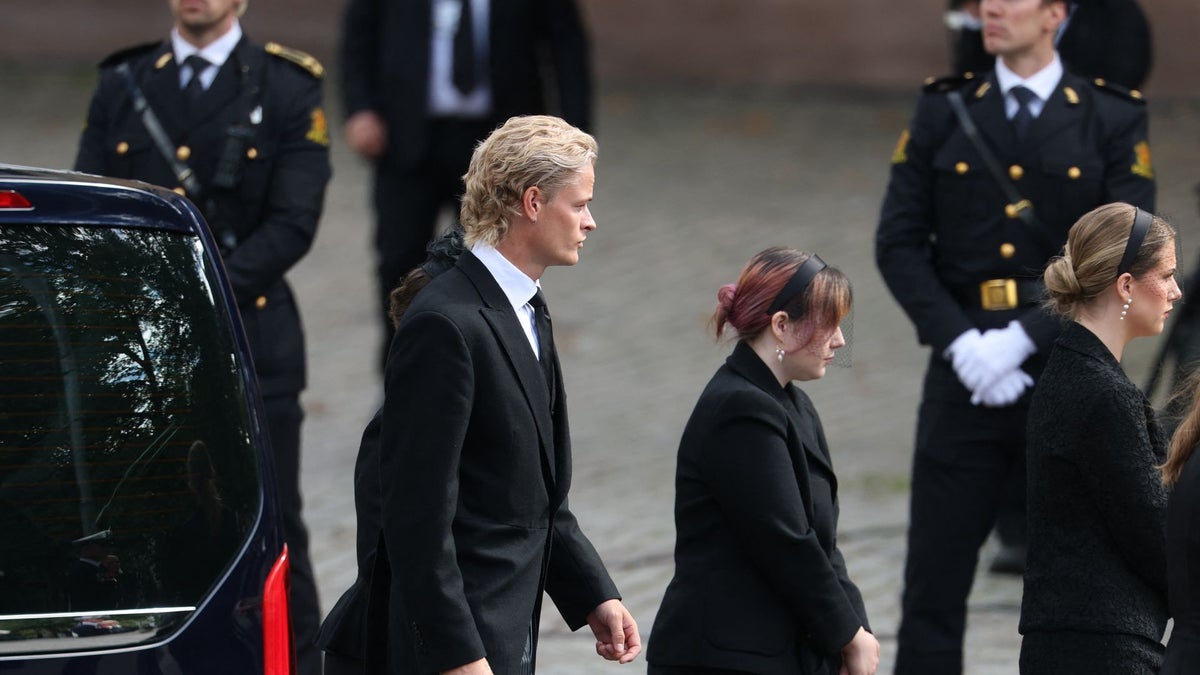

When Harald of Norway passed away on August 28, Marius Borg Høiby was at the royal estate of Skaugum, serving his court-ordered house arrest after several attempts by his defense team to obtain that measure from the Oslo District Court. In the days beforehand, while the monarch was still hospitalized, exceptional measures were approved so that the young man, sentenced to four years in prison for two rapes and awaiting appeal, could travel to the hospital. That set off all the alarms: this was clearly not just another hospitalization for a king with famously fragile health.
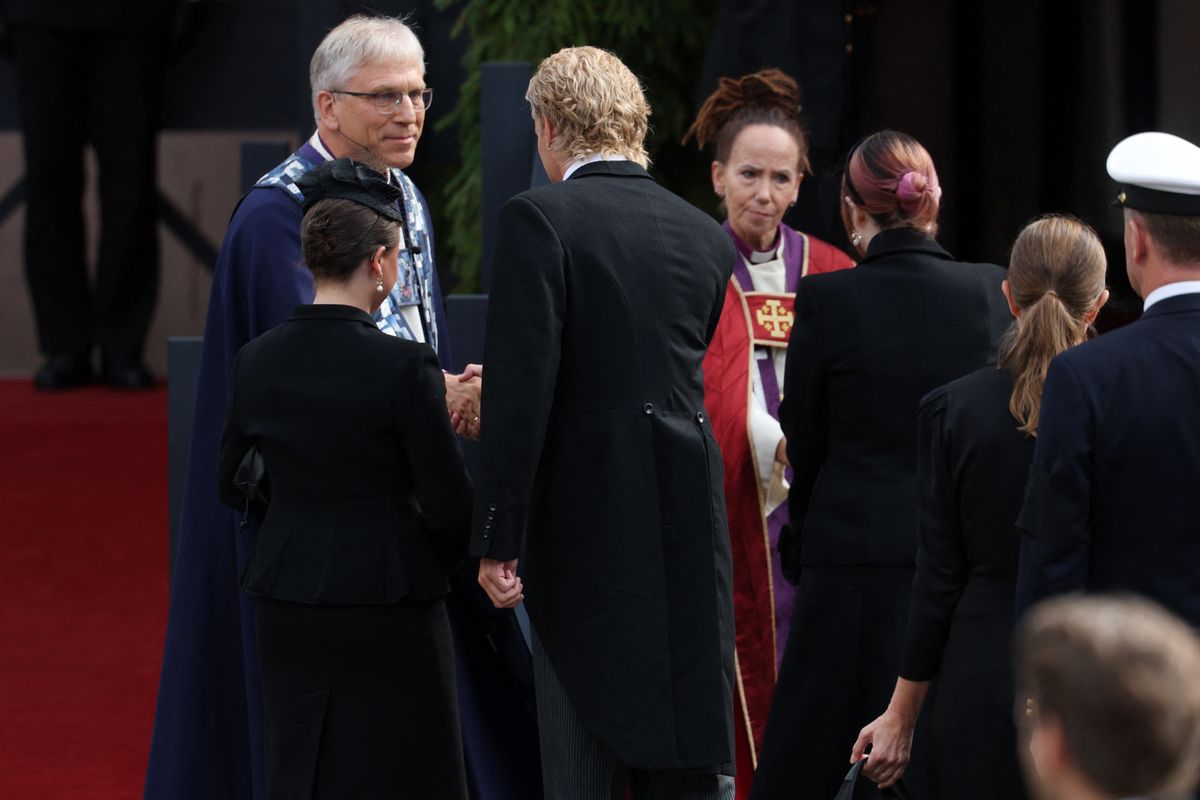
This historic Wednesday, September 9, 2026, the son that the now Queen Mette‑Marit had before marrying is present at Oslo Cathedral as one more member of the Norwegian royal family at the State funeral. His presence sums up how Harald always understood his role: before being king, he was a husband, a father, and a grandfather. And perhaps this is his final great gesture, allowing everyone, including those without titles or official duties and those who have clouded the Crown’s image in recent years, to be part of the farewell that closes his reign and, above all, his life.
Marius Borg traveled from the Skaugum estate to the Royal Palace in Oslo in the same car as his siblings, Crown Princess Ingrid and Prince Sverre. Once there, Princess Ingrid and Prince Sverre prepared to walk in the funeral procession on foot, while he went directly to Oslo Cathedral to make his entrance together with Martha Louise of Norway’s second husband, Durek Verrett, and his cousins, Martha Louise’s daughters Leah Isadora Behn, Maud Angelica Behn, and Emma Tallulah Behn.
Watch the Live stream of the funeral of King Harald V
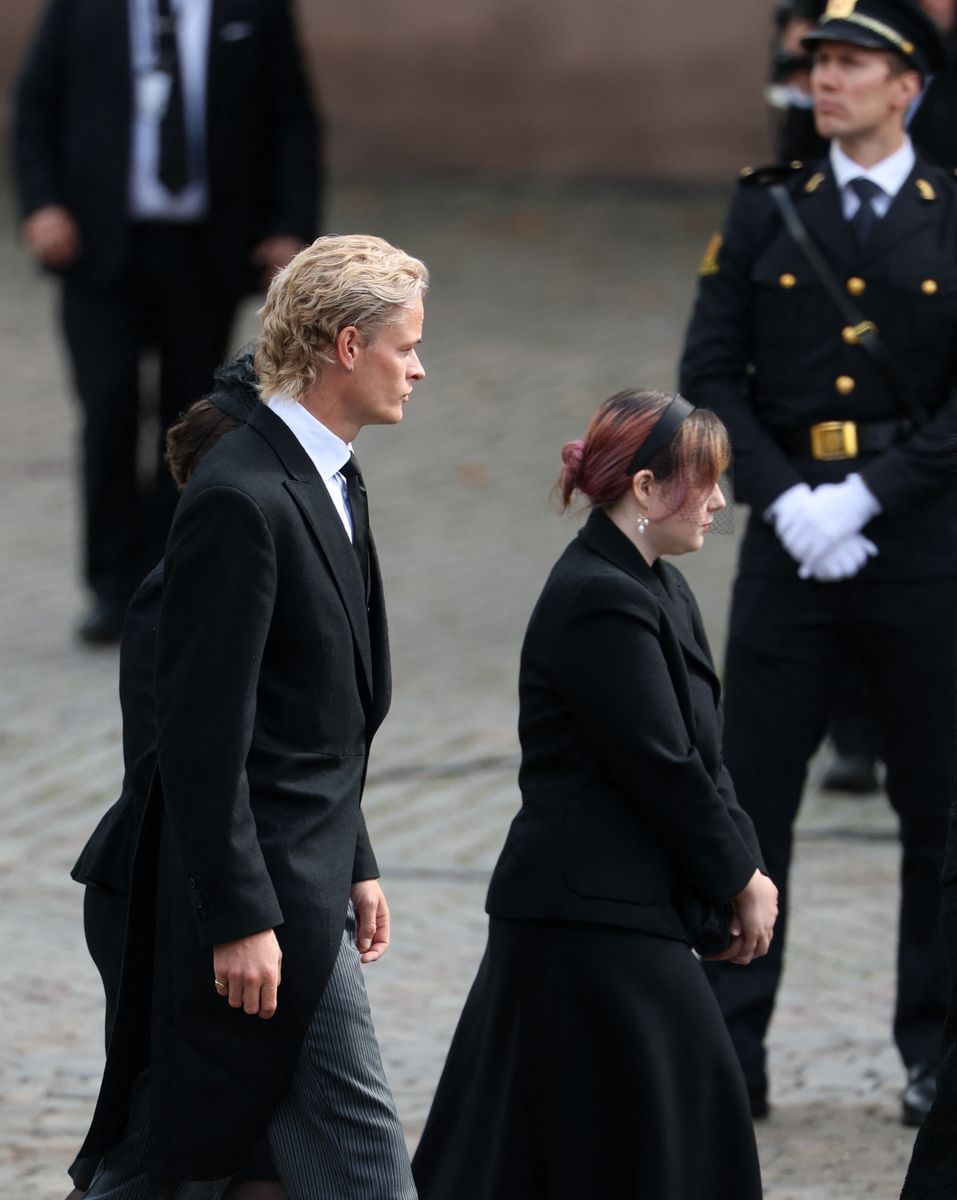
Once inside, he took a seat in the second row by the altar, in the section reserved for the family, where King Harald’s grandchildren without official roles were seated. That section also included some royals who are not heads of state, such as Queen Anne‑Marie of Greece and her children, and Princesses Beatrix and Amalia of the Netherlands.
 © ODD ANDERSEN
Once again, Marius Borg became one of the day’s defining images, as he has been at the center of one of the longest trials in Norway’s history and, without question, because of his royal connection, the most high‑profile one. The case is not yet over: it is now before the Court of Appeal, and the Norwegian press does not expect a final ruling until 2027.
Mette‑Marit of Norway’s son, thanks to a special permit that allows him to move beyond the perimeter set by the Norwegian Correctional Service, is returning to Oslo Cathedral, the place where he became “famous” 25 years ago. That was when his mother married the Crown Prince and he became the ultimate symbol of a changing era: the future king was marrying a commoner who had worked as a waitress, was a single mom, and had openly acknowledged a “wild past.”
That wedding, the first of the new millennium, marked the beginning of a public and exceptional life for the 4‑year‑old boy: he lived on royal property, had a diplomatic passport, permanent security, and took part in official events without holding an institutional role. That high‑wire act, living like a prince without actually being one, defined his place in the family until his legal troubles forced the institution to set some distance, a boundary that today is visibly softened.
 © Patrick van Katwijk
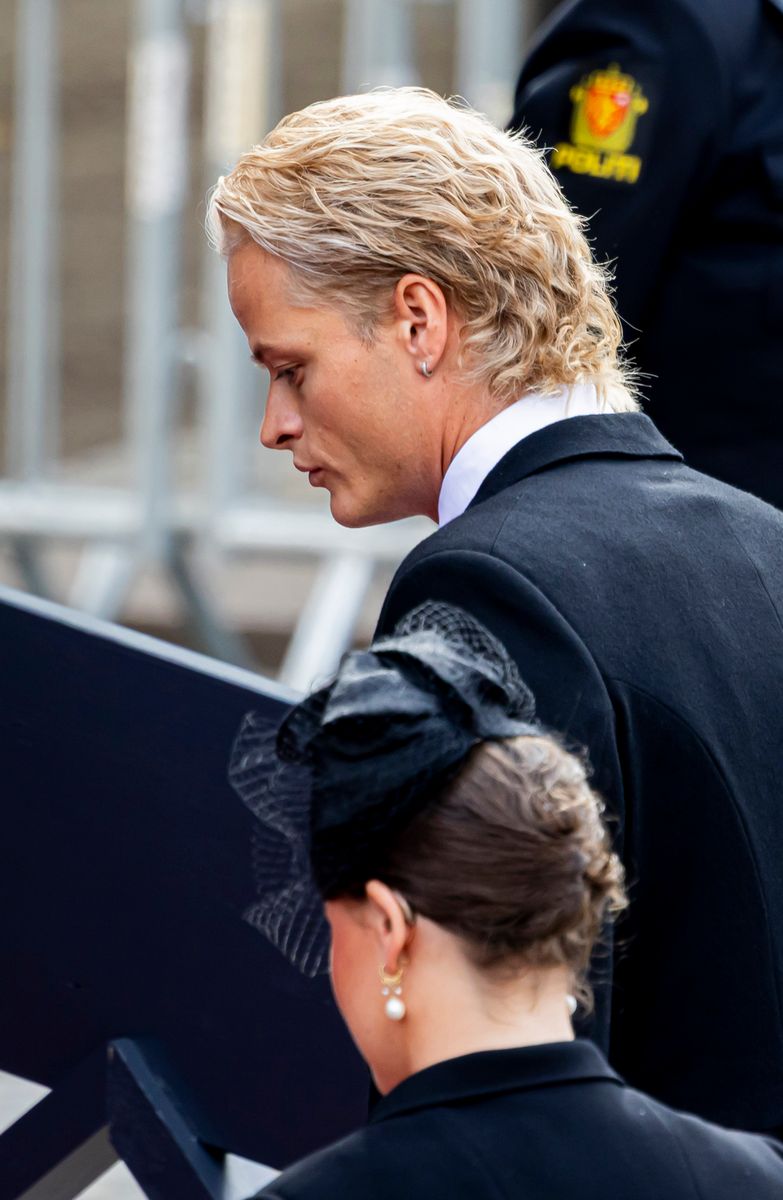
Marius Borg’s presence at an event of the highest institutional importance, surrounded by kings, queens, princes, heads of state, and foreign leaders, speaks volumes about the character of Harald V. The monarch always made it clear—through his decisions, his interviews, his biographies and, in recent years, through the way he handled both Marius’s trial and Queen Mette‑Marit’s connection to Jeffrey Epstein, that Norway was what mattered most to him, but he placed his family on an equal level.
The final gesture of a king who never left anyone behind
King Harald’s life was marked by separation during exile, the early death of his mother, and the pressure of being the only son of a king. Yet from very early on, he showed that he was a man who also ruled from the heart. He fought for ten years to marry Sonja, allowed his children to choose their partners freely, let Martha Louise forge her own path, and firmly supported all his grandchildren, including those without official duties.
 © ODD ANDERSEN
Few monarchs have given interviews as human and heartfelt as his: Harald spoke about how Ari Behn’s death brought back the pain of losing his mother and how, already in his eighties, he realized that he also needed to be a father figure for his granddaughters.
The emotion he showed at Princess Ingrid Alexandra’s 18th birthday, when she recalled how much they enjoyed watching Westerns together, completes the portrait of a man who died with his boots on: he served his country with absolute dedication, but he was also a rock for his family. In that balance, between the Crown and his loved ones, between the institution and affection, lies the reason why Marius Borg is at Oslo Cathedral today. It is the final reflection of a king who never left anyone behind and who, until his last day, defended the idea that family is also part of the state.
Read the full article here