

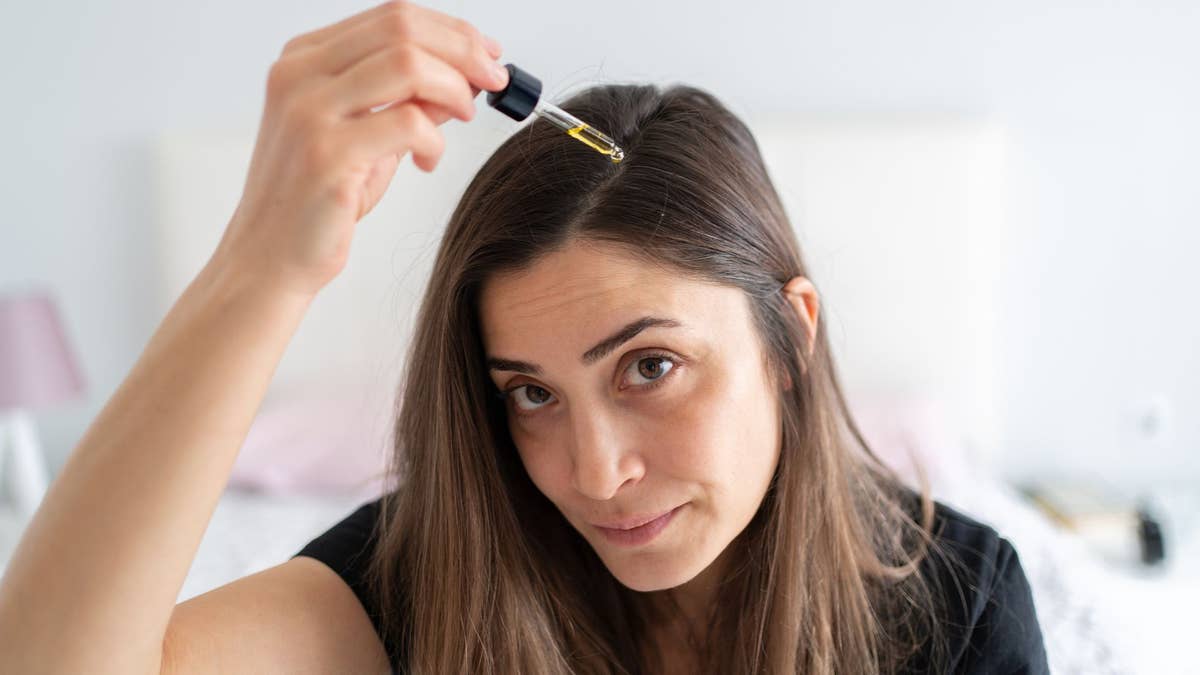

While rosemary oil dominated hair growth TikTok in past years, there’s a new contender to help hair loss. Melatonin, best known for keeping our sleep cycles in check, is now making waves in a rather unexpected place: the world of hair health.
According to trichologist Dr Alba Gómez Zubiaur, the sleep hormone could, in fact, be the key to longer, thicker hair.
Recent studies suggest the sleep hormone might do more than just help us drift off; it could actually strengthen hair, slow down thinning, and even kickstart new growth. It raises the question: could melatonin be the new secret weapon for those battling hair loss?
“Melatonin is a hormone that plays a vital role in regulating our body clock,” Dr Gómez Zubiaur tells us. “Beyond sleep, recent medical research has highlighted its impact on the hair cycle itself. In fact, there is growing evidence of a possible link between our circadian rhythms and how our hair grows. By extending the ‘anagen’ or growth phase, melatonin could effectively delay or reduce hair loss.”
So, while its primary job is regulating our circadian rhythms and ensuring a good night’s rest, melatonin is increasingly being used topically, orally or via mesotherapy to tackle hair fall head-on. But how effective is it really, how does the science work and what results can we actually expect?
The sleep hormone secret: How melatonin ‘resets’ your hair growth cycle
The specialist highlights the vital importance of our circadian rhythms. According to Dr Gómez Zubiaur, while the theory of a “two-way street” between our body clock and hair health is still being explored, the connection is compelling.
“Melatonin is a hormone deeply involved in our circadian rhythms – effectively our body clock. Its significant role in the life cycle of hair has only recently been uncovered, suggesting it could be a vital tool for those experiencing thinning or alopecia”
“There appears to be a mutual influence between a well-regulated biological clock and the natural cycles of hair growth and shedding,” she explains. “Since melatonin helps govern our sleep-wake cycles, it stands to reason that it could also help regulate the hair’s growth phase.
“While we need more evidence before these theories are set in stone, we do know that melatonin can actively extend the ‘anagen’ phase. It does this by stimulating a specific cellular signaling route known as the WNT pathway.”
Who should try melatonin for hair loss?
We wanted to know which patients see the best results when using melatonin to combat hair loss. “While evidence is still emerging, it appears that those suffering from acute hair loss, known as telogen effluvium, stand to benefit the most,” she says, noting that this type of sudden shedding is common following childbirth, surgery, seasonal changes or periods of intense stress.
Because of melatonin’s ability to extend the hair’s growth phase, it is currently being used to treat both acute and chronic telogen effluvium.
Melatonin works by reducing the number of follicles that prematurely enter the shedding phase, and there are two types of hair loss it can address:
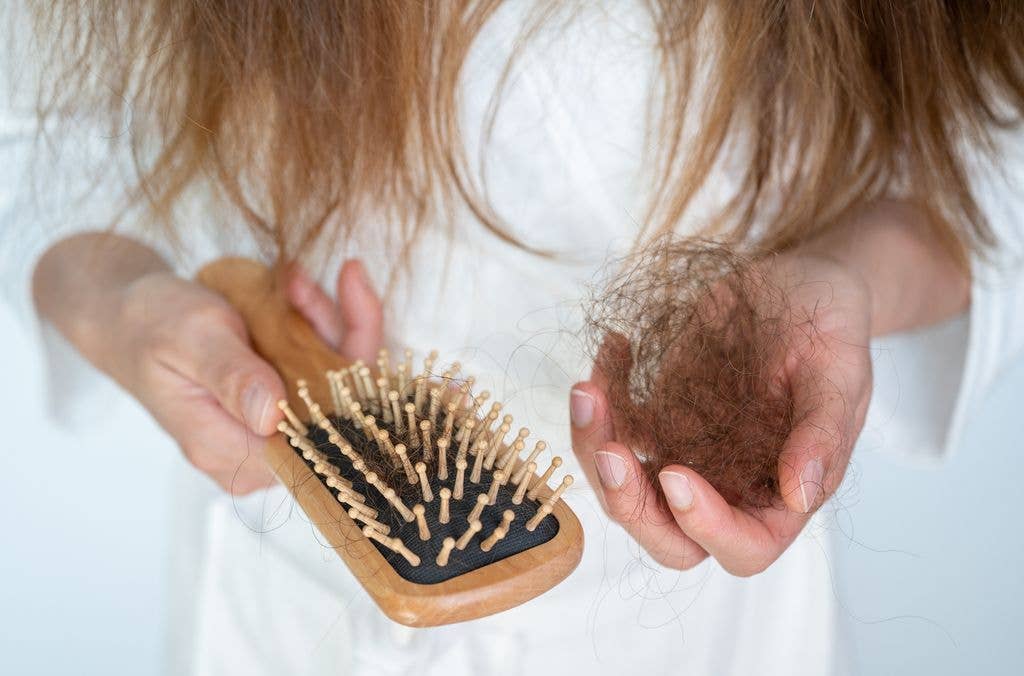
- Acute hair loss: “This is usually sparked by a specific trigger, such as a severe infection, surgery, childbirth or significant emotional stress,” says Dr Gómez. “The shedding typically lasts between two and four months, after which the hair cycle normalises and the lost hair grows back. These triggers disrupt the cycle, causing a massive, synchronised shift where hairs enter the shedding phase all at once, often jumping from the usual 15% to much higher levels. Seasonal hair loss, such as that seen in autumn, also falls under this category.”
- Chronic hair loss: “In this instance, the hair loss is less dramatic but more persistent,” she adds. “Rather than a sudden spike in shedding, the number of hairs in the shedding phase remains consistently high, around 20-25%, which is above average but less immediately noticeable. It is the long-term nature of the shedding that defines this condition. Identifying a single trigger is more complex here, so it is essential to rule out nutritional deficiencies, underlying health issues or other forms of alopecia.”
 © Getty Images
Drops, supplements or scalp injections? 3 ways to use melatonin
Having established that melatonin can indeed benefit our hair, the next question is whether the method of delivery – be it topical, oral, or via mesotherapy (direct scalp injections) – makes a significant difference.
“Oral, topical and mesotherapy melatonin have all been proposed as viable treatment options for these conditions,” Dr Gómez clarifies. “The primary goal across all three is the same: to stop follicles from prematurely entering the shedding phase before they have finished growing. By extending the growth phase, melatonin helps produce noticeably thicker and longer hair.”
The expert confirms that melatonin has been the subject of extensive study in recent years, with medical literature supporting both oral and topical formats. (Traditionally, oral melatonin was used almost exclusively to aid sleep.)
“The latest research suggests that topical application may be the most effective way to target the follicles directly, as it ensures higher availability where it’s needed most,” she explains. “That said, given that oral melatonin also helps improve nighttime rest and regulate the body clock, the possible influence on stress and lifestyle factors would also be beneficial for our hair.”
“There are various supplements that include melatonin specifically to treat sudden hair thinning. Topical melatonin is also now widely available, and has been proven to reach the hair root effectively”
Dr Gómez also notes that mesotherapy is an option. “In our clinical experience, some patients have seen excellent results, though we still need more large-scale studies to confirm its efficacy across the board,” she adds.
In cases of severe hair loss, the doctor notes that a combination of these different methods can often be the best therapeutic approach.
Vivid dreams and thicker hair: What to expect when starting treatment
Given the benefits, we asked the expert whether there are any side-effects to keep in mind when using melatonin for hair.
“When used topically, the absorption is primarily local, so there are no significant adverse effects to worry about,” Dr Gómez explains. “With oral use, it’s important to remember that it will affect your sleep-wake cycles and help regulate your rest. However, it doesn’t leave you with that lingering sense of daytime grogginess. Some patients do report having particularly vivid or realistic dreams during the first few days of treatment.”
 © Getty Images
She also clarifies that in the world of hair restoration, it is standard practice to combine various active ingredients. “Depending on the specific type of hair loss, we often use melatonin alongside other medications or clinical procedures to achieve the best results,” she notes.
Can melatonin help stop thinning before it begins?
Finally, there is the question of whether melatonin can be used as a preventative measure for those just starting to notice their hair is thinning. In Dr Gómez’s view, melatonin is most effective when treating active hair loss rather than general thinning.
“If you look through the medical databases, you’ll find a wealth of studies published in recent years on the efficacy of melatonin for hair health. What we can gather from this is that it’s a truly promising treatment; one that is not only effective but holds significant potential. I suspect we’ll see some even more noteworthy developments for certain types of hair loss in the coming years”
“When we talk about thinning, we are usually referring to the hair fibres becoming increasingly fine. This is typically caused by either hormone-related hair loss or the natural ageing process,” she explains. “In both instances, there are other medications and clinical options that offer greater efficacy than melatonin on its own. That said, it certainly has a place as a supportive treatment alongside those more targeted therapies.”
About the expert:
Dr Alba Gómez Zubiaur is a leading consultant dermatologist and trichologist based in Madrid, specialising in advanced hair restoration and the treatment of complex scalp disorders.
Read the full article here