

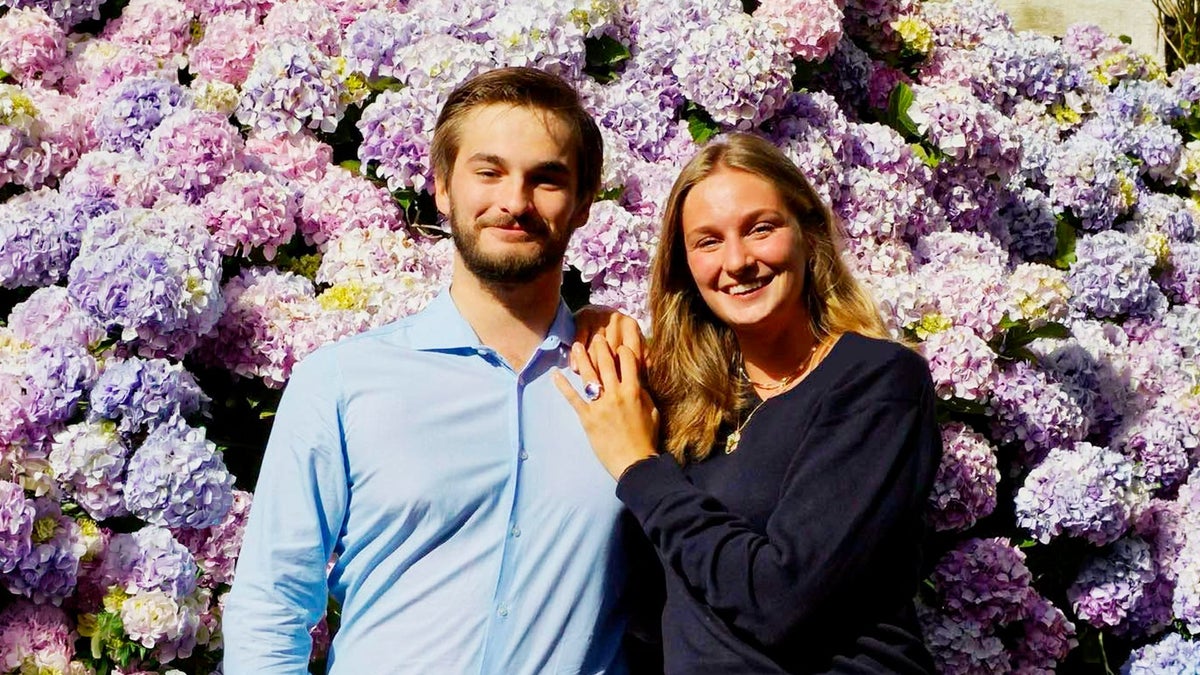

Wedding bells are ringing in Portugal. Infante Dinis, Duke of Porto, is engaged to the woman of his dreams, Countess Anna Schaffgotsch von und zu Kynast und Greiffenstein, Baroness of Trachenberg. The Dukes of Braganza announced the news on June 29 from Sintra, without revealing the date of the wedding or any details of the ceremony, which “will be made known in due time.”
The statement was accompanied by a photo of the couple posing in front of a large hydrangea, with a smiling Anna showing off her engagement ring, set with a blue sapphire. The piece has attracted a great deal of attention because of the size of the stone and its striking resemblance to the ring that belonged to Princess Diana of Wales and was inherited by Kate Middleton in 2010, after her engagement to William.
The proposal took place in Lisbon last month and came as a complete surprise to the local press, which noted that the romance was unknown to them and that this will be a very special wedding, as it unites two European dynasties with deep history.
A romantic thread
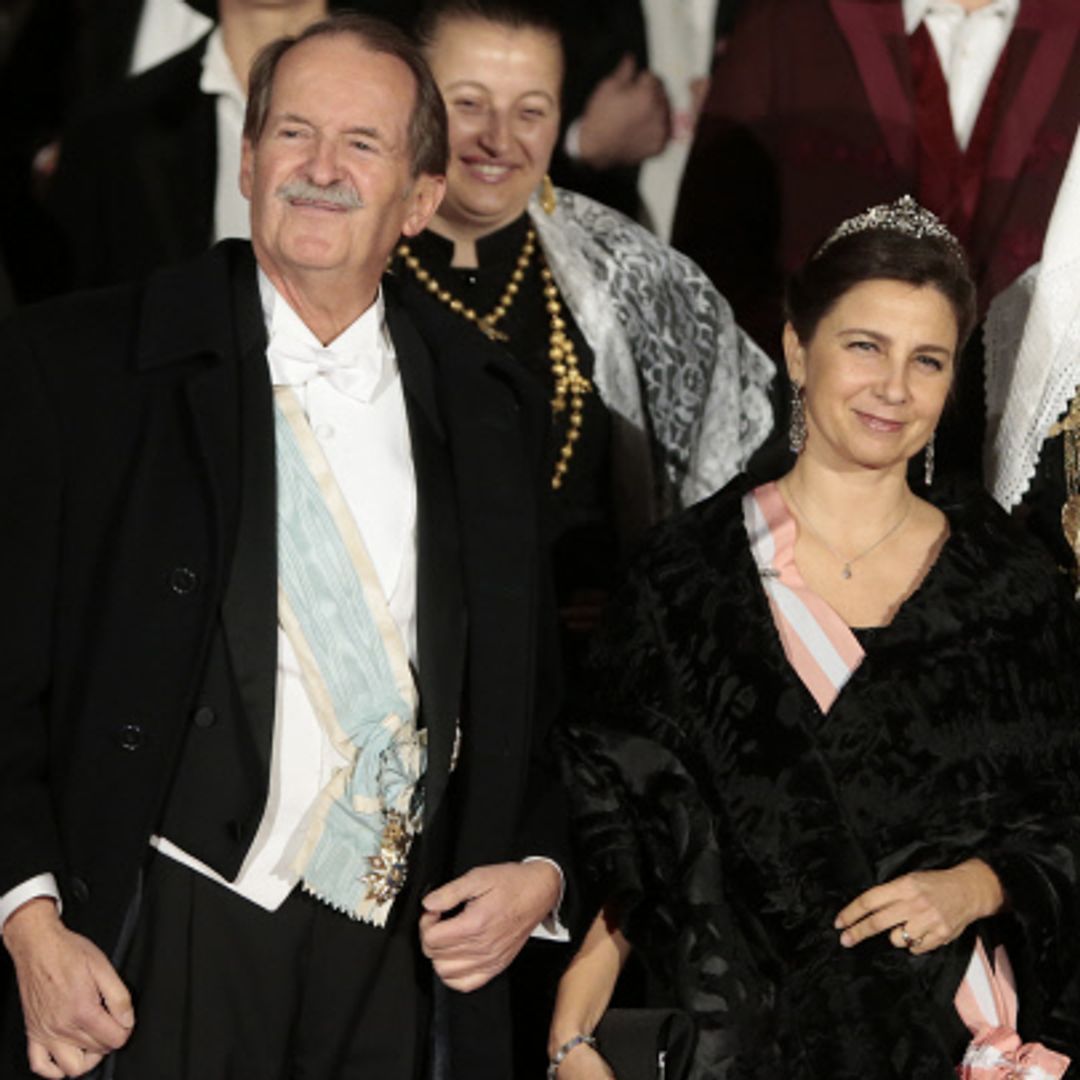
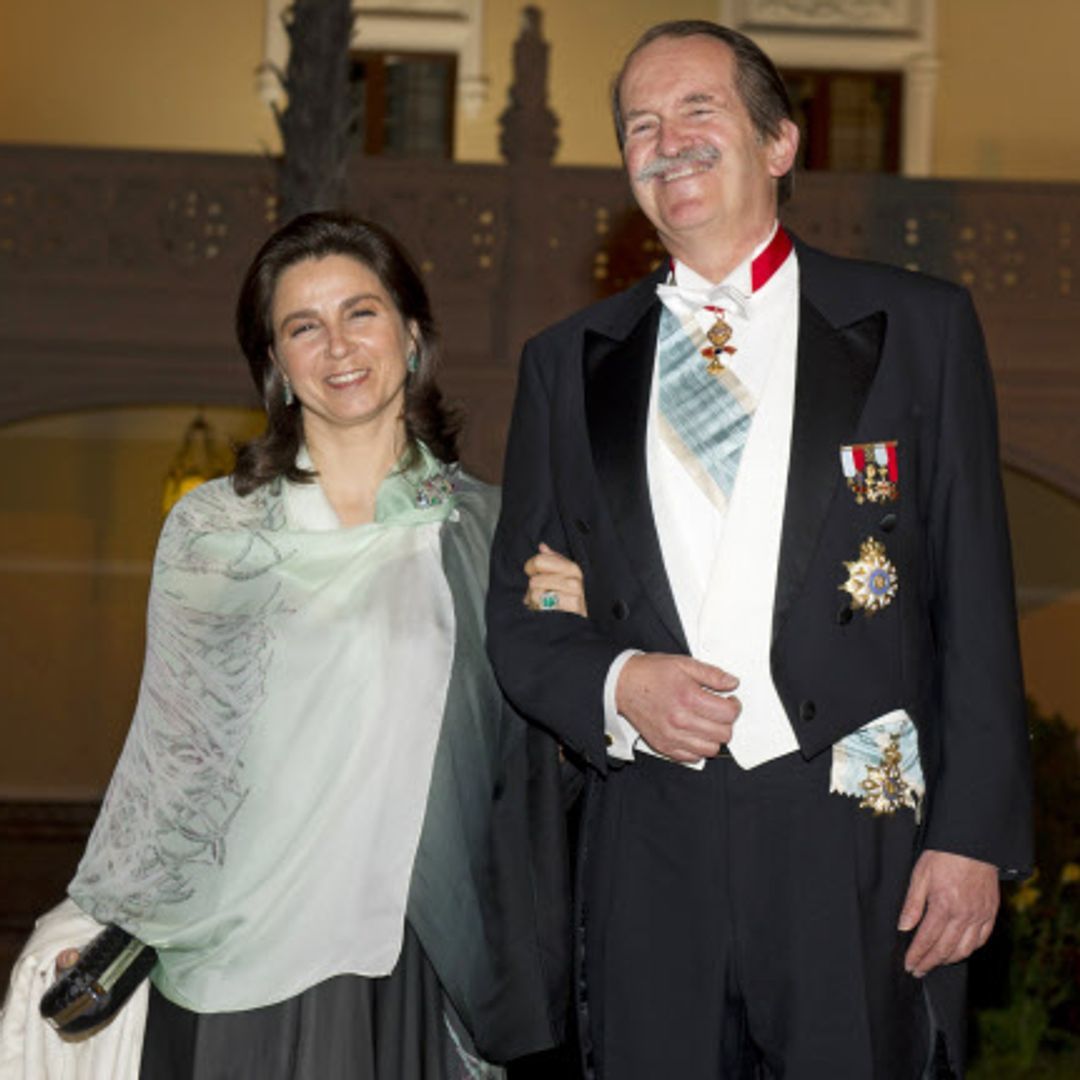
Dinis was born in Lisbon in 1999 and is the youngest son of Dom Duarte, pretender to the throne of Portugal, and Dona Isabel de Braganza. Anna was born in Vienna, Austria, in 2002, the daughter of Counts Maximilian and Marie Schaffgotsch, and grew up with three siblings. Interestingly, fate had already woven a “romantic” thread between the two countries.
The great-grandmother of the current Duke of Braganza was also an Austrian countess: Elisabeth de Dobrzensky von Dobrzenicz (1875–1951). She was born in 1875, in the Austro-Hungarian Empire, was the wife of Pedro de Alcántara de Orleáns-Braganza, Imperial Prince of Brazil, and died in Sintra in 1951.
 © GTRES
There are also other historic connections. Anna, like her future husband, is descended from Elizabeth Stuart. She was the daughter of James VI of Scotland and I of England and was sovereign of Bohemia alongside her husband, Frederick V, Elector Palatine, for only one year. Because of that, she went down in history as the “winter queen” and is remembered in popular tradition as the “Queen of Hearts” for her kindness and wisdom.
The story of Anna Schaffgotsch
The future Duchess of Porto belongs to one of the powerful dynasties that served both the Habsburgs and Prussia. Established in Silesia for centuries, the Schaffgotsch family was one of the most powerful and wealthy dynasties in the region until World War II. In former Prussia they owned thousands of hectares of forest, as well as palaces, spas, and coal and zinc operations, but after the war everything changed for the dynasty. Under the Potsdam Agreement, Silesia came under Polish administration and most of the family’s properties were confiscated, including the castles of Kynast and Greiffenstein, in what is now Lower Silesia.
They lost much of their former estate, but managed to preserve their legacy over time through other properties in Central Europe. Among them is Niederleis Castle, in the Weinviertel region of Lower Austria, inherited by Anna Gräfin Schaffgotsch in 1928, and still today in the hands of the Schaffgotsch family.
A movie setting
During the Russian occupation (1945–1955), it was looted, but with the Austrian State Treaty of 1955 the family was able to recover the property, which was later completely restored. In fact, in 1968 it was the main filming location for the movie Moos auf den Steinen (“Moss on the Stones”).
The castle, surrounded by water as it was conceived as a defensive fortress, was remodeled in the 16th century in the Renaissance style and today houses a museum with valuable works of art and antiques. Also noteworthy on the estate is the chapel, with an impressive Spanish Baroque altarpiece crowned by a 14th‑century cross attributed to Giotto’s school, as well as the vast park with romantic gardens surrounding the castle.
 © Getty Images
The future Duchess of Porto holds a degree in Economics and Social Sciences from the Vienna University of Economics and Business; she also has qualifications in Real Estate Management and Health Care Management, and next year she will continue her studies in Comparative Education at University College London. Her native language is German; she speaks English and Italian and is currently interning at Associação Projeto Lisboa, a Portuguese NGO.
Her brother Afonso is heir to the headship of the Portuguese Royal House
As for Infante Dinis, he holds a degree in Social Sciences from the Université libre de Bruxelles and the Catholic University of Portugal and is studying political science and international relations. He co‑founded Caravela Consulting, a firm that provides strategic advisory services to public and private entities, and has completed internships in government institutions and the European Parliament. He speaks Portuguese and English fluently, as well as French, Spanish, and Italian.
 © GTRES
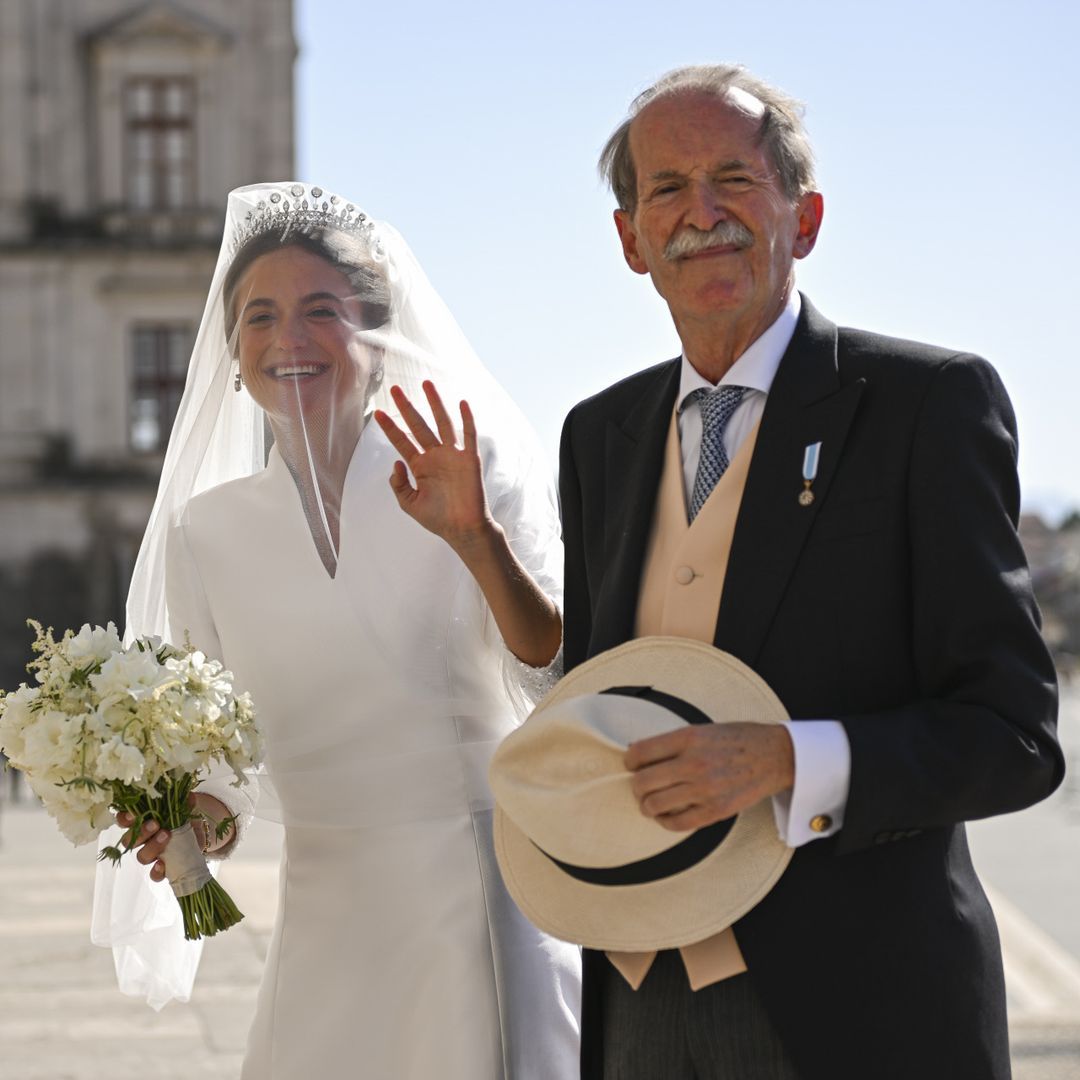
He has two siblings: Infante Afonso, Prince of Beira and heir to the headship of the Portuguese Royal House; and Infanta Maria Francisca, Duchess of Coimbra, who is married to lawyer Duarte de Sousa Araújo Martins.
 © Getty Images
The Braganza family ascended to the Portuguese throne in 1640 with D. João IV, who restored the country’s independence. After the death of the last king, D. Manuel II (1889–1932), who left no descendants, Duarte Nuno became the heir to the House of Braganza and, to this day, it is his son Dom Duarte Pio who leads the dynasty and the Casa de Braganza Foundation, which manages its historic heritage, most notably the Ducal Palace of Vila Viçosa.
Read the full article here